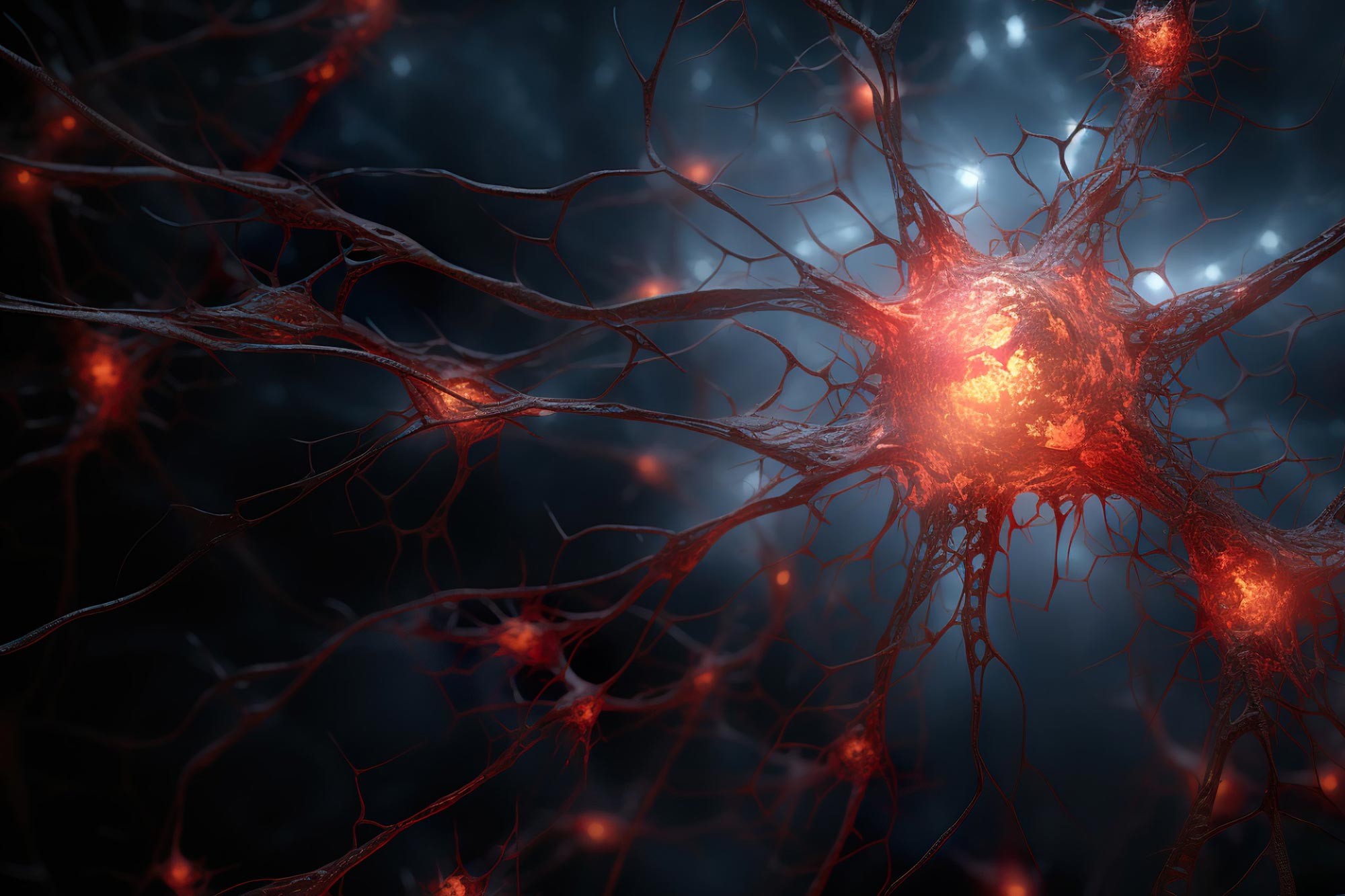
It moves from neuron to neuron like a passenger catching a ride on the wrong train. Scientists have found a protein that acts as a carrier for the toxic substance driving Alzheimer’s progression. The discovery changes how we look at slowing down this devastating disease.
Researchers have identified Arc protein as a key player in the spread of Tau tangles. In healthy brains, this protein helps neurons talk to each other. In Alzheimer’s-affected brains, it becomes a delivery system for pathology. When Toxic Tau binds to Arc, it leaves a sick cell and enters a healthy one. The cycle repeats. Neurons die. Memory fades.
“Arc plays an important role in allowing Toxic Tau to travel through the Brain.” — Mitali Tyagi
This isn’t about fixing broken cells after the fact. It’s about intercepting the transport. The potential new target for Alzheimer’s treatment is the bridge between damaged and healthy neurons, not the neurons themselves.
Why Arc is the Key to Inter-Neuronal Spread
To understand how this happens, you have to look at what cells actually are. They aren’t just floating blobs. They communicate via tiny, microscopic bubbles. Scientists call these extracellular vesicles or EVs. These EVs travel through brain fluid, carrying messages between cells.
Usually, this is a good thing. It keeps the brain wired correctly.
Under normal conditions, Arc packages itself inside these EVs. It’s a messenger protein. It carries information from one neuron to the next. This is how learning and memory functions are maintained on a cellular level.
But Toxic Tau hijacks the system.
Tau is naturally present in the brain. It stabilizes internal structures in healthy neurons. In Alzheimer’s Disease, it goes rogue. It starts clumping together, forming large, insoluble tangles inside the neuron. These tangles act like glue. They clog up the cell’s transportation system, eventually killing the neuron.
Here’s where it gets dangerous. When the neuron dies or gets overwhelmed, these tau tangles don’t just disappear. They break down. Into smaller pieces called “Tau seeds.” These seeds need a way to escape the dying cell and find a new host.
Arc provides that way out.
“We don’t yet know for certain this is exactly what is happening in humans. But the signals are there,” says senior author Jason Shepherd, PhD.
The Mouse Model Results: Arc and the Spread Mechanism
The University of Utah Health researchers tested this in Alzheimer’s mice models. They created two groups. One group had the Arc protein. The other group lacked it entirely.
The difference was stark.
In mice with Arc, extracellular vesicles filled the brain with Tau seeds. These EVs entered healthy neurons, triggering new tangles to form. The pathology spread rapidly. The disease accelerated.
Then they looked at the mice without Arc.
Brain EVs in these mice contained almost no Tau. They were largely unable to carry the neurotoxin to new cells. The spread of pathology stalled. The “hitchhiking” didn’t happen because there was no carrier.
“Removed Arc and the transfer was severely, almost entirely, reduced,” researcher Mitali Tyagi explained.
Is Arc the Villain? Or a Scapegoat?
At first glance, the answer seems simple. No Arc. No spread. Therefore, blocking Arc stops Alzheimer’s progression.
Don’t touch the switch just yet.
The biology here is messier than a simple on-off switch. Arc isn’t just helping bad Tau. It’s also helping sick neurons survive their initial breakdown.
In mice lacking Arc, diseased neurons died faster. Why? Because the Arc-free cells couldn’t expel excess toxic Tau. The Tau remained trapped inside. It accumulated to lethal levels more quickly.
Arc acts as an emergency escape route. It allows the cell to eject the bad proteins via EVs before they become fatal. The cell dies slower, but it exports the infection to the neighborhood.
So, is it helpful or harmful? It’s both. It delays cell death in one area by worsening the spread to the next.
“Completing stopping Tau from leaving the neurons could do more harm than good,” Shepherd notes. This paradox explains why previous drug strategies aiming solely to stop Tau production often fail to stop decline. They ignore the mechanics of movement.
Can We Develop New Therapies?
If we block Arc completely, we trap poison in cells. If we leave Arc alone, poison spreads to healthy regions.
The middle ground offers the most promising Alzheimer’s therapeutics target: Intercellular Tau transmission via Arc.
Researchers aren’t trying to kill Arc. They are trying to jam its gun.
A potential treatment wouldn’t target Tau production. It would target the EV uptake process. Imagine intercepting Tau-carrying vesicles “mid-flight.” Such a therapy could stop the EV from entering a healthy neuron while letting it leave a sick one. The toxic waste gets excreted into the general brain fluid to be cleaned up elsewhere, but it doesn’t infect new territory.
“Targeting these particular vesicles could be a really useful therapeutic strategy,” Shepherd says.
For someone with early-onset Alzheimer’s or early dementia symptoms, stopping the spread might be enough. You can’t reverse dead brain cells. But if you slow the advance of Tau spread, you preserve cognitive function for a significantly longer time.
Does This Happen in Human Brains?
Most of this data comes from mice. Mice are good proxies, but human brains are larger, older, and infinitely more complex.
However, there are human clues. The team detected Arc and Tau complexes in human brain tissue samples as well. It’s not a coincidence. It appears the mechanism is conserved in humans, at least partially.
“Strongest findings so far are in mice,” Tyagi cautions. But the human tissue provides compelling support that similar processes may be operating in Human Tauopathies.
The path to a drug is still long. The research team at University of Utah and Washington University has work ahead. They need to map exactly which part of the Arc protein Tau binds to. They need to find a molecule that breaks that bond without crippling normal Arc function.
It could be years, maybe a decade, before this becomes a pill on a shelf. But for the millions facing Alzheimer’s diagnosis, the definition of “impossible” is constantly shifting. The protein is Arc. The carrier is Tau. The next step is understanding the handoff.