It starts with a rock. It’s rough and jagged and sharp enough to bite into wood. This is the original adz. It is one of the oldest tools invented by humans, appearing in Stone Age ruins long before civilization had a name for it. You don’t need a factory to make it. All you need is hard rock and a lot of effort.
Fast forward to Egypt. Things get even more exciting. At least it’s more ergonomic.
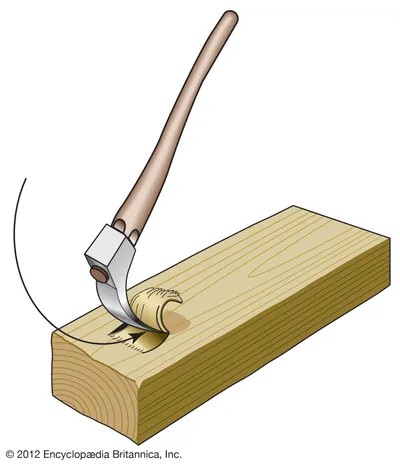
The carpenters stopped swinging raw stone and began attaching the blades to the handles. They call the handle haft. blade? Usually copper or bronze. They set it flat on the wood creating a unique T shape. This is a simple update. But it changes everything.
This T-shaped design has been the gold standard in shaping wood for thousands of years. Why? Because it’s effective.
Picture the scene. There is a log on the ground. Or the floor. Carpenters did not stand on it like modern lumberjack. No, he was straddles the timber. Or stand on it. He holds the adz with both arms. Then he swings it.
The motion is picklike. Downward. Toward himself.
For thousands of years, the adz was the primary hand tool for shaping and trimming wood.
This is not a chopping motion. This is a scoop. He pushed the blade into place and pulled it back, shaves off a curl of wood. *Shave. Shave. Shave. *
You may be wondering why we replaced it. Chainsaws? Planers? certainly. But adz taught us how to think about the grain of wood. You can feel the resistance of the fibers. Don’t rush. The blade should follow the path of least resistance.
Today, you can almost always find adzes in museums or made by traditional craftsmen. But the principle remains. You can control. About forces acting in a certain direction. About the T-handle and downward pull.
Now we have machines. Machines do it faster. But they have no history. There are no stones in them. They didn’t have an Egyptian carpenter, straddling his log and carving a future one chip at a time.
The blade is still sharp. The handle is still made of wood. The action is still the same.