A groundbreaking study published in Nature Neuroscience has uncovered a surprising mechanical link between our abdominal muscles and brain health. The research suggests that simple physical movements—like standing up or taking a step—act as a natural pump, helping to flush waste products from the brain.
This finding offers a fresh perspective on why physical activity is so crucial for cognitive longevity. It moves beyond the general advice to “exercise more” by identifying a specific physiological mechanism: abdominal contractions drive fluid flow in the brain.
The Body’s Hydraulic System
For years, scientists have known that cerebrospinal fluid (CSF) plays a vital role in clearing metabolic waste from the brain. However, the exact mechanisms driving this fluid movement remained partially mysterious.
Patrick Drew, a professor at Penn State and corresponding author of the study, explains that the brain is more physically connected to the body than previously thought. The process works like a hydraulic system:
- Abdominal Contraction: When you tighten your core muscles (even slightly, as when bracing to stand), you increase pressure in the abdomen.
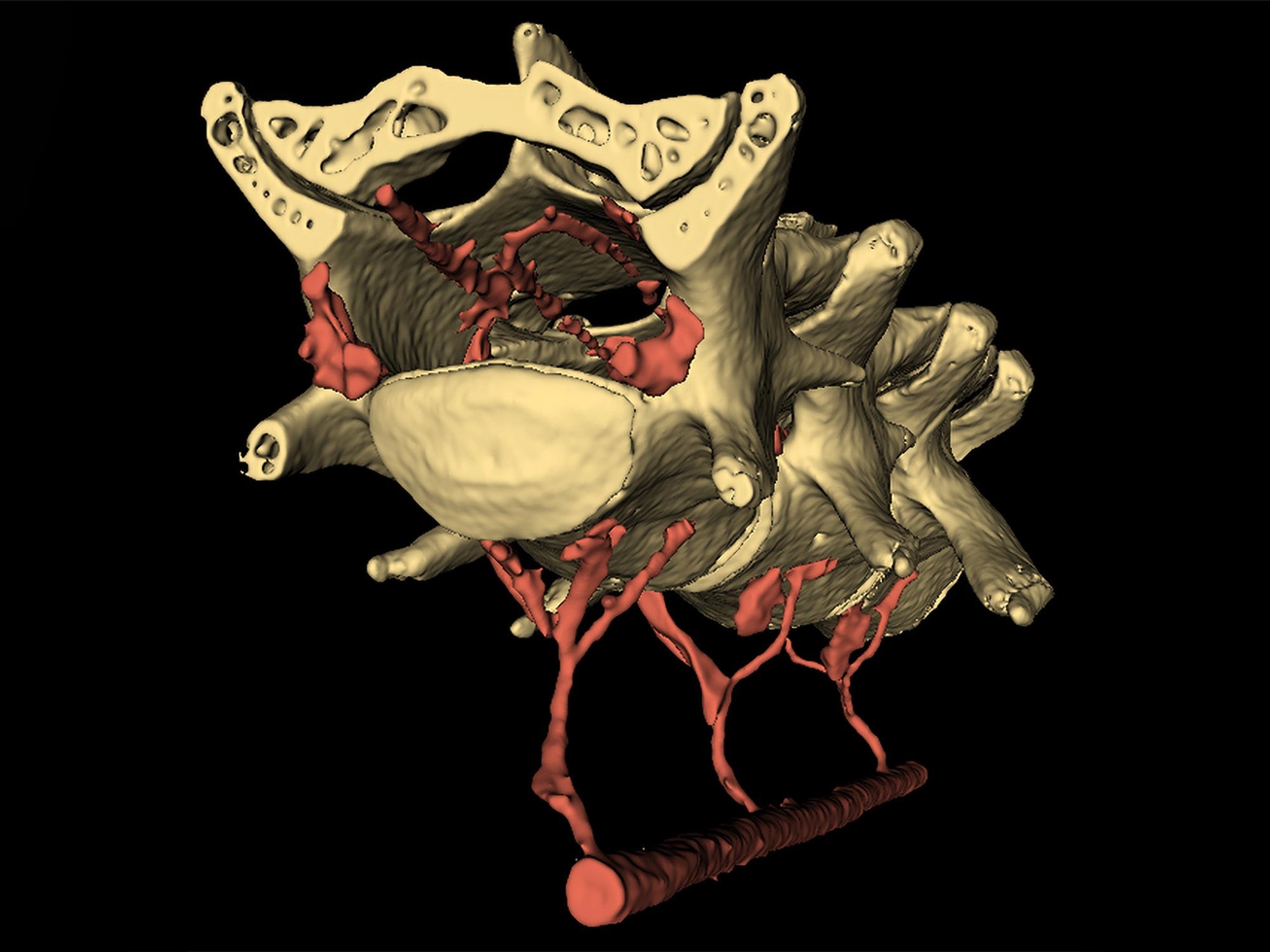
- Pressure Transmission: This pressure pushes blood and fluid through the vertebral venous plexus—a network of veins connecting the abdomen to the spinal cord and skull.
- Brain Motion: The resulting pressure causes the brain to shift subtly within the skull.
- Fluid Flush: This slight movement drives cerebrospinal fluid across the brain’s surface, helping to carry away waste products that could otherwise interfere with neural function.
“Our research explains how just moving around might serve as an important physiological mechanism promoting brain health,” said Drew. “A little bit of motion is good, and it could be another reason why exercise is good for our brain health.”
Seeing the Unseeable: Imaging and Simulation
To prove this connection, the research team at Penn State combined advanced imaging with complex computer modeling. They studied mice in motion using two primary tools:
- Two-photon microscopy: Provided detailed views of living tissue.
- Microcomputed tomography: Enabled high-resolution 3D imaging of entire organs.
The images revealed that the brain shifts position immediately after abdominal muscles tighten to initiate movement. To confirm causality, researchers applied controlled, gentle pressure to the abdomens of lightly anesthetized mice. Even at pressure levels lower than those experienced during a standard blood pressure cuff measurement, the brain moved. Crucially, the brain returned to its baseline position immediately once the pressure was released, proving the direct link between abdominal tension and brain positioning.
Modeling the “Dirty Sponge”
While imaging showed the brain moving, it couldn’t fully capture the complex behavior of fluid flow. Enter Francesco Costanzo, another lead researcher on the project, who led the computational modeling efforts.
Modeling fluid dynamics in the brain is notoriously difficult due to multiple simultaneous movements and membrane interactions. To simplify this, the team treated the brain like a sponge.
“Keeping with the idea of the brain as a sponge, we also thought of it as a dirty sponge — how do you clean a dirty sponge?” Costanzo explained. “You run it under a tap and squeeze it out.”
By simulating the brain as a porous structure, they demonstrated that the subtle motion induced by abdominal contractions effectively “squeezes” the sponge, inducing fluid flow that clears waste products from the brain’s folds and pores.
Why This Matters for Brain Health
The implications of this research extend beyond basic biology into public health. Neurodegenerative disorders, such as Alzheimer’s disease, are often linked to the buildup of toxic waste proteins in the brain. If everyday movements help circulate CSF and remove these toxins, then physical inactivity may be more harmful to brain health than previously realized.
Drew notes that while more research is needed to confirm these findings in humans, the mechanism appears robust. The motion required is minimal—generated by walking, standing, or engaging in any physical behavior.
“This kind of motion is so small. It’s what’s generated when you walk or just contract your abdominal muscles… It could make such a difference for your brain health,” Drew said.
Conclusion
This study transforms our understanding of the brain-body connection, revealing that our abdominal muscles act as a vital pump for cognitive hygiene. By facilitating the removal of waste products through subtle mechanical shifts, everyday movement serves as a natural defense against neurodegeneration. The takeaway is clear: staying active isn’t just about physical fitness; it is a fundamental requirement for keeping the brain clean and healthy.