
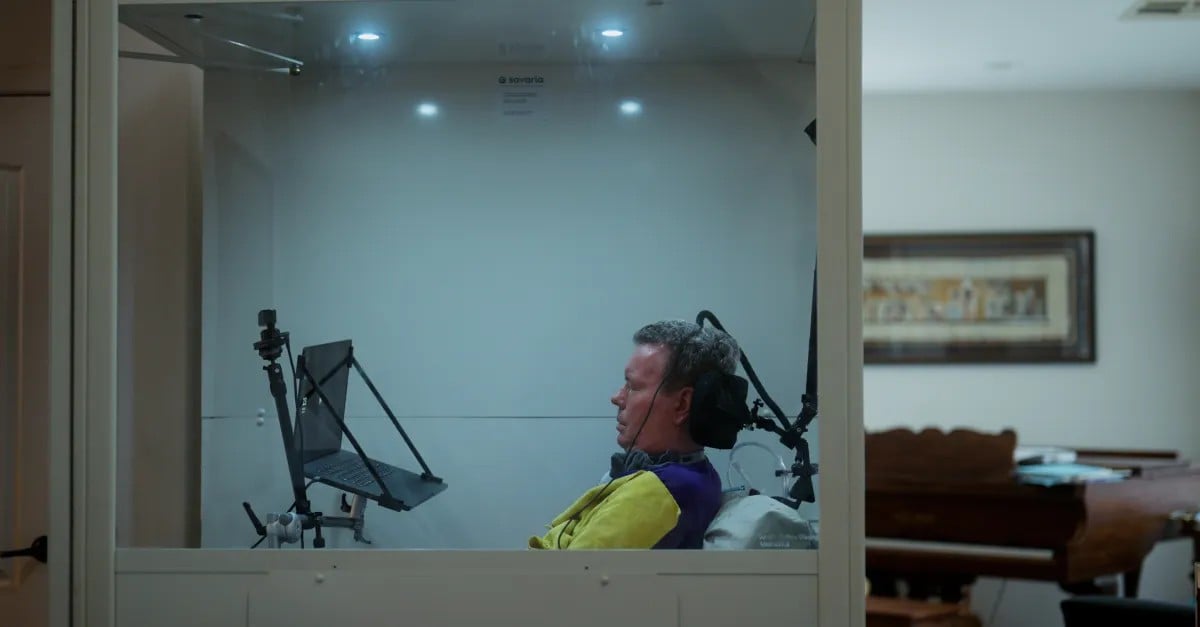

The future of brain-computer interfaces (BCIs) isn’t about sleek implants alone—it’s about how people with disabilities adapt existing tech to reclaim agency in a world not built for them. Brad Smith, one of the first Neuralink patients with ALS, proved this by rigging a simple webcam to his mind-controlled computer, a move that baffled the company’s engineers.
This isn’t about flashy innovation; it’s about practical solutions. Smith’s story, as detailed in The Verge, highlights a key truth about BCIs: they’re tools, not miracles. His implant replaced eye-tracking software, but he soon realized the real power lay in how he used it. While Neuralink focused on the tech itself, Smith wanted to watch his son’s soccer games—a basic human desire that demanded a workaround.
The solution? A $50 Insta360 Link webcam, better known as a conference camera. Neuralink didn’t understand the need, but Smith moved forward regardless. This underscores a vital point: BCI users aren’t waiting for perfect solutions; they’re making them. Nathan Copeland, a BCI user for over a decade with a Blackrock Neurotech device, confirms this. He’s used his implant to fist-bump Barack Obama and shake hands with Will Reeve, but his daily life still relies on “mishmash” of hacks—Google Home commands, custom controllers, even breath-controlled switches.
The Core Principle: BCIs Amplify Existing Needs
BCIs work by decoding neural signals. When Smith thinks about moving his hand, electrodes in his brain detect the resulting electrical activity and translate it into cursor movement on a screen. The Neuralink device replaced a tiring, sunlight-dependent eye-tracking system. But the real leap came when Smith integrated a webcam, allowing him to pan and zoom with his mind.
Neuralink adapted, even mounting the camera to his wheelchair. This demonstrates a crucial dynamic: companies respond to user-driven innovation. Smith’s setup isn’t just about tech; it’s about restoring autonomy. He uses the camera to follow conversations, watch family, and maintain connection to the world, all from his chair.
The story isn’t isolated. Burkhart, a paralyzed BCI pioneer, emphasizes that people with disabilities are “forced to make adjustments.” They don’t wait for perfect devices; they combine existing tools in creative ways. From dog bells to modified Xbox controllers, necessity breeds innovation. Smith himself jokes that his wife’s frugality pushes him to find resourceful solutions.
The Bigger Picture: BCI’s Future Lies in User-Driven Adaptation
Smith’s experience reveals a fundamental truth: BCI technology will only truly thrive when researchers listen to user needs. He envisions a future where BCIs seamlessly integrate with everyday devices, including wheelchairs and smart homes. This isn’t just about regaining functionality; it’s about reclaiming agency and hope.
The key takeaway? The most exciting part of BCI isn’t the hardware, but the human ingenuity that drives its real-world application. It’s not about replacing bodies; it’s about re-humanizing lives in a world that often fails to accommodate them.