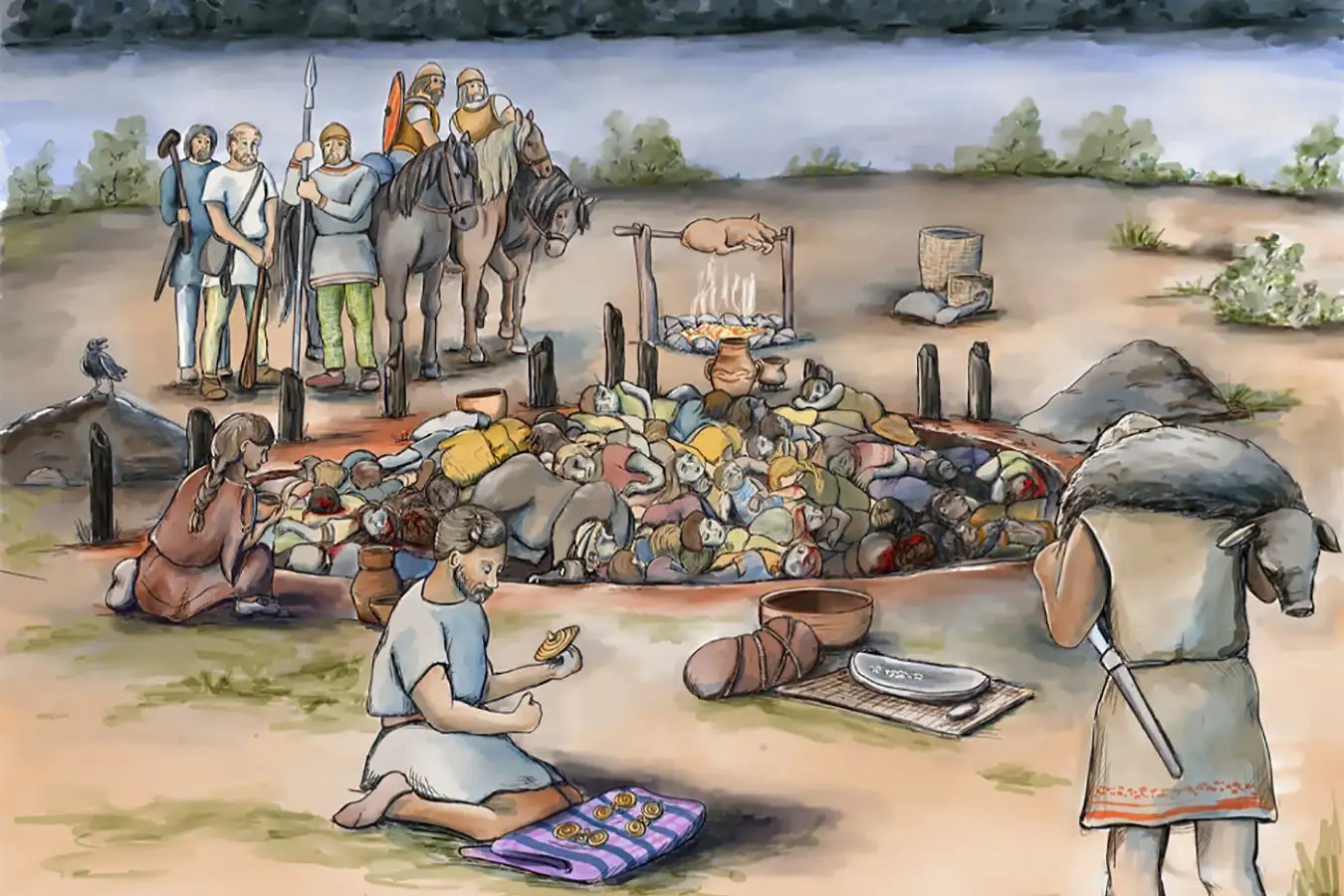

A newly analyzed mass grave from the early Iron Age in Serbia suggests a brutal and deliberate slaughter, with compelling evidence pointing to women and children as primary targets. The site at Gomolava, dating back to the 9th century BC, held the remains of 77 individuals, many of whom died violently in what appears to be an intentional act.
The Discovery and Initial Findings
The mass grave was unearthed at Gomolava, an ancient settlement mound (tell) in the Carpathian basin. Previously attributed to a pandemic in a 1976 analysis, the remains have undergone renewed scrutiny by researchers at the University of Edinburgh and University College Dublin. This investigation revealed unhealed injuries consistent with violent attacks, defensive wounds, and evidence of projectile impacts.
Of the 77 victims, over 66% were children and adolescents (51 individuals), and 71% of those whose sex could be determined were female (51 out of 72). The sheer disproportion of women and children raises critical questions about the nature of this massacre.
Context: A Clash of Cultures and Land Disputes
The period around 900 BC was marked by significant societal shifts in the region. Nomadic pastoralists from the Eurasian steppe began competing with settled agricultural communities who were reoccupying old tell sites. This created conflict over land use and resources.
“You’ve got these two conflicting ways of using landscape,” explains Barry Molloy of University College Dublin. The massacre may have been a brutal attempt to assert dominance, displacing rival groups and preventing resistance. The high proportion of non-related victims suggests a widespread societal conflict, rather than a localized feud. DNA and isotope analysis indicate the individuals came from different backgrounds, sharing common cultural practices but not direct familial ties.
Why Women and Children? A Deliberate Act of Violence
The targeting of women and children deviates from typical warfare patterns. While violence often focuses on adult males, this massacre appears to have intentionally eliminated vulnerable populations. Researchers speculate the perpetrators may have intended to send a clear message: either submit or face total destruction.
Alternatively, some suggest the absence of adult males could indicate they were elsewhere, leaving women and children defenseless. However, the brutal nature of the injuries – forceful blows to the head and close-contact violence – supports the theory of intentional killing.
Symbolic Burial: A Complicated Aftermath
What makes this event even more disturbing is the meticulous burial. The victims were interred with personal possessions (bronze jewelry, pottery) and even the remains of a butchered calf. Broken grinding stones and burnt seeds were also placed in the grave, representing the entire food cycle.
“It’s the entire food cycle, all deposited alongside them,” says Molloy. This suggests the burial was not just disposal but a deliberate, symbolic act. The killers may not have been the same people who performed the rites, adding another layer of complexity to the event.
The Iron Age was a period of extreme instability across Europe, with frequent armed conflicts. The Gomolava massacre serves as a chilling reminder of the brutality that defined this era. The intentional targeting of women and children suggests a particularly ruthless form of violence intended to subdue resistance and secure dominance over the land.