The Artemis II mission has officially concluded, marking a monumental milestone in human spaceflight. For ten days, four astronauts—Reid Wiseman, Victor Glover, Christina Koch, and Jeremy Hansen —traveled further into space than any humans before them, completing a journey that pushed the boundaries of technology, human endurance, and emotional resilience.
The Visceral Reality of Launch
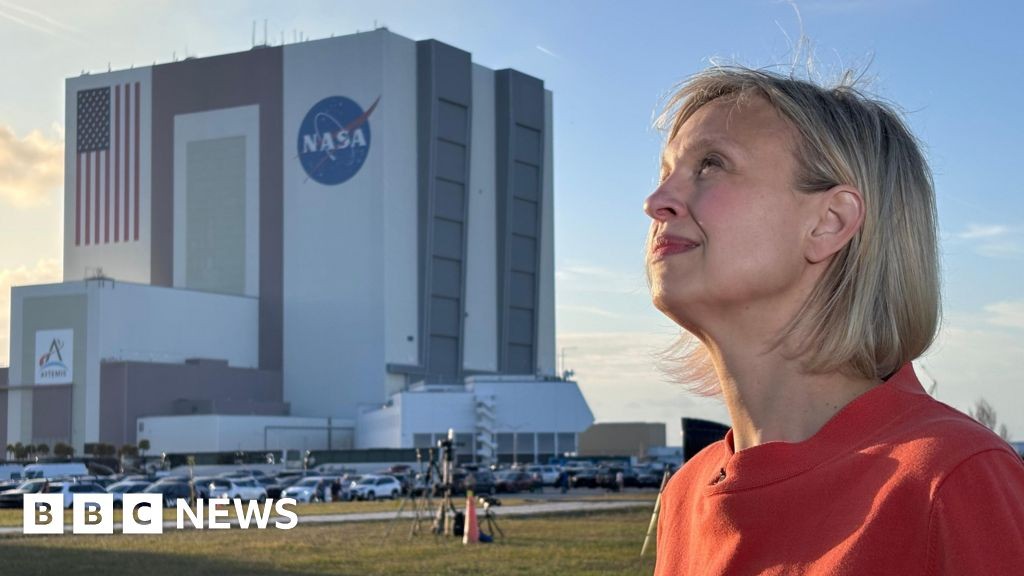
The mission began with a spectacle at the Kennedy Space Center in Florida. Watching a 98-meter-tall rocket ascend is not merely a visual experience; it is a physical one. The deafening roar and the sheer force of the blast passing through the spectators serve as a stark reminder of the immense energy required to break Earth’s gravity.
As the crew reached orbit, the mission transitioned from a feat of engineering to a study in human confinement. Living inside a capsule roughly the size of a minibus, the astronauts faced the grueling realities of microgravity. This included:
– Extreme Proximity: The crew lived, worked, and slept in cramped quarters with zero privacy.
– Technical Hurdles: The $23 million Universal Waste Management System faced plumbing challenges, forcing the crew to use “contingency urine devices” (essentially specialized bags) for certain tasks.
High Stakes and Human Connection
While the technical aspects of the mission were paramount, the psychological weight carried by the crew was equally significant. Artemis II was a test flight, meaning the crew was essentially piloting a new rocket and spacecraft for the first time.
The risks were not abstract concepts; they were deeply personal. Before launch, astronauts shared the heavy reality of their mission with their families, acknowledging the possibility that they might not return. This human element reached a poignant peak during the lunar transit when the crew identified a crater on the Moon’s surface and named it “Carroll” in honor of Commander Reid Wiseman’s late wife. This moment of shared grief and solidarity bridged the gap between the sterile environment of space and the raw emotions of those watching on Earth.
The Great Debate: Why Return to the Moon?
The mission’s success raises a fundamental question that has sparked debate among scientists and policymakers: Why spend billions to send humans to the Moon when robotic rovers and orbiters can perform much of the same work?
With an estimated cost of $93 billion, the Artemis program is not merely a repeat of the Apollo era. NASA Administrator Bill Nelson (and leadership figures like Jared Isaacman) argue that this mission is a stepping stone toward much larger goals:
1. Establishing a Permanent Presence: Plans include a lunar landing in 2028 and the eventual construction of a Moon base.
2. The Mars Objective: The Moon serves as a proving ground for the technologies and life-support systems required for the ultimate goal: sending humans to Mars.
3. The Human Element: NASA maintains that human exploration is driven by an innate biological drive to explore, providing unique insights that machines simply cannot replicate.
A “White-Knuckle” Return
The most dangerous phase of any mission is often the end. Re-entry into Earth’s atmosphere involves hurtling through a “fireball” of temperatures reaching half as hot as the surface of the Sun.
During the descent, Mission Control at the Johnson Space Center faced six agonizing minutes of communication blackout. The tension only broke when the capsule was spotted over the ocean and Wiseman’s voice confirmed their safety: “Houston, we have you loud and clear.”
“I’d miss the camaraderie,” Christina Koch remarked, noting that the crew had transitioned from colleagues to a family bonded by the extreme circumstances of their voyage.
Conclusion
The Artemis II mission has transitioned its crew from astronauts to global icons, proving that space exploration remains one of humanity’s most captivating endeavors. By successfully navigating the technical risks and the vast distances of deep space, this mission has laid the groundwork for a permanent human presence beyond Earth.