A key spacecraft in the European Space Agency’s (ESA) Proba-3 mission has gone dark after losing control of its orientation. The incident, which occurred in mid-February, threatens the unique project designed to study the sun’s corona by creating artificial eclipses in space.
Mission Overview: Artificial Eclipses in Orbit
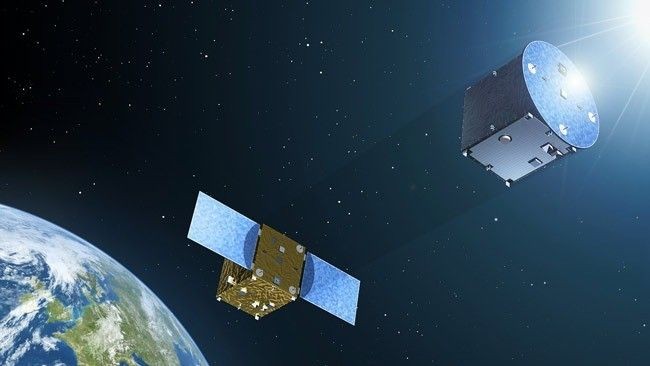
Launched in December 2024, Proba-3 consists of two spacecraft operating in tandem: the Coronagraph and the Occulter. The Occulter blocks the sun’s intense light, allowing the Coronagraph to image the faint solar corona without distortion. This method is critical because the corona, the sun’s outer atmosphere, is typically obscured by the star’s brightness. Maintaining a precise 500-foot (150-meter) separation with millimeter-level alignment is essential for the mission’s success.
Incident Details: Loss of Control and Power Drain
The anomaly centered on the Coronagraph probe. A failure in its attitude control system caused it to rotate away from the sun, cutting off power from its solar panels. This triggered a “survival mode” shutdown as batteries depleted. ESA has stated that the root cause is under investigation, but the loss of orientation prevents the probe from entering safe mode.
Recovery Efforts: A Risky Approach
Engineers are now considering a high-risk maneuver to bring the Occulter spacecraft closer to the disabled Coronagraph. The hope is that the Occulter can assist in diagnosing the problem or potentially reestablishing contact. ESA emphasizes that updates will be provided as new information emerges.
Significance: A First-of-Its-Kind Mission
Proba-3 achieved a milestone in May 2025 by demonstrating the unprecedented ability to maintain two spacecraft in such close, synchronized formation. In June 2025, the mission captured its first artificial solar eclipse images, providing valuable data on the sun’s corona. The loss of the Coronagraph jeopardizes this unique capability.
The Proba-3 mission represents a crucial step forward in solar physics. The loss of one probe highlights the inherent risks of complex space operations and underscores the importance of redundancy in future missions.
The future of Proba-3 hangs in the balance as ESA races against time to understand and potentially recover the stricken spacecraft.