



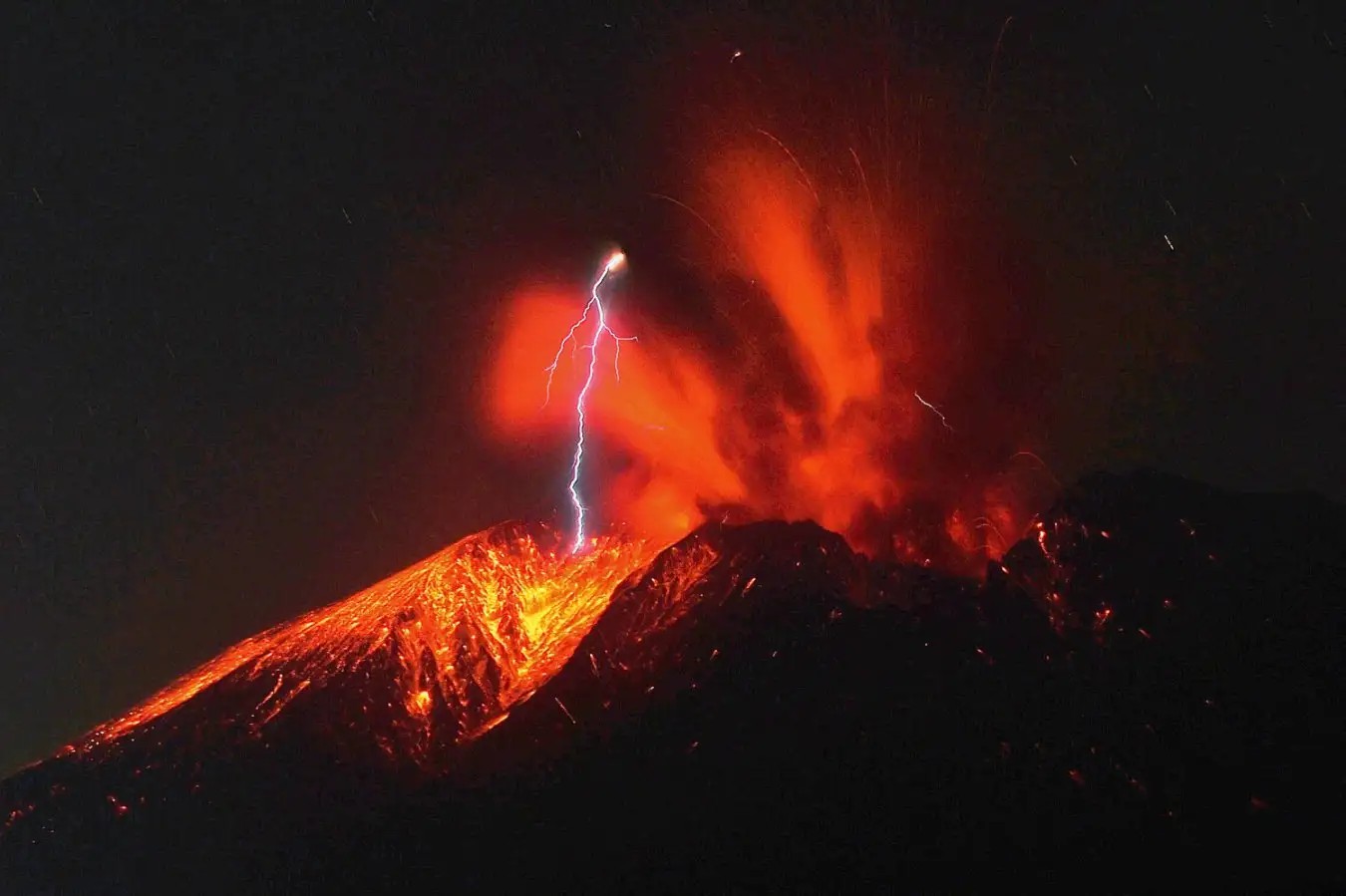
For most of Earth’s history, volcanoes weren’t the primary force shaping our planet’s greenhouse gas levels. A new study reveals that volcanic arcs – the chains of erupting peaks like those in Japan – only became dominant sources of carbon emissions within the last 100 million years, towards the end of the dinosaur age. This finding fundamentally alters our understanding of Earth’s long-term climate regulation.
The Role of Phytoplankton in Carbon Cycling
The key to this shift lies in the evolution of microscopic organisms: phytoplankton with calcium carbonate scales. These creatures first appeared roughly 150 million years ago, and their impact on the carbon cycle has been immense. When they die, their shells accumulate on the ocean floor, forming vast deposits of calcium carbonate.
Over geological timescales, tectonic plates subduct (slip beneath each other), recycling these carbon-rich sediments into Earth’s mantle. A portion of this carbon is then released through volcanic arc eruptions. But before these phytoplankton existed, volcanic emissions were significantly lower because there was less carbon available in the subducting plates.
From Rifting to Arcs: A Shifting Emission Source
For billions of years, the dominant carbon release mechanism wasn’t volcanic arcs at all. Instead, it was rifting – the tearing apart of continents, like the East African Rift, and the formation of new crust at mid-ocean ridges.
Rifting essentially “unroofs” the molten interior, allowing carbon to escape directly into the atmosphere. The amount released depended on the length and speed of rifting, but emissions remained relatively steady until phytoplankton altered the equation.
Modern Emissions: A Two-Thirds Increase
Today, volcanic arcs emit two-thirds more carbon than they did 150 million years ago, thanks to the massive seafloor reservoir created by those calcium carbonate shells. While this increase is substantial, it’s still less than the amount of carbon phytoplankton lock away on the seafloor or that’s subducted into the Earth’s interior.
Why This Matters
Understanding this timeline is critical because it clarifies how Earth’s climate system has evolved. The shift from rifting to volcanic arcs as the primary emission source shows that biological processes (the evolution of phytoplankton) can fundamentally alter planetary-scale geological cycles. This also raises questions about how future biological changes might affect carbon emissions and climate stability.
The research, led by Ben Mather at the University of Melbourne, highlights the importance of detailed modeling in understanding Earth’s long-term climate history. As Alan Collins of the University of Adelaide notes, the changing composition of ocean sediments—driven by evolving creatures—has had profound consequences for planetary carbon cycling.
In conclusion, volcanic activity’s influence on climate isn’t a constant; it’s a dynamic process shaped by biological evolution and plate tectonics. The rise of phytoplankton fundamentally changed how carbon is cycled through Earth, and this shift has long-term implications for understanding our planet’s past, present, and future climate.