



Archaeologists in Spain have uncovered a significant piece of evidence supporting the legendary campaigns of Hannibal, the Carthaginian general: a fossilized elephant foot bone from an Iron Age battle site. This marks the first concrete physical proof that Hannibal’s war elephants traveled through ancient Europe.
Historical Context: Hannibal’s Campaigns
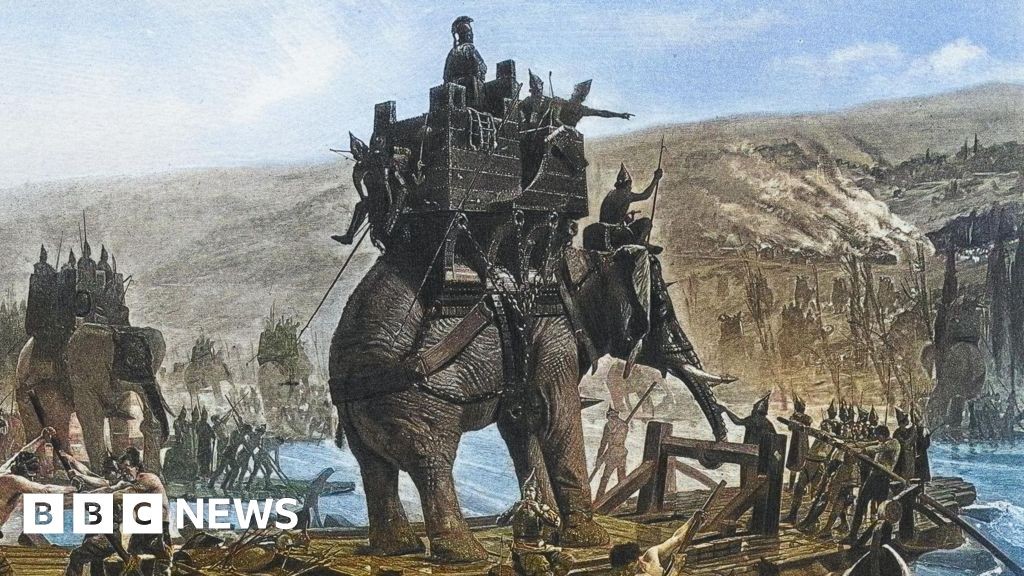
For centuries, historians have relied on ancient texts and illustrations detailing Hannibal’s epic march across the Alps with a force that included 37 war elephants in 218 BCE during the Second Punic War. However, archaeological confirmation has always been elusive. Hannibal led his armies from Carthage (modern-day Tunisia) through Spain and France in an attempt to invade Italy and challenge Roman dominance over the Mediterranean.
The new discovery suggests that at least some of these elephants never made it to the Alps; the bone was found beneath a collapsed wall at the Colina de los Quemados site near Cordoba, Spain. This location was likely a staging ground for Hannibal’s forces before crossing into France.
Scientific Findings
The team, led by Professor Rafael M. Martínez Sánchez, analyzed the bone and compared it to modern elephants and steppe mammoths to confirm its origin. The presence of additional battlefield artifacts—artillery, coins, and ceramics—from excavations in 2020 further supports the conclusion that this was a site of military conflict.
The scientists emphasize that transporting live elephants by sea was the only practical method, making it unlikely that dead animals were moved for decorative or artisanal purposes.
Why This Matters
The discovery has significant implications for understanding the scale and logistics of Hannibal’s military campaigns. The fact that war elephants were present in Spain before Hannibal’s Alpine crossing suggests a more extensive and complex network of supply and reinforcement than previously imagined.
“The discovery of elephant remains in European archaeological contexts is exceptionally rare,” the scientists state in their paper, published in Journal of Archaeological Science: Reports.
While identifying the exact species of elephant remains a challenge, this bone provides a tangible link to one of the most famous military leaders in history and his brutal, ambitious war. The discovery of Hannibal’s war elephants in Spain confirms that the Carthaginian army was well-equipped and determined to dominate the Mediterranean world.
The find underscores how little is known about the logistics of ancient warfare, and how archaeological discoveries can rewrite our understanding of the past.