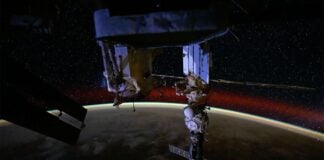




The Van Allen radiation belts are zones of highly energetic charged particles trapped by Earth’s magnetic field. These belts pose a significant hazard to spacecraft and astronauts, but understanding them is crucial for safe space exploration.
What are the Van Allen Belts?
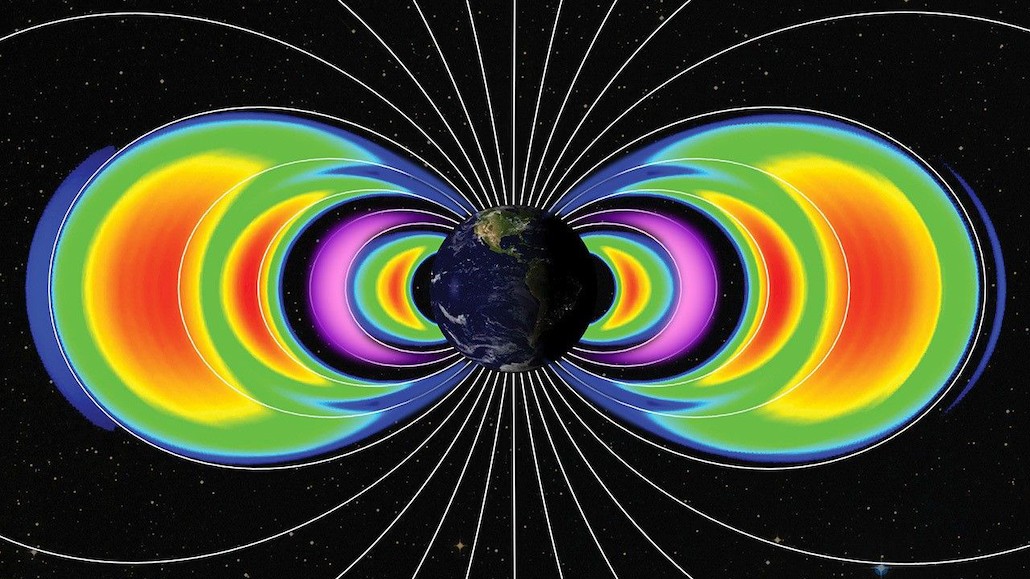
The belts are not physical structures but rather regions where protons and electrons—particles accelerated to extreme speeds by the sun and cosmic rays—become trapped. The Earth’s magnetic field acts like an invisible shield, bending these charged particles toward the poles and forcing them to spiral along magnetic field lines.
This trapping effect creates two main belts: an inner belt dominated by high-energy protons and an outer belt primarily filled with electrons. The intensity of radiation varies with altitude and location; the closer one gets to the Earth, the more intense the radiation becomes.
The Threat to Space Travel
Astronauts and sensitive electronics are particularly vulnerable to the Van Allen belts. High-energy particles can damage spacecraft systems, leading to malfunctions or failures. For humans, exposure to intense radiation can cause acute radiation sickness or increase long-term cancer risks.
NASA and other space agencies carefully plan missions to minimize time spent within the belts. This includes using shielding materials, choosing optimal orbital paths, and limiting exposure durations. Without such precautions, space travel would be far more dangerous.
Origins and Dynamics
The particles within the belts originate from several sources. Cosmic rays, high-energy particles from outside our solar system, contribute to the radiation. The solar wind, a stream of charged particles emitted by the sun, also feeds the belts. These particles become trapped in Earth’s magnetic field and accelerate over time due to interactions with the field itself.
The belts are not static; their intensity fluctuates with solar activity. Solar flares and coronal mass ejections (CMEs) can temporarily swell the belts, increasing the radiation hazard. Monitoring these events is critical for space weather forecasting.
Why This Matters
Understanding the Van Allen belts is fundamental to the future of space exploration. As we push further into deep space, mitigating radiation risks becomes paramount. Improved shielding technologies, predictive models for solar activity, and optimized mission planning are all essential. Without these advances, our ability to explore beyond Earth will remain severely constrained.
The Van Allen radiation belts remind us that space, despite its vastness, is not empty. It is filled with invisible hazards that demand respect, careful study, and rigorous preparation.