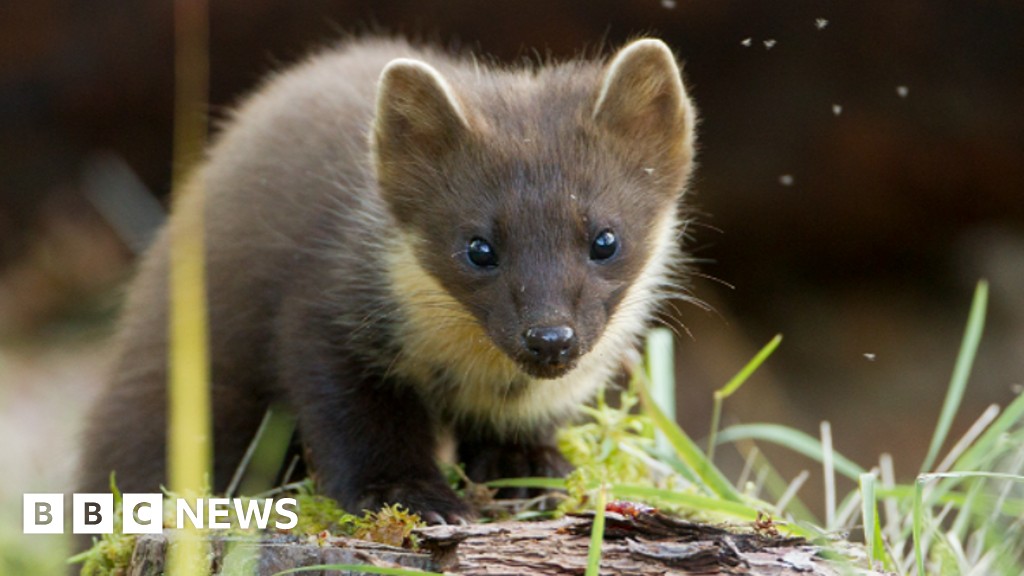
Conservationists are celebrating a major milestone in the effort to restore biodiversity to South West England. Recent findings confirm that pine martens—mammals related to weasels—have successfully begun breeding in the wild following a targeted reintroduction program.
A Milestone for Local Biodiversity
The news comes as a significant victory for the Devon Wildlife Trust’s “Two Moors Pine Marten” project. Since autumn 2024, dozens of pine martens have been released into undisclosed locations across Dartmoor and Exmoor.
In July, officials confirmed that these animals have successfully produced offspring. This marks a turning point for the species in the region, which has been absent for over a century due to historical hunting and trapping.
Monitoring the New Arrivals
The project uses a combination of technology and field observation to track the progress of the released animals:
– Initial Tracking: For the first six months, released pine martens were monitored using specialized collars.
– Remote Observation: Once the collars were no longer necessary, the team transitioned to using remote camera traps to observe natural behavior.
– Expansion of Territory: Data shows that these small, cat-sized mammals are highly mobile, with some traveling more than 20 miles (32km) from their release sites to explore the landscape before settling in woodland habitats.
Tracey Hamston, the project lead, noted that the current season is a critical period for observation.
“This year’s kits should be being born on both Dartmoor and Exmoor around now. We hope to see evidence of this on our cameras when the kits become more active in May and June.”
Why This Matters
The successful breeding of pine martens is more than just a win for a single species; it is a sign of a recovering ecosystem. As “mesopredators,” pine martens play a vital role in controlling smaller mammal populations, which helps maintain a healthy balance within the woodland food web. Their return suggests that the habitats in Dartmoor and Exmoor are once again capable of supporting complex wildlife cycles that were lost a century ago.
How the Public Can Help
To assist with ongoing tracking and research, the project is encouraging the local community to participate in citizen science. If anyone spots a pine marten, they are urged to report the sighting to help conservationists better understand the animals’ movements and breeding success.
Conclusion: The successful breeding of pine martens in Dartmoor and Exmoor signals a successful step toward restoring a lost piece of England’s natural heritage. This development provides hope that these elusive mammals can once again become a permanent fixture of the South West landscape.