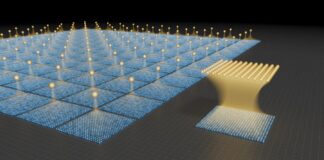
Researchers in China have developed a strontium optical lattice clock so accurate it could soon force a fundamental change in how we measure time. This isn’t just about better watches; it’s about redefining the very second itself.
The Problem with Current Timekeeping
For over half a century, the second has been defined by the oscillations of cesium-133 atoms – a remarkably stable standard, but still imperfect. The Earth’s rotation isn’t consistent. Relying on the length of a day to define time means that the second itself would subtly shift. Atomic clocks solved this, but optical clocks offer the next leap in precision.
How the New Clock Works
The new clock uses strontium atoms, which vibrate at visible light frequencies, generating over 700 trillion “ticks” per second. This is a massive improvement over cesium’s 9 billion oscillations. The USTC researchers achieved an uncertainty of 9.2 x 10⁻¹⁹, meaning the clock would only lose one second after running for roughly 30 billion years—longer than the universe’s current age.
This level of precision isn’t just theoretical. It opens doors to new scientific possibilities, including more accurate dark matter searches and precise measurements of Earth’s gravitational field.
The Path to Redefinition
For the second to be officially redefined, at least three optical clocks meeting strict precision standards need to operate at different institutions. The USTC clock joins two other strontium-based clocks and two aluminum ion clocks that have already reached this milestone.
The decision rests with the General Conference on Weights and Measures (CGPM), which meets every four years. While the 2024 meeting won’t see the redefinition, a proposal for the new standard is expected by 2030, with a date for implementation to follow.
“This performance meets the 2 x 10-18 single-clock accuracy requirement for redefining the SI second, with potential applications in relativistic geodesy and high-resolution dark matter searches,” the researchers write.
The move towards redefining the second isn’t just a technical adjustment; it’s a recognition that our most precise tools now demand a more stable and universal definition of time. It will reshape how we measure reality at its most fundamental level.