




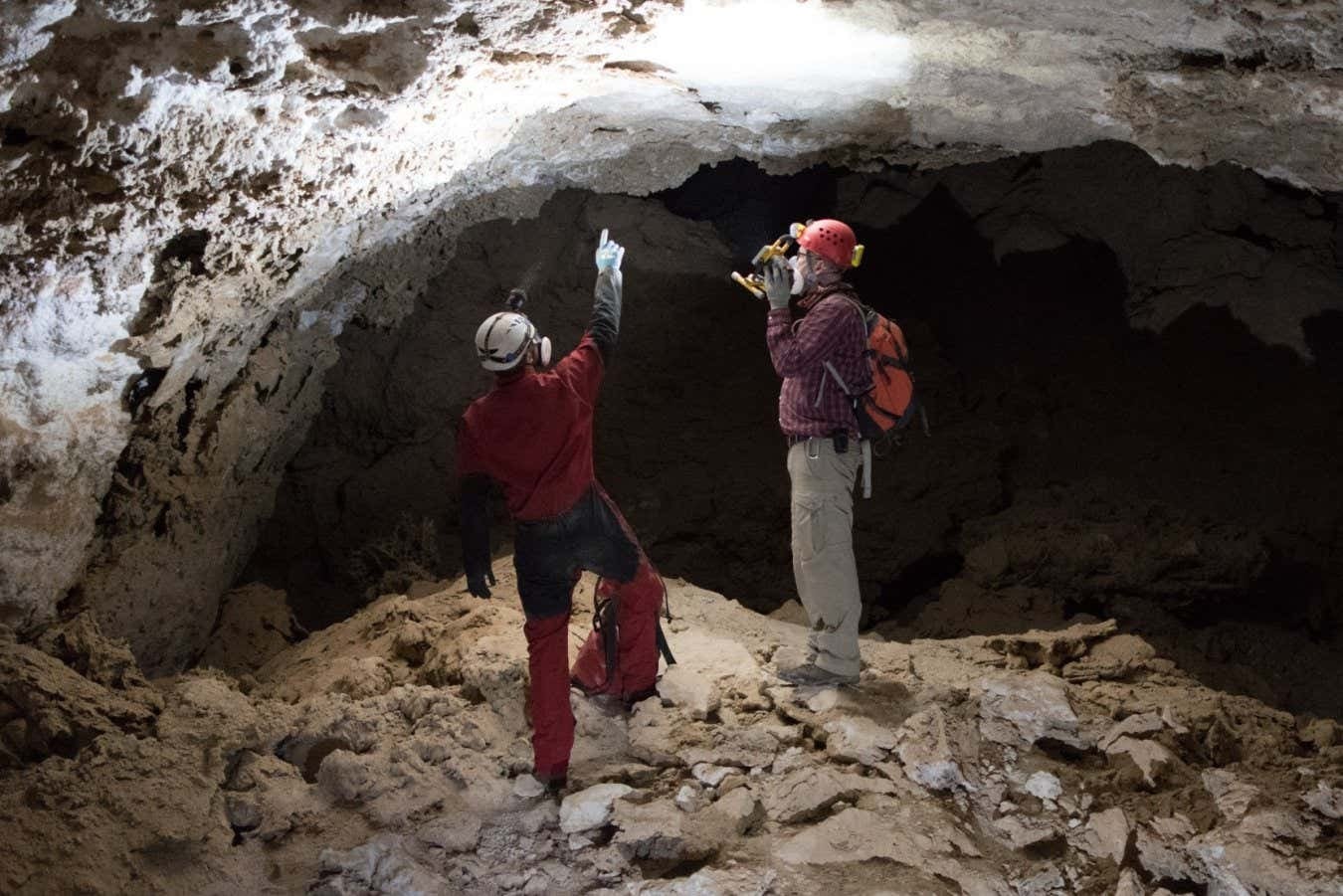
New archaeological discoveries confirm that ancient hominins inhabited the now-arid landscapes of north-eastern Saudi Arabia, revealing a once-thriving ecosystem supported by wetter conditions. The research, focused on a previously unstudied region between Qatar and Kuwait, uncovers evidence of human presence dating back as far as 100,000 years. This challenges the perception of Arabia as a historical barrier to migration, suggesting that past climate shifts created periods where the region was habitable.
A Lost World Revealed
For decades, the Arabian peninsula has been overlooked in studies of early human migration. However, scientists knew the region once received enough rainfall to support robust plant and animal life. The new study targeted 79 caves and surrounding areas, specifically seeking locations near ancient riverbeds and chert deposits – a material crucial for toolmaking.
“Caves are often important locations for archaeological, fossil and climatic records,” says Huw Groucutt of the University of Malta, a lead researcher on the project.
The team found evidence of hominin activity in multiple caves, including one site littered with over 400 stone tools. Animal remains discovered alongside the artifacts include those of camels, gazelles, hyenas, wolves, reptiles, and birds. The sheer volume of preserved bones provides unprecedented insight into past Arabian ecosystems.
Timing and Implications
Analysis of the tools suggests that hominins occupied these caves between 10,000 and 100,000 years ago. This timeframe coincides with periods when climate conditions allowed for increased vegetation and animal populations.
Monika Markowska of Northumbria University, who was not involved in the research, explains that the findings demonstrate Arabia wasn’t always a barrier to movement. Instead, “climate-driven windows of opportunity may have created more favourable conditions for occupation and migration.”
Why This Matters
The Arabian peninsula has long been considered a geographical bottleneck, hindering rather than facilitating human dispersal. These discoveries rewrite that narrative. The evidence suggests that ancient populations exploited periods of increased rainfall to move through the region, potentially connecting Africa, Asia, and Europe.
Michael Petraglia of Griffith University emphasizes that this research is just one step in a larger effort to understand the dynamic ecosystems of Arabia. The findings highlight the importance of continued exploration in this understudied region.
The Arabian desert once provided a viable pathway for ancient hominins. This study demonstrates that climate played a crucial role in shaping migration patterns, turning what is now an arid barrier into a temporary bridge for early humans.