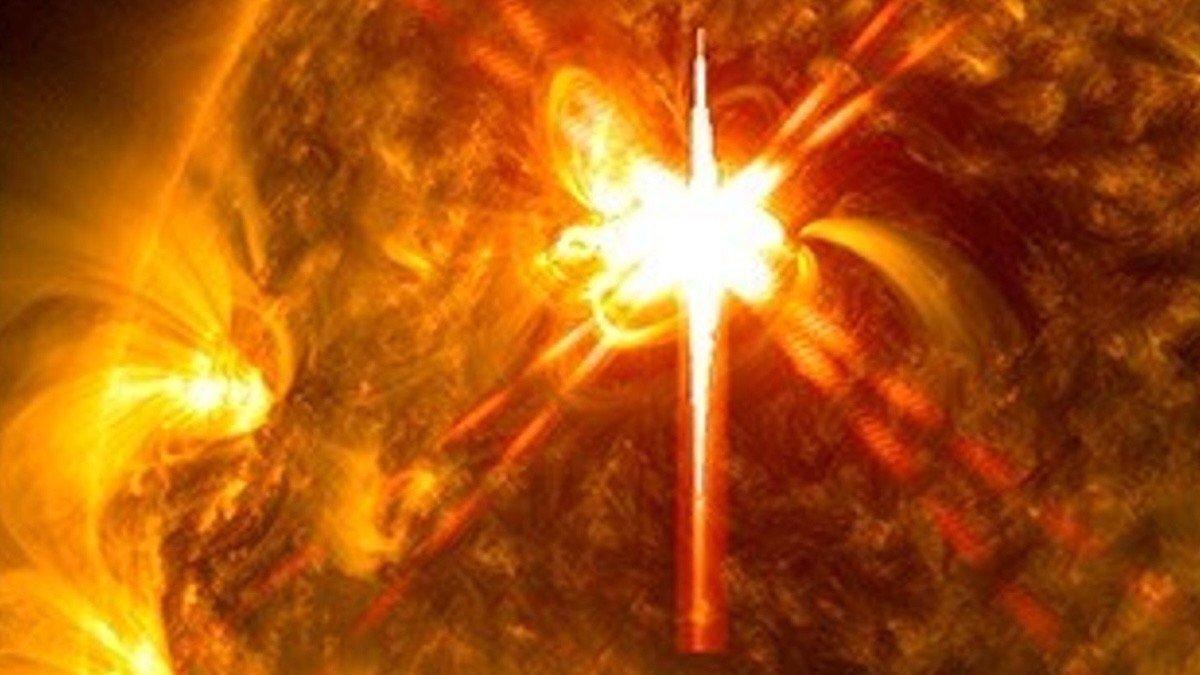
The Sun has erupted with four major solar flares in under 24 hours, raising concerns about potential disruptions to satellites, power grids, and communication systems. These events mark a period of heightened solar activity that could persist in the coming days.
Intense Flare Activity Confirmed
The first flare, an X1.0 class event, occurred at 12:33 UTC on February 1st. This was followed by an even more powerful X8.1 flare just eleven hours later, at 23:37 UTC. On February 2nd, the Sun released an X2.8 flare at 00:36 UTC, and a further X1.6 flare at 08:14 UTC.
X-class flares represent the most intense category of solar flares. The X8.1 flare was the strongest since October 2024, placing it among the top 20 most powerful flares ever recorded. These eruptions originated from sunspot region RGN 4366, which has recently rotated into an Earth-facing position.
Potential Impacts: From Auroras to Disruptions
The flares carry the risk of coronal mass ejections (CMEs) – massive expulsions of plasma from the Sun. While CMEs can trigger spectacular auroral displays (Northern and Southern Lights), they also pose a threat to technological infrastructure.
- Satellites: CMEs can damage or disable satellites, impacting navigation, communications, and weather monitoring.
- Power Grids: Large flares can induce geomagnetic currents in power grids, potentially causing widespread blackouts.
- Communications: Radio communications, including GPS signals, can be severely disrupted during intense solar events.
The Solar Cycle and Future Activity
The recent surge in solar activity aligns with the Sun’s 11-year cycle, which reached a peak in 2024. Although the cycle is expected to decline towards its next minimum around 2030, experts caution that unpredictable bursts of activity may still occur.
“If this spot group continues to evolve, remains complex, and erupts with any powerful solar flares, there could be increased chances of energetic particle events and possible even coronal mass ejections (CMEs) to watch for,” warns NOAA’s Space Weather Prediction Center.
The Sun remains unpredictable, and further flares or CMEs could impact Earth in the coming days. Monitoring space weather conditions is crucial for mitigating potential disruptions.
These flares serve as a reminder of the Sun’s power and its influence on our planet, highlighting the need for continued research and preparedness in the face of space weather events.