




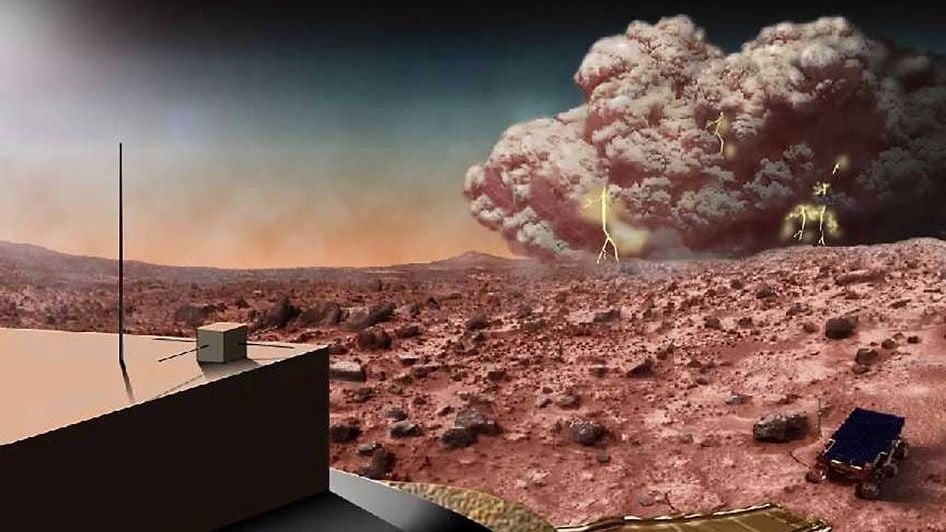
For the first time, scientists have detected faint electrical discharges – akin to miniature lightning bolts – occurring within Martian dust clouds. These findings, captured by NASA’s Perseverance rover, solve a long-standing mystery about the origin of chemical oxidants on Mars and open new avenues for understanding the planet’s atmospheric and geological processes.
The Mystery of Martian Oxidants
Since 2003, researchers have known that Mars’ surface contains unusual levels of highly reactive compounds like hydrogen peroxide. These chemicals can both destroy organic molecules (potentially wiping out evidence of past life) and create new ones through chemical reactions. The source of these oxidants has been a puzzle, but this discovery suggests electrical discharges from dust storms and dust devils are a key contributor.
How the Discovery Was Made
The electrical activity wasn’t detected by cameras or specialized sensors, but by Perseverance’s microphone. Researchers led by Baptiste Chide identified 55 distinct audio events over 29 hours of recordings, spread across two Martian years. These events begin with a sharp burst of static, followed by a rapid decline in signal strength, and then a faint but real sound from a small shockwave. The microphone doesn’t actually hear the lightning; it registers electromagnetic interference caused by the electrical discharge.
Martian Lightning: Not Like Earth’s
Unlike Earth, Mars lacks the water-rich atmosphere needed for conventional thunderstorms. Instead, the electrical discharges are generated by friction between dust particles, similar to what happens in volcanic plumes on our planet. However, Mars’ thin atmosphere and lower pressure mean that these discharges are weaker, more like the static shock from rubbing a balloon. The breakdown threshold for lightning is much lower on Mars (15 kilovolts per square meter) than on Earth (3 megavolts per square meter).
Implications for Future Missions
The discovery has practical implications for future missions. The rover team speculates that electrical discharges may have played a role in the early failure of the Soviet Mars 3 lander in 1971, which went offline after just 20 seconds. Understanding these discharges will inform the design of more resilient electronics and potentially impact the requirements for future astronaut suits.
The Hunt for Life and Oxidants
The presence of electrical discharges on Mars also affects the search for past or present life. Oxidants can destroy biosignatures, but they can also create organic molecules. Mapping the distribution of oxidants and electrical activity could help pinpoint areas on Mars where evidence of life is most likely to survive. For example, regions with less dust storm activity may harbor more stable organic compounds.
Beyond Mars: A Universal Phenomenon?
This is the first time electrical discharges have been confirmed on a rocky planet other than Earth. The same process could occur on Venus through dust activity or on Saturn’s moon Titan via icy grains. Moreover, the electrification of dust may play a crucial role in Mars’ global dust cycle, creating a feedback loop where electrical static reduces the threshold for winds to lift dust off the surface.
With thousands of regionalized dust storms every Martian year, vast stretches of electrified fronts may crackle with tiny lightning bolts. This discovery suggests that the full story of Mars’ electrical landscape is only just beginning to unfold.