




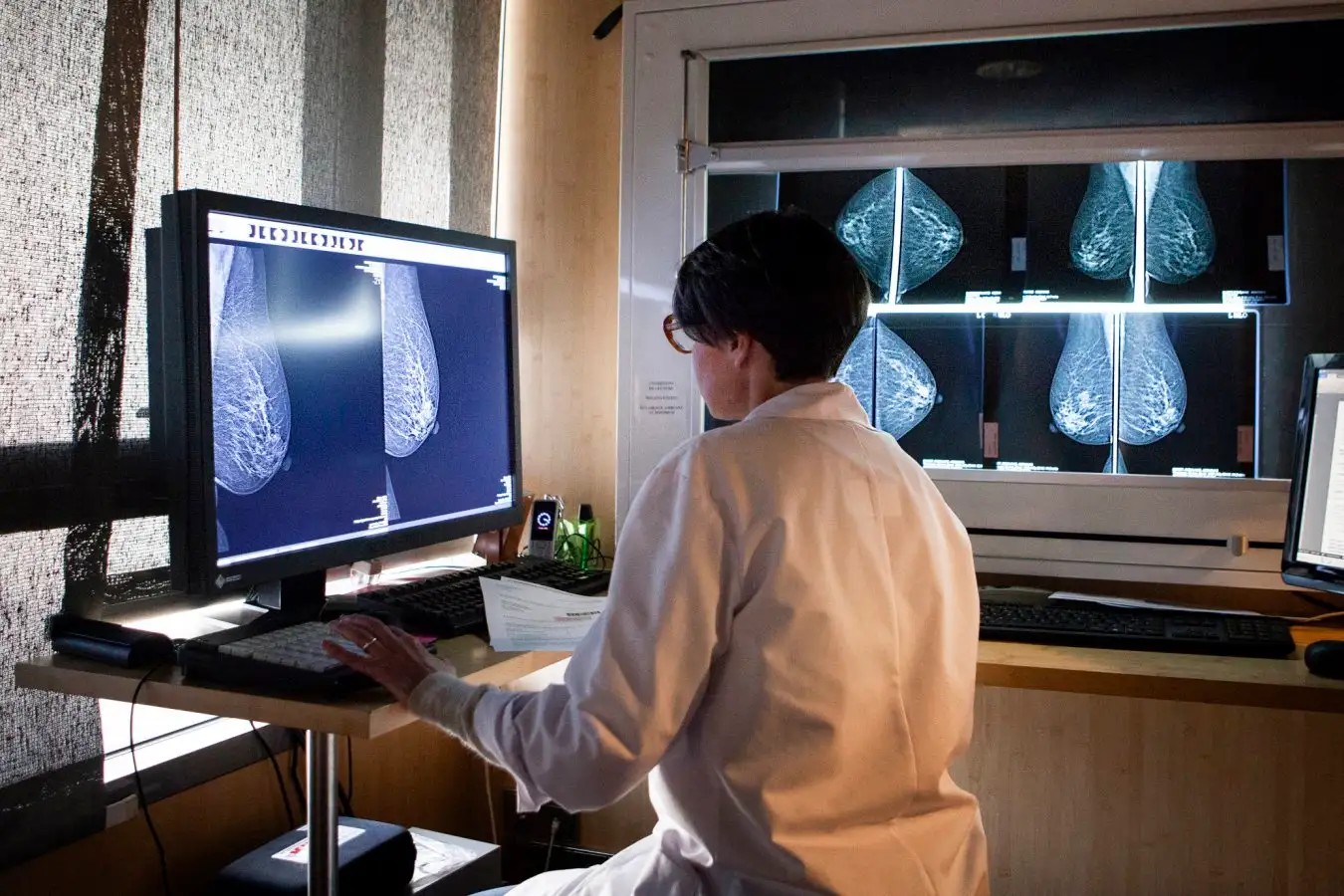
Artificial intelligence (AI) is proving effective in improving breast cancer screening, with new research showing that AI-assisted mammography reduces the likelihood of developing aggressive cancers between screenings. This marks a significant step forward in early detection, potentially saving lives by catching tumors before they become more dangerous.
The Breakthrough in Early Detection
A randomized controlled trial led by Kristina Lång at Lund University in Sweden has demonstrated that women screened with AI support are 12% less likely to develop interval cancers – those that grow rapidly between screenings and are often more aggressive. This is a key finding because interval cancers tend to spread faster and are harder to treat once detected.
The AI system, developed by ScreenPoint Medical, analyzes mammograms using a scale of 1 to 10 to assess cancer probability. Scans with higher scores (8-10) are reviewed by two radiologists, while lower-scoring scans are assessed by one. This tiered approach ensures that critical cases receive the most thorough evaluation.
How AI Improves Accuracy
Previous studies already showed that AI-assisted screening could detect 29% more cancers without increasing false positives. This latest research confirms that AI not only finds more cancers but also helps prevent the development of aggressive, fast-growing tumors. The benefit lies in AI’s ability to identify subtle indicators that human radiologists might miss at very early stages.
“The AI seems to be better at spotting cancers at a very early stage. Radiologists might overlook small tumors, but the AI can detect them,” explains Lång.
Implementation and Future Research
The AI-assisted approach is set to roll out across southwest Sweden within months, following the trial’s success. However, broader adoption will require further trials in other countries to assess its impact on diverse populations. This includes testing whether AI performs equally well across different ethnic groups and whether less experienced radiologists benefit as much.
Cost-effectiveness is another critical factor. Experts estimate that cutting interval cancer rates by at least 5% would justify the investment in AI assistance. Radiologist training will also be necessary, though the software is described as user-friendly.
The Human Role Remains Crucial
Despite AI’s advancements, human radiologists remain essential. Women undergoing screening prefer a human element in the process, and experts agree. AI should serve as a tool to enhance, not replace, the expertise of medical professionals. As Lång emphasizes, “Women want a human in the loop, and I agree. It’s a tool for radiologists.”
Conclusion: AI-enhanced mammography offers a significant improvement in breast cancer screening, reducing the risk of aggressive tumors and improving early detection rates. Widespread adoption requires further trials and cost-benefit analyses, but the potential to save lives is clear. The key is to integrate AI as a powerful tool for radiologists, not as a standalone solution.