





Paleontology continues to yield remarkable discoveries, reshaping our understanding of prehistoric life. In 2025, six significant dinosaur finds redefined what we know about these ancient creatures. These finds range from bizarrely armored herbivores to terrifying predators, offering fresh insights into dinosaur evolution, behavior, and physical capabilities.
Zavacephale rinpoche: The Oldest Dome-Headed Dinosaur
The oldest known member of the pachycephalosaur family, Zavacephale rinpoche, was unearthed in Mongolia. Dating back 108 million years, this dinosaur was only about one meter long when it died. Its skull, described as resembling a “cabochon jewel” by researchers, provides evidence of early dome-headed dinosaurs. These dinosaurs likely used their thickened skulls for head-butting contests, though the exact purpose remains debated.
Spicomellus afer: A Baroque Ankylosaur
Discovered in Morocco, Spicomellus afer is an ankylosaur unlike any other. The creature’s extreme armor was so unique that scientists struggled to describe it adequately. The team eventually settled on the term “baroque” to convey its highly ornamented and heavily armored structure. The discovery challenges previous assumptions about ankylosaur diversity and suggests a broader range of defensive adaptations in this group.
Duonychus tsogtbaatari: The Two-Fingered Scissor-Clawed Herbivore
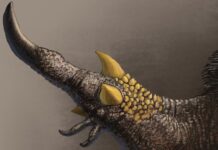
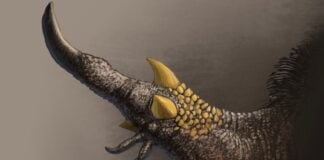
Found in the Gobi desert, Duonychus tsogtbaatari is a 90-million-year-old dinosaur with an unusual feature: only two fingers on each hand, each tipped with enormous 30-centimeter claws. Despite being herbivorous, the creature possessed formidable weaponry, potentially used for stripping foliage or defense. This discovery highlights the diverse anatomical experiments that occurred within dinosaur evolution.
Shri rapax: A Velociraptor Relative with Brutal Claws
The Gobi desert also yielded Shri rapax, a 75 to 71-million-year-old predator named for its “rapacious” claws. At two meters long, this raptor-like dinosaur was among the most dangerous predators in its environment. Its powerful claws suggest a highly aggressive hunting style, making it a formidable rival even to the famous Velociraptor.
Baminornis zhenghensis: The Earliest Known Bird?
A 150-million-year-old fossil from China, Baminornis zhenghensis, has blurred the line between birds and dinosaurs. Researchers determined that this quail-sized creature may be the earliest known bird, though the distinction is complicated by the fact that birds are dinosaurs. Its short tail, unlike the longer tail of Archaeopteryx, suggests that modern bird tail structures evolved earlier than previously thought.
Joaquinraptor casali: The Megaraptor with a Crocodile Stuck in its Jaw
Discovered in Patagonia, Joaquinraptor casali was a 66-million-year-old megaraptor armed with a forearm-sized claw. The specimen, at least seven meters long and weighing over a ton, died with a crocodile leg lodged in its jaw. This gruesome discovery underscores the brutal reality of the Cretaceous period. Despite Tyrannosaurus rex being larger, J. casali possessed stronger arms, suggesting different predatory strategies.
These discoveries in 2025 highlight the continued dynamism of paleontological research. Each new fossil challenges existing theories and expands our understanding of the prehistoric world, reminding us that dinosaurs remain one of the most fascinating and ever-evolving areas of scientific study.