

NASA’s Artemis II mission, launched April 1, isn’t just about astronauts circling the moon. Packed inside the spacecraft, alongside life support and four crew members, is a curious collection of mementos, science experiments, and symbolic objects. The items represent a blend of historical reverence, practical research, and good luck charms.
A Legacy of Lunar Ambition
The inclusion of an American flag intended for the canceled Apollo 18 mission speaks to NASA’s enduring pursuit of space exploration. The U.S. abandoned planned lunar missions decades ago, but this flag symbolizes a renewed commitment to reaching beyond Earth. Alongside it are numerous other flags, mission patches, and pins—gifts for employees and contractors who supported the Artemis II project.
From Rocket Shavings to Moon Trees
The “official flight kit” includes some surprising items. Shavings from the Space Launch System’s core stage —aluminum scraps from welding and machining—are onboard. While seemingly mundane, these fragments represent the sheer power needed to propel the spacecraft into orbit. Even more unusual are ten bags of dirt, containing soil from trees grown from seeds that flew on Artemis I. This full-circle journey from space to Earth and back highlights the long-term impact of NASA’s programs.
The tradition of bringing seeds to space dates back to Apollo 14, where a broken seed container led to the accidental creation of “moon trees.” NASA didn’t repeat the mistake this time but allowed the Canadian Space Agency to continue the practice, acknowledging that one of Artemis II’s astronauts is the first non-American on a deep-space flight. Other seeds, including zinnias and chili peppers, also made the cut.
Historical Artifacts and Cutting-Edge Science
The kit includes a one-inch square of fabric from the Wright brothers’ Flyer, loaned from the Smithsonian. This commemorates the birth of flight itself, linking human space exploration to its earliest roots. A photo negative from Ranger 7, the first U.S. mission to successfully land on the moon in 1964, adds another layer of historical significance.
Beyond symbolic items, Artemis II is carrying lab-grown astronaut tissue samples in a unique experiment. Doctors extracted blood from each crew member before launch and grew cells on thumb-drive-size chips. Studying these cells after the mission will reveal how deep-space radiation and microgravity affect human biology, potentially paving the way for personalized health kits for future astronauts.
A Plush Zero-G Indicator
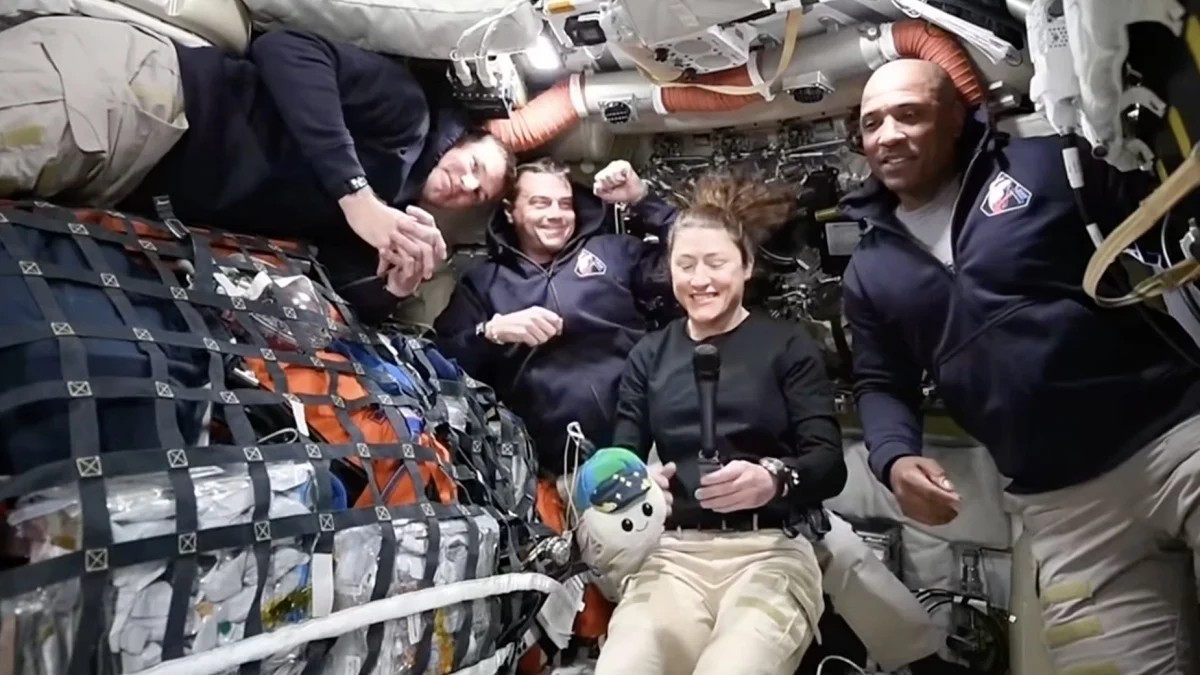
Perhaps the most endearing item is a stuffed mascot designed by eight-year-old Lucas Ye. This zero-gravity indicator, resembling the Earthrise image taken during Apollo 8, floats when the spacecraft reaches microgravity, signaling to mission control that they’ve arrived. The toy also contains an SD card with the names of people supporting the mission.
The Kennedy Space Center gift shop has temporarily halted sales of Artemis-related merchandise due to overwhelming demand, underscoring the public’s fascination with this mission.
Ultimately, the oddball cargo onboard Orion is a testament to NASA’s blend of ambition, tradition, and human curiosity. These items aren’t just souvenirs; they are tangible links between past achievements and future explorations.