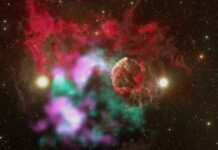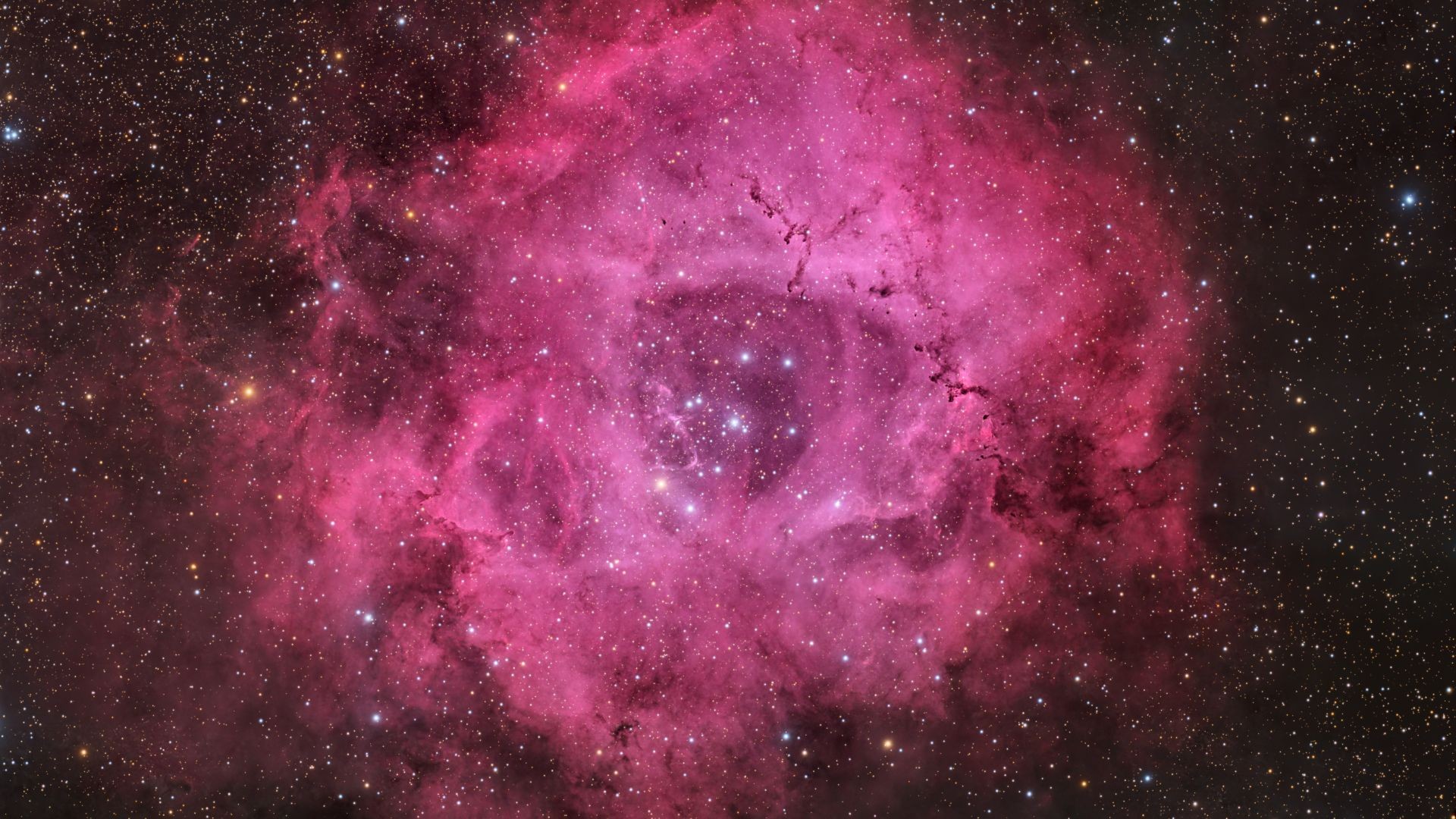
A stunning image released by astrophotographer Ronald Brecher reveals the Rosette Nebula, a vast star-forming region in the constellation Monoceros, 5,000 light-years from Earth. The nebula, captured over 10 hours of observation in 2021 and recently reprocessed with advanced software, appears as a blooming cosmic rose sculpted by the intense radiation of nearby stars.
The Scale of the Rosette Nebula
The nebula spans 100 light-years in diameter and contains a mass equivalent to 10,000 suns. This immense structure has been shaped over millennia by powerful stellar winds and ultraviolet light emitted from the open star cluster NGC 2244, which sits at its heart. The brightest stars within the cluster are true giants, some exceeding 50 times the mass of our sun.
How the Image Was Created
Brecher utilized the PixInsight astrophotography software to refine the image. This demonstrates how new technologies and increased experience can dramatically enhance existing data, revealing deeper details in cosmic phenomena. The nebula’s appearance shifts drastically depending on the wavelengths used for observation; optical views show swirling gas and dust, while ultraviolet and infrared light reveal embedded stars.
Why This Matters
The Rosette Nebula is a prime example of stellar birth and evolution. It is a stellar nursery, where new stars are born from collapsing gas and dust. Studying such nebulae helps astronomers understand how stars form, live, and eventually die. This knowledge is fundamental to understanding the broader evolution of galaxies and the universe itself.
The Rosette Nebula offers a glimpse into the raw power of nature at an unimaginable scale, reminding us of the dynamic processes constantly at play in the cosmos. It’s a reminder that even in the vast darkness, beauty and creation flourish.