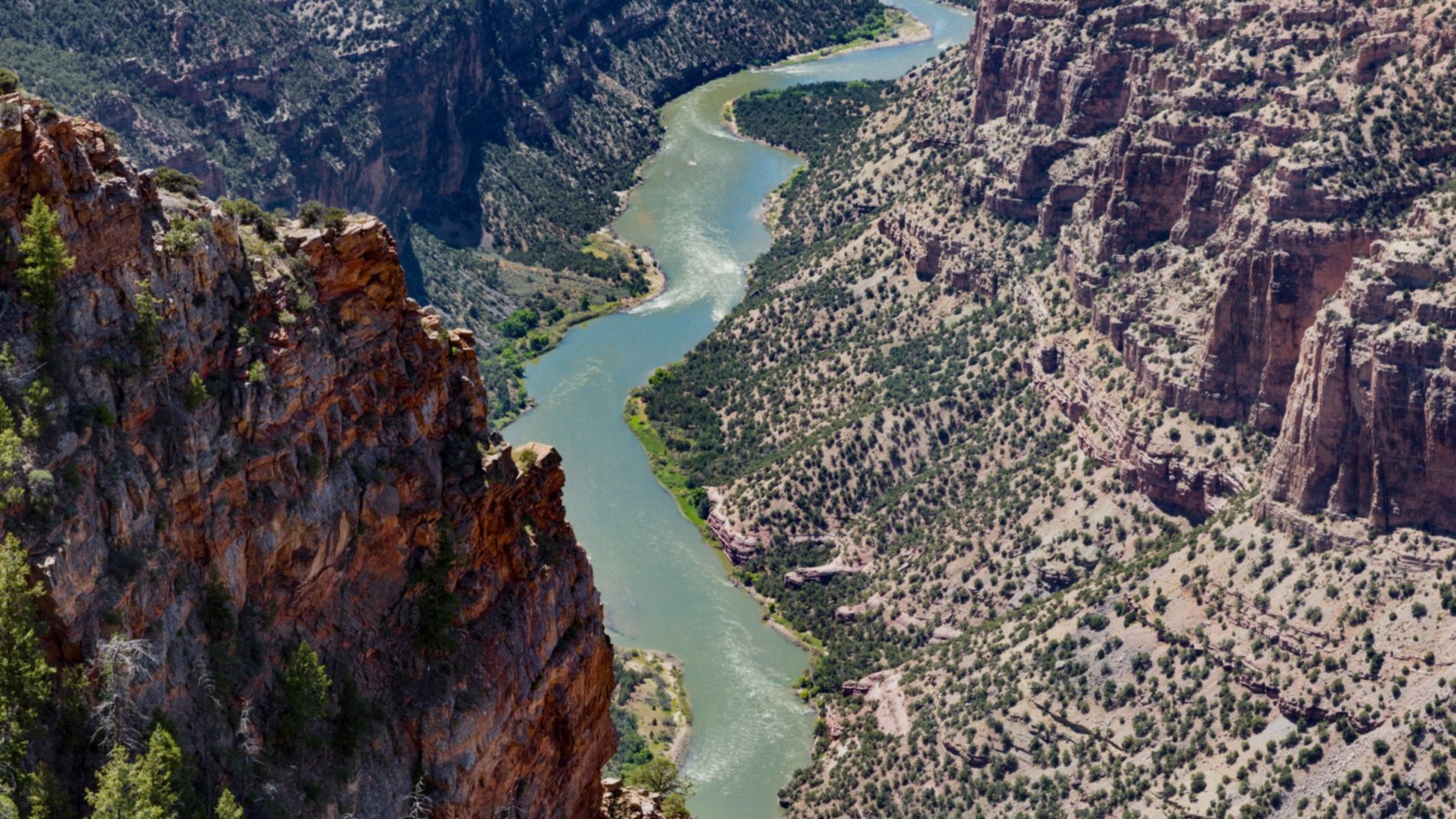
For millions of years, the Green River—the largest tributary of the Colorado River—has followed a counterintuitive path: carving through the 13,000-foot Uinta Mountains instead of flowing around them. Now, a new study suggests that this apparent defiance of gravity wasn’t due to an extraordinary river, but to the mountains themselves sinking, making the high terrain passable.
The Mystery of an Unusual River Course
Geologists have long puzzled over the Green River’s route. Formed roughly 8 million years ago (though potentially as recently as 2 million), the river cut directly through a mountain range that had already existed for 50 million years. Previous theories—a forceful southward channel cut by the nearby Yampa River, or temporary sediment buildup raising the river above the mountains—failed to fully explain the phenomenon. Neither hypothesis convincingly accounted for the sheer force required to erode such a path, or the lack of similar formations elsewhere.
Lithospheric Drips: Mountains Sinking into the Mantle
The new research, published in the Journal of Geophysical Research: Earth Surface, proposes a unique solution: the Uinta Mountains subsided due to a geological process called a “lithospheric drip.” This occurs when dense minerals accumulate beneath mountain ranges, increasing pressure at the base of Earth’s crust. Over time, these minerals form heavy blobs that detach and sink into the mantle—the layer between Earth’s crust and outer core—effectively dragging the mountains down.
This process isn’t new; evidence of lithospheric drips has been found in other regions, such as the Andes. The key indicator is a “bullseye” pattern of uplift on the Earth’s surface, which researchers found matches the unusual river profiles in the Uinta Mountains. Seismic tomography—3D maps of Earth’s interior—revealed a 120-mile-deep blob in the mantle beneath the Uintas, strongly supporting the theory.
Timing and Impact
Calculations based on the drip’s depth and size suggest it detached between 2 and 5 million years ago, coinciding with estimates of when the Green River began carving through the mountains. The sinking mountains created “the path of least resistance,” allowing the river to flow over them and continue eroding the terrain, forming structures like the Canyon of Lodore.
Why This Matters
The Green River’s unique course isn’t just a geological curiosity. It demonstrates how deep mantle processes can directly shape surface landscapes over relatively short geological timescales. Studying such events helps scientists understand how mountain ranges evolve, and the dynamic relationship between Earth’s crust, mantle, and surface features.
While the lithospheric drip hypothesis may not be the final word, as other experts suggest, it offers a compelling explanation that aligns with multiple lines of evidence. This research underscores the power of combining surface observations with deep-Earth data to unravel complex geological mysteries.