Recent research indicates that powerful quantum computers capable of breaking modern internet encryption may require as few as 10,000 qubits – a significant reduction from previous estimates of millions. This development accelerates the timeline for potential cybersecurity threats and has implications for online security, finance, and critical infrastructure.
The Threat to Encryption
For years, the assumption was that breaking widely-used encryption standards like Elliptic Curve Cryptography (ECC) and RSA-2048 would require quantum computers with millions of stable qubits. New calculations from researchers at Caltech and Oratomic suggest otherwise. A 9,988-qubit quantum computer could theoretically crack ECC in approximately 1,000 days. Scaling up to 26,000 qubits would reduce this timeframe to just one day. The RSA-2048 standard, though more resilient, could be broken with 100,000 qubits in about 10 days.
This matters because: ECC is the foundation for securing many online transactions, including those in cryptocurrencies like Bitcoin, and protects sensitive data across countless industries.
Advances in Quantum Error Correction
The shift in qubit requirements is driven by improvements in quantum error correction. Quantum bits are notoriously unstable, prone to errors that render computations useless. The development of more efficient error correction techniques – particularly quantum low-density parity check codes – dramatically reduces the number of physical qubits needed to create a reliable logical qubit.
These codes work by combining multiple faulty qubits into one stable unit, but previously required extensive qubit overhead. The new methods make logical qubits more efficient, bringing practical quantum computing closer to reality.
The Race to Quantum Supremacy
The urgency is palpable. Research from Iceberg Quantum in Sydney corroborates these findings, estimating that RSA encryption could be defeated in a week with around 100,000 qubits. Google Quantum AI has also weighed in, suggesting that a 500,000-qubit computer running for minutes could endanger cryptocurrency security.
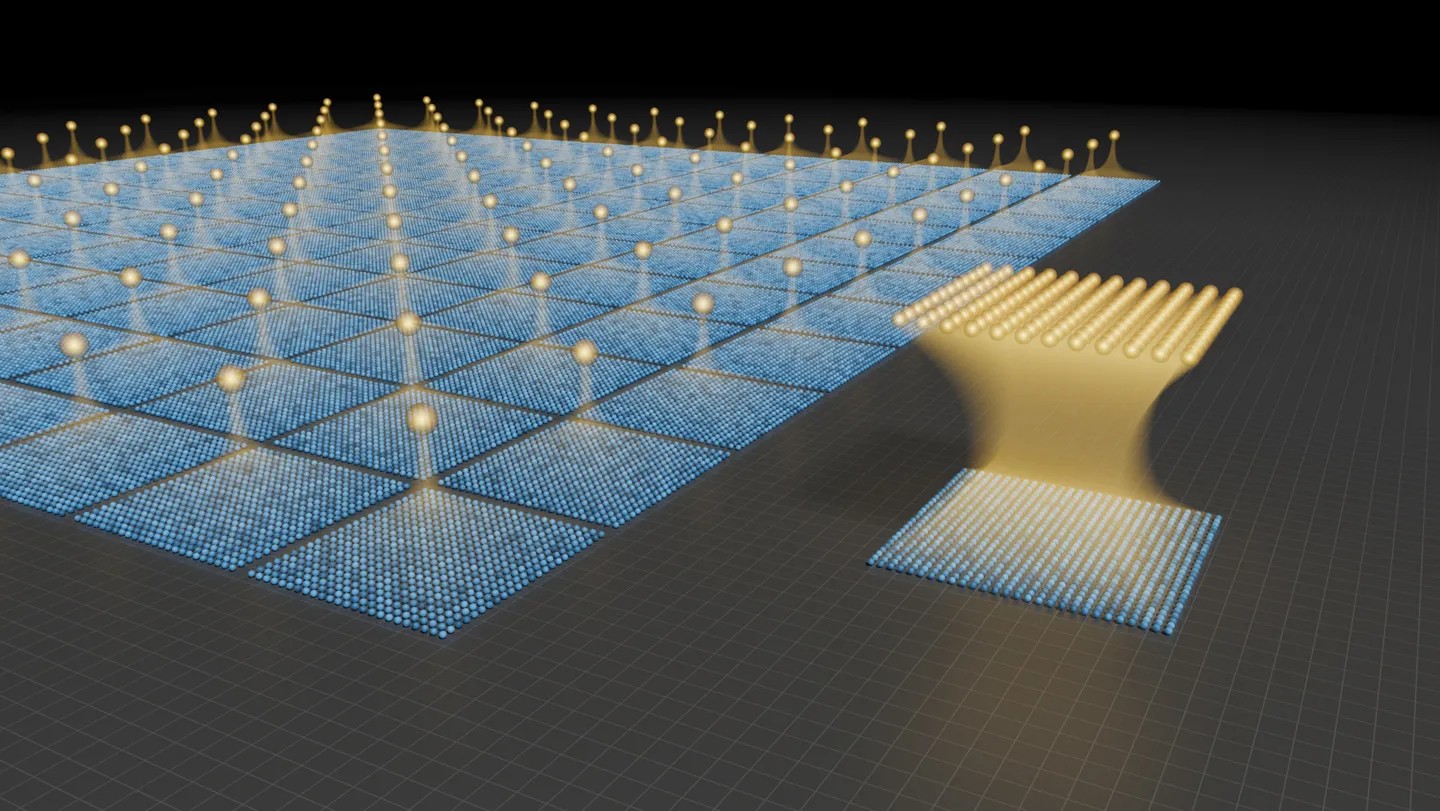
This isn’t just theoretical anymore: Oratomic’s work leverages a quantum computer design using individual atoms manipulated by lasers, enabling direct qubit interaction—a crucial element for efficient error correction. The company’s researchers believe this technology is rapidly becoming attainable.
What Comes Next
The race to build fault-tolerant quantum computers is now a critical cybersecurity challenge. While these calculations provide benchmarks, the field is still evolving rapidly.
“Putting down a number is just one step…There’s a lot of details to be worked out.” – Jens Eisert, physicist at Freie Universität Berlin
The development of quantum-resistant encryption standards is becoming paramount. As quantum computing advances, the potential for disrupting existing security protocols is no longer a distant threat, but an imminent possibility.
The implications are clear: the security landscape is shifting, and proactive measures are needed to protect critical data and infrastructure in the age of quantum computation.