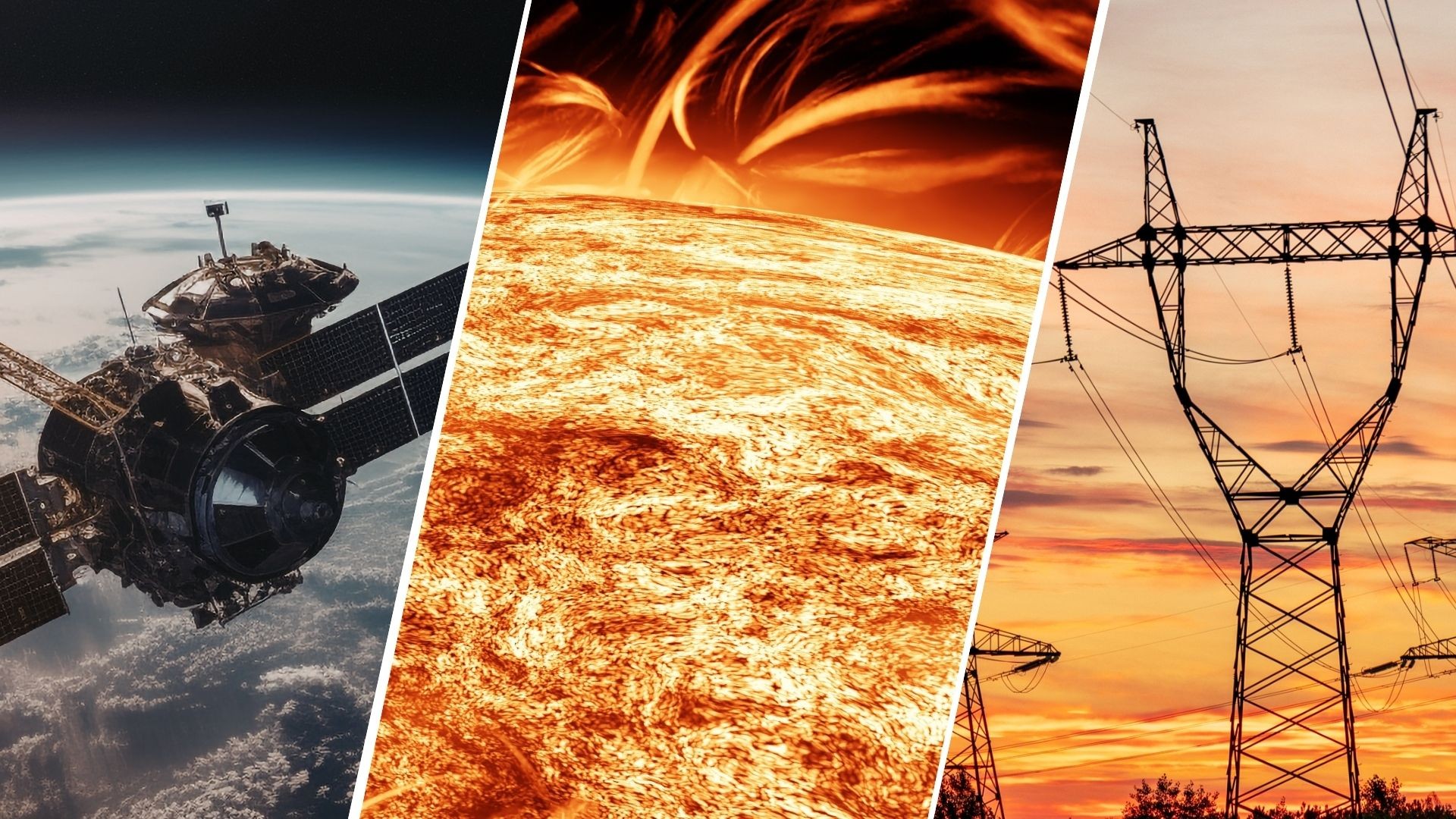
While most people check the sky for rain or snow, scientists are increasingly focused on a different kind of forecast: space weather. As our global infrastructure becomes more reliant on satellite technology and interconnected power grids, the solar activity originating from our sun poses a growing risk to the stability of modern civilization.
A recent technical report from the U.K.’s Science and Technology Facilities Council (STFC) has detailed the potential impacts of a “worst-case” solar event. Rather than focusing on once-in-a-million-year anomalies, researchers define a worst-case scenario as an event occurring every 100 to 200 years —a timeframe that makes such events a statistical reality for policymakers.
Understanding the Solar Drivers
Space weather is not a single phenomenon but a combination of three distinct solar processes, each affecting Earth differently:
- Solar Flares: Intense bursts of energy that increase ionization in the upper atmosphere, leading to immediate radio blackouts.
- Geomagnetic Storms: Caused by Coronal Mass Ejections (CMEs)—massive streams of plasma that collide with Earth’s magnetic field.
- Solar Radiation Storms: High-energy protons and electrons that travel from the sun, posing risks to both electronics and biological life.
The Vulnerability of Our Infrastructure
The report highlights three critical areas where a severe solar event could cause systemic failure:
1. Power Grid Instability
During geomagnetic storms, additional electric currents are induced in ground-based power lines. If these currents are sufficiently strong, they can trigger safety systems, leading to regional power outages. Beyond immediate blackouts, these storms can cause physical damage to transformers, causing “premature aging” that reduces the grid’s capacity for months or even years after the storm has passed.
2. Satellite Degradation and Orbital Drag
Our digital world orbits above us, and it is highly vulnerable. Extreme solar activity can damage satellite electronics and degrade solar panels, significantly shortening a spacecraft’s operational life.
Furthermore, solar flares heat Earth’s atmosphere, causing it to expand. This creates increased atmospheric drag, which slows satellites down and causes them to lose altitude. We saw a precursor to this in 2022, when heightened solar activity caused roughly 40 Starlink satellites to re-enter the atmosphere and burn up. In a worst-case scenario, this drag could make it nearly impossible to track spacecraft and space debris effectively.
3. Communication and Navigation Failures
Modern life relies on a constant stream of radio signals for everything from WiFi and mobile networks to maritime and aviation communications.
* Short-term disruptions: Solar flares can “drown out” radio signals for about an hour on the sunlit side of Earth, affecting radar and GPS.
* Long-term disruptions: Geomagnetic storms can destabilize the ionosphere—the layer of the atmosphere used to bounce long-distance signals—potentially disrupting satellite navigation for several days.
The economic stakes are high. In May 2024, a strong solar event caused a loss of satellite navigation that resulted in a $500 billion hit to the U.S. agricultural industry.
Aviation and Radiation Risks
The disruption extends to the skies. Interference in Ultra-High Frequency (UHF) and Very-High Frequency (VHF) ranges could ground flights by disrupting long-range communication for pilots.
However, grounding flights might also be a necessary safety measure. High-altitude aircrews face increased hazardous radiation exposure during these events, particularly at higher latitudes. This poses specific health risks to vulnerable groups, such as pregnant crew members, who may need to limit flight duties during peak solar activity.
The Bottom Line: While a solar storm is unlikely to cause a total “doomsday” collapse, its ability to disrupt power, communication, and transport makes it a significant threat to global economic and physical security.
As our technology becomes more sophisticated, our vulnerability to the sun’s whims grows; however, our improving ability to monitor and forecast these solar storms provides a vital window for preparation and mitigation.