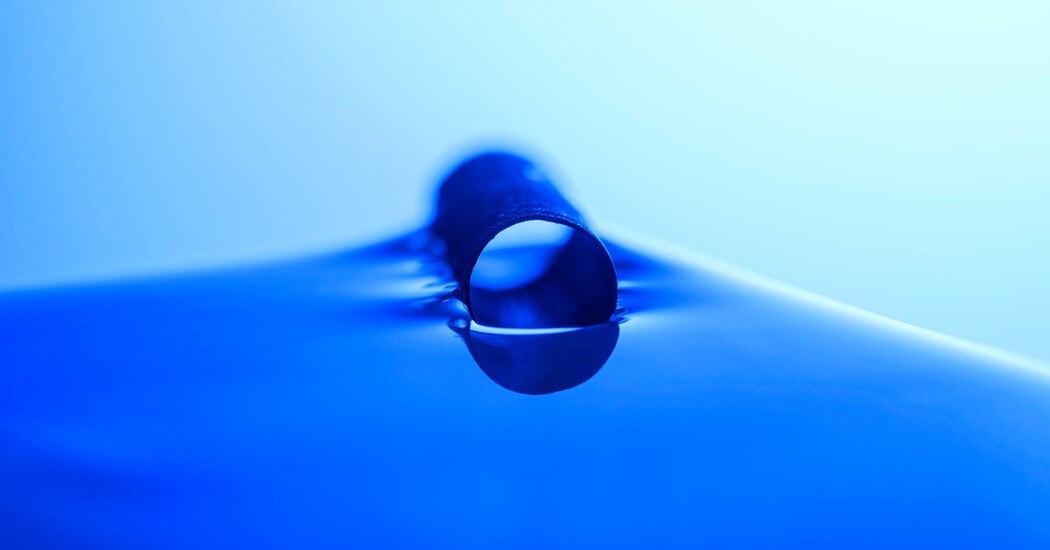
Researchers at the University of Rochester have developed a method for creating unsinkable aluminum tubes by permanently trapping air within their structure. This breakthrough could have implications for renewable energy harvesting, floating infrastructure, and even recreational applications.
The Science Behind Unsinkability
The team, led by Professor Chunlei Guo, achieved this by manipulating the surface of narrow aluminum tubes – approximately one-fifth of an inch in diameter – to create microscopic textures. These textures securely lock air bubbles inside, preventing them from escaping even when the tubes are damaged or subjected to rough conditions.
This is not merely a matter of superficial coating; the air is physically bound within the metal’s structure. The researchers found that even with punctures or significant damage, the tubes maintain buoyancy.
Potential Applications: From Energy to Recreation
The primary focus of this technology is harnessing ocean energy. By assembling these tubes into larger floating structures, it may become possible to efficiently capture energy from wave motion. The ocean remains a largely untapped resource, and this approach offers a new way to access it.
However, the applications extend beyond energy. The inherent buoyancy makes these tubes ideal for:
- Floating platforms: For research, monitoring, or even temporary structures.
- Lightweight, durable floats: For maritime safety or recreational use (like pool furniture).
- Damage-resistant buoyancy aids: Where reliable flotation is crucial.
Why This Matters: The Rise of Bio-Inspired Engineering
The success of this technique highlights a growing trend in materials science: learning from nature. The principle of trapping air for buoyancy is common in biological systems (think of water striders or buoyant algae). By mimicking these natural solutions, engineers can create materials with unprecedented properties.
This research also demonstrates the potential of surface texturing as a low-cost, scalable method for modifying material behavior. The process is relatively simple and could be applied to other metals beyond aluminum.
The development of unsinkable aluminum tubes represents a step forward in bio-inspired engineering, offering a versatile solution for buoyancy and energy harvesting. As climate change drives the need for sustainable energy sources, innovations like this will become increasingly valuable.