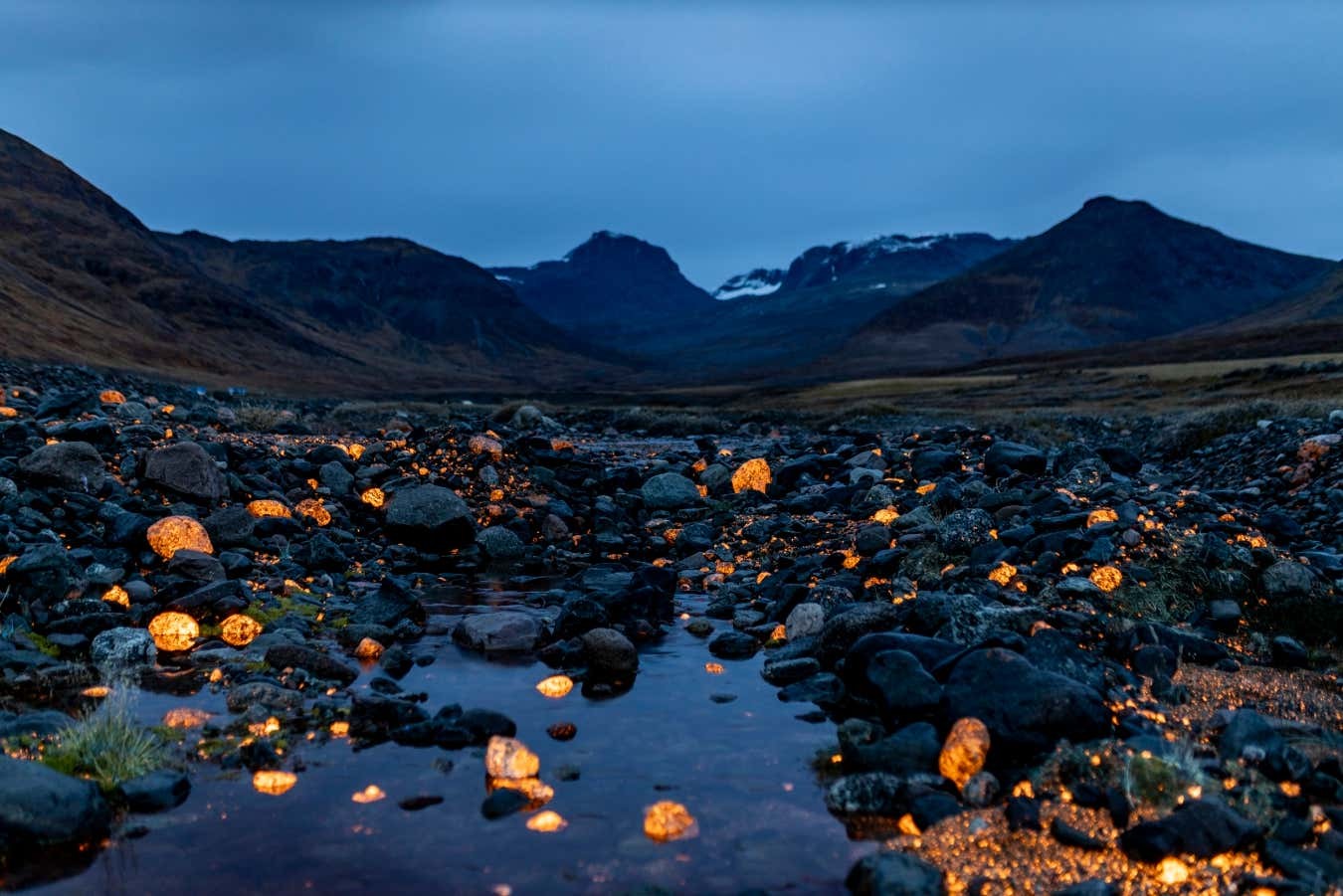
Greenland, an autonomous territory within the Kingdom of Denmark, is rapidly emerging as a critical player in the global race for rare earth elements and strategic minerals. Recent photographic documentation, including striking images of glowing sodalite at the Kvanefjeld deposit, highlights both the island’s geological wealth and the escalating international interest it attracts. This surge in attention isn’t accidental; it’s a direct consequence of rising geopolitical tensions and the West’s dependence on China for essential raw materials.
The Strategic Importance of Greenland’s Resources
Currently, approximately 90% of rare earth elements and minerals used in vital technologies – from electric vehicle batteries to defense systems – originate from Chinese mines. This creates a significant vulnerability for Western nations seeking to diversify their supply chains. Greenland, however, holds substantial reserves: 25 of the 34 minerals identified by the European Commission as critical raw materials are present on the island.
The Kvanefjeld site is particularly noteworthy. While the sodalite itself isn’t commercially valuable, its presence indicates a rich deposit of the very minerals needed to transition away from fossil fuels and support the growing demand for green technologies. Other sites, like the Amitsoq graphite mine (one of the world’s largest), further solidify Greenland’s position as a potential game-changer in the resource landscape. The EU has already designated Amitsoq as strategically important, paving the way for financial backing.
Political Complexities and Local Concerns
Greenland’s newfound significance has not gone unnoticed by major powers. Former U.S. President Donald Trump publicly floated the idea of purchasing the island, while other nations quietly assess their own options. This external pressure coincides with growing local aspirations for full independence from Denmark. Many Greenlandic political parties reject integration into the U.S., adding another layer of complexity to the situation.
The island’s economy currently relies heavily on fishing (90% of export revenue), but large-scale resource extraction could fundamentally reshape its financial future. However, this potential wealth comes with environmental risks. Many of Greenland’s valuable minerals are mixed with radioactive uranium, raising concerns about contamination and long-term ecological damage. Locals are grappling with whether the economic benefits outweigh these potential drawbacks.
The Future of Greenland’s Role
Greenland’s sudden prominence on the global stage is a direct result of its geological assets and the escalating competition for strategic resources. The island’s residents find themselves at the center of an international tug-of-war, while their pursuit of independence and economic self-sufficiency is increasingly intertwined with external geopolitical forces.
The long-term consequences of this dynamic remain uncertain, but one thing is clear: Greenland’s mineral wealth will continue to draw global attention, shaping its political trajectory and environmental fate for years to come.