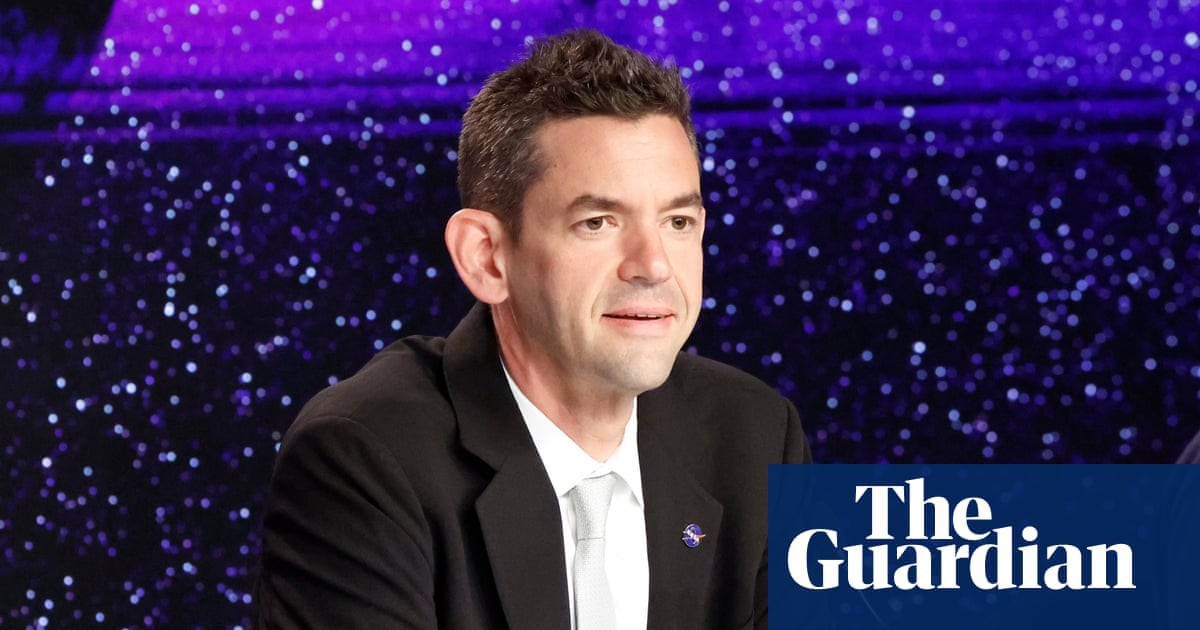
The pursuit of extraterrestrial life is not merely a matter of curiosity; it is a fundamental driver of modern space exploration. According to NASA Administrator Jared Isaacman, the question of whether we are alone in the universe is “inherent in every one of our scientific endeavors.”
The Cosmic Scale: Why the Odds Favor Discovery
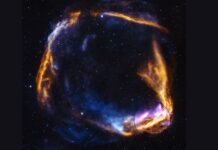
While Isaacman noted that his own experiences in space have yielded no evidence of intelligent life, he grounded his optimism in the sheer scale of the cosmos. With an estimated two trillion galaxies in the observable universe, each containing countless star systems, the statistical probability of finding biological signatures elsewhere is significant.
To facilitate this search, NASA is looking toward the lunar surface. Plans for a potential base at the Moon’s south pole include the deployment of advanced telescopes designed to peer deeper into the universe than ever before. This transition from Earth-based observation to lunar-based infrastructure represents a critical shift in how humanity will attempt to “unlock the secrets of the universe.”
Artemis in Motion: A Milestone for Lunar Exploration
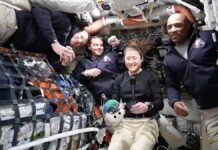
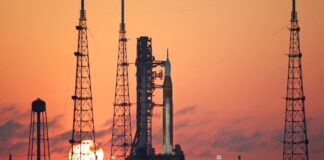
Isaacman’s remarks coincided with a pivotal moment for the Artemis mission, the first major lunar endeavor since 1972. The Orion spacecraft is currently performing a high-stakes circumnavigation of the Moon.
Key details of the mission include:
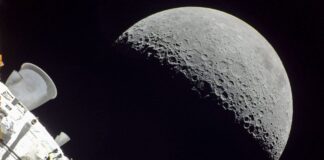
– Proximity: The crew recently reached a point where they were closer to the Moon (110,700 miles) than to Earth (169,000 miles).
– Trajectory: The capsule is set to loop around the far side of the Moon—a major technical milestone—before slingshotting back toward Earth.
– Expected Arrival: The crew is scheduled to return to Earth this coming Friday.
The Unglamorous Side of Space: The Challenge of Life Support
While the search for alien life captures the public imagination, the reality of long-term space travel often hinges on much more mundane, yet critical, engineering challenges: human waste management.
During the mission, the Orion spacecraft encountered a fault with its $30 million Universal Waste Management System (UWMS). This vacuum-based system is essential for deep-space travel, using suction to separate urine—which is vented into space—from fecal matter, which is stored in canisters for return to Earth.
Isaacman provided a candid perspective on the difficulties of spaceflight:
“Throughout the history of human spaceflight… the toilet working is almost a bonus capability. Of all the extraordinary things in space right now, a working bathroom remains elusive.”
Despite the technical glitch, NASA confirmed that the system is back to normal operations. The spacecraft utilizes redundant backup systems, including secondary vent lines, to ensure the crew remains safe and comfortable. This highlights a recurring theme in space exploration: the most profound scientific goals are entirely dependent on mastering the most basic biological necessities.
Conclusion
NASA is currently balancing two vastly different scales of exploration: the grand, philosophical quest to find life among trillions of galaxies, and the gritty, technical struggle to maintain basic human life support in the vacuum of space.