


In the traditional view of physics, liquids flow and solids break. However, a groundbreaking study has challenged this fundamental distinction, revealing that simple liquids can undergo sudden, violent fractures when subjected to extreme force.
This discovery, made through a collaboration between researchers from Drexel University and ExxonMobil, suggests that the boundary between fluid and solid behavior is more porous than previously understood.
The “Snapping” Discovery
The phenomenon was discovered almost by accident. While conducting experiments on how viscous (thick) liquids respond to intense mechanical forces, researchers were startled by a loud, sudden snapping sound.
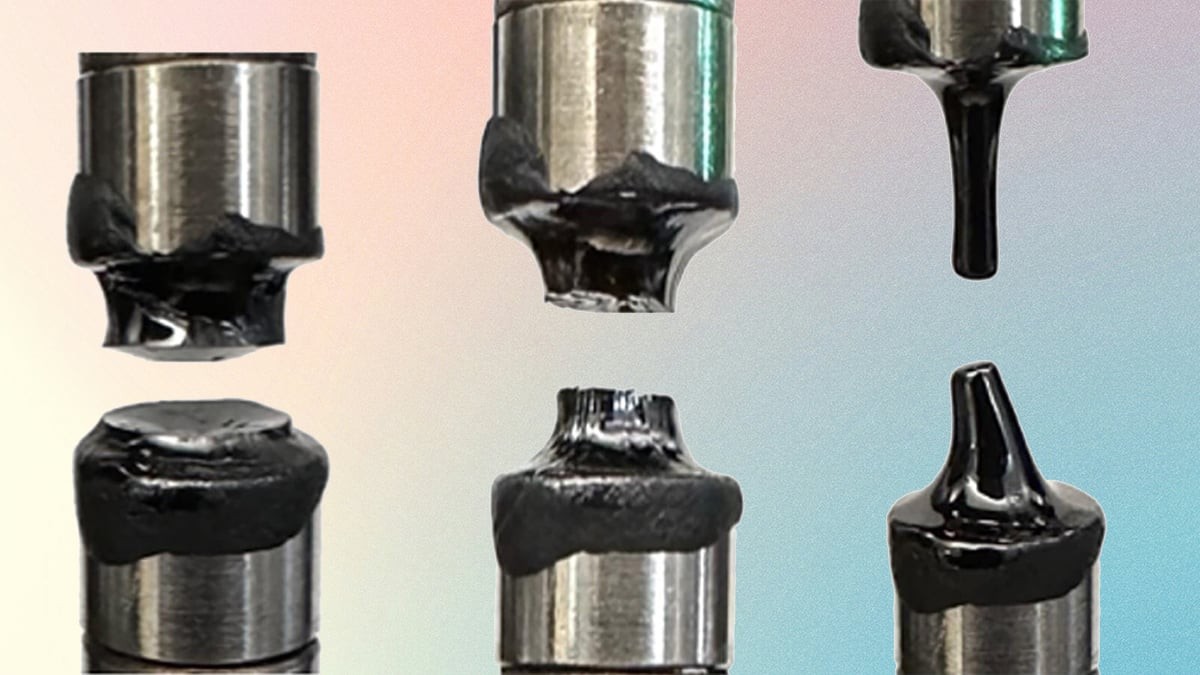
Initially suspecting equipment failure, the team—including chemical engineers Thamires Lima and Nicolas Alvarez—repeated the experiments to confirm the results. They discovered that under specific conditions, a liquid does not just stretch or flow; it reaches a “critical stress” point and snaps.
Key experimental details:
- The Force: The fracture occurred when the liquid was pulled with a force equivalent to a heavy bag of bricks hanging from an area no larger than a fingernail.
- The Materials: The team observed this in a tar-like hydrocarbon blend and a styrene oligomer.
- The Speed: Once the fracture begins, it moves at an incredible velocity—between 500 and 1,500 meters per second.
Why This Happens: The Role of Cavitation
While it has long been known that certain substances can be made to crack through extreme cooling or specific chemical mixing, this research focuses on simple liquids. The researchers believe this property may be universal, potentially applying to common substances like water and oil.
The leading theory behind this rapid breaking is a phenomenon known as cavitation. Scientists hypothesize that when enough stress is applied to the liquid, tiny vacuum bubbles form within the fluid. These bubbles act as internal structural failures, causing the liquid to tear apart almost instantly.
Why This Matters: From Robotics to Biology
This discovery is not merely a laboratory curiosity; it has significant implications for how we manipulate matter in the real world. Understanding the “breaking point” of fluids allows for more precise control in several high-tech industries:
- 3D Printing & Inkjet Technology: Precise control over how liquids flow and break is essential for high-resolution printing.
- Soft Robotics: Engineers designing robots that mimic biological movements can better predict how hydraulic or fluid-based systems will behave under pressure.
- Industrial Manufacturing: The findings could improve processes like fiber spinning, where viscous liquids are transformed into solid strands.
- Biological Systems: Understanding how fluids fracture under stress may provide new insights into the mechanics of the human body and cellular environments.
“Our findings show that if pulled apart with enough force per area, a simple liquid… will reach what we call a point of ‘critical stress’, when it will actually fracture like a solid.” — Thamires Lima, Drexel University
Looking Ahead
The next phase of research will focus on the underlying mechanics of these fractures and how they manifest in diverse environments outside of controlled laboratory settings. As measurement tools become more sophisticated, the scientific community is beginning to uncover hidden complexities in substances we once thought were simple.
The discovery of liquid fracturing redefines our understanding of fluid mechanics, opening new doors for engineering precision in everything from advanced manufacturing to medical technology.