





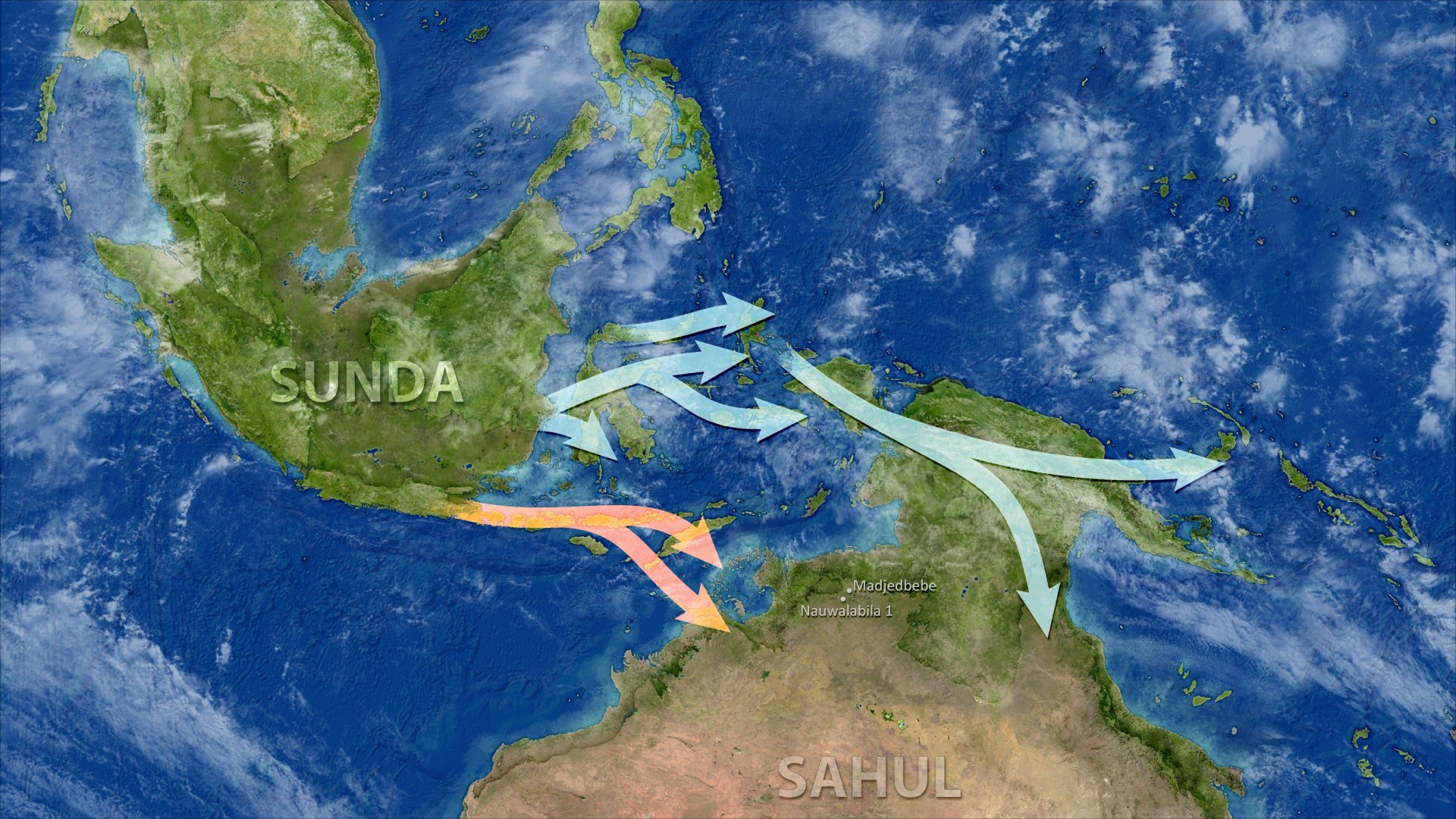
A comprehensive new genetic analysis confirms that modern humans reached Australia approximately 60,000 years ago – significantly earlier than some previous estimates. The research, published in Science Advances, resolves a long-standing debate about the timing of this pivotal migration and reveals that the first arrivals followed two distinct routes.
The Long-Standing Debate
For decades, archaeologists and geneticists have argued over when humans first settled Australia. The “short chronology” suggests an arrival between 47,000 and 51,000 years ago, while the “long chronology” posits an earlier date, between 60,000 and 65,000 years ago. Reaching Australia required seafaring capabilities, as it was separated from mainland Asia by water even during periods of lower sea levels. The question isn’t just about dates; it’s about understanding the cognitive and technological skills of early Homo sapiens.
New Genetic Evidence
The study analyzed DNA from nearly 2,500 individuals, including both ancient and contemporary Aboriginal Australians, to reconstruct the migration patterns. Researchers focused on genetic divergence times, using a molecular clock approach to estimate when populations split from one another. Their findings decisively support the “long chronology.”
The analysis reveals that the first settlers came from the ancient landmass of Sunda (modern-day Indonesia, Malaysia, and the Philippines) to Sahul (Australia, Tasmania, and New Guinea). This migration wasn’t a single event but rather two separate waves: one from northern Sunda (the Philippine archipelago) and another from southern Sunda (the Indonesian islands).
Implications for Human History
This research has several key implications. First, it establishes Aboriginal Australians and New Guineans as possessing the oldest continuous genetic heritage outside of Africa. Second, it highlights the early development of maritime skills in Homo sapiens, predating clear archaeological evidence of seafaring technology.
Finally, the study suggests that these early pioneers likely interbred with archaic human species, including Homo longi, H. luzonensis, and the diminutive H. floresiensis (“the hobbit”). The extent of this interbreeding remains unclear, but it underscores the complex interactions between modern and archaic humans during this period.
“This data supports a really deep heritage for these communities… it tells of the close links people have had with Country and Sea Country for at least 60,000 years.” – Helen Farr, archaeologist at the University of Southampton.
The evidence now firmly points to a much earlier human presence in Australia than previously thought, reinforcing the deep ancestral connection between Aboriginal people and their land.