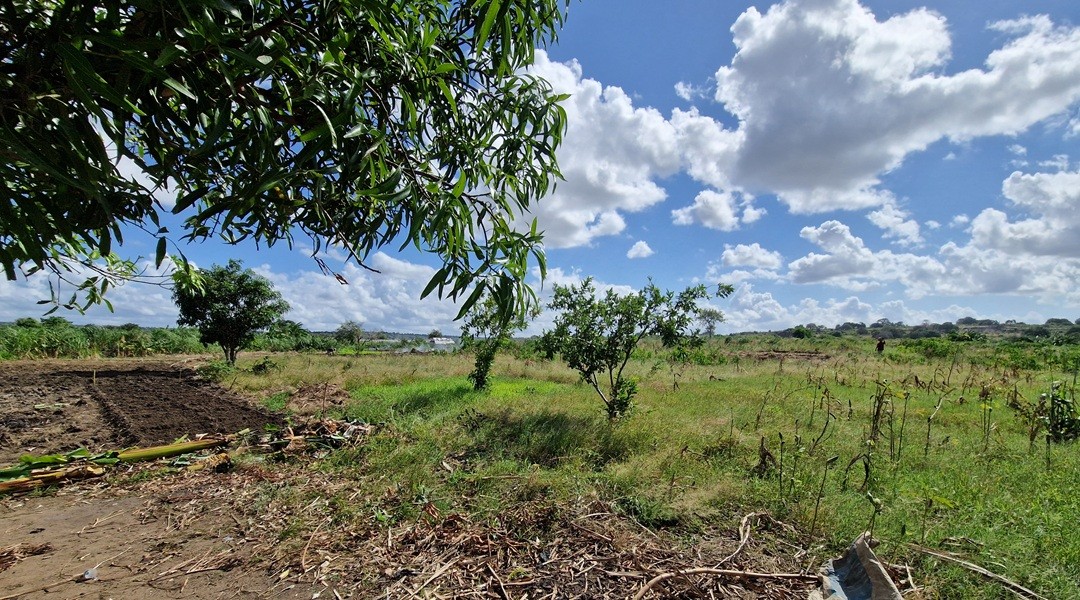
Mozambique possesses vast arable land and a wealth of renewable resources, yet much of its agricultural potential remains locked behind systemic challenges. In rural areas, a critical cycle of scarcity persists: a lack of reliable energy prevents the operation of water pumps, while water shortages stall agricultural productivity.
A collaborative research initiative is now working to break this cycle by reimagining agricultural waste —the leftover plant material from harvests—not as refuse, but as a vital resource for local energy and water solutions.
A Data-Driven Approach to Rural Realities
Researchers from the University of Bologna, in partnership with the NGO International Association of Lay Volunteers (LVIA), are conducting a specialized study in Mozambique’s Nampula province. Unlike traditional studies that rely solely on broad satellite imagery or national statistics, this team is using a more granular, human-centric method.
The research team is combining:
– Direct Interviews: Engaging smallholder farmers and small processing enterprises to understand their specific needs regarding crops like maize, cassava, millet, cashews, beans, and rice.
– Geographic Information Systems (GIS): Mapping the precise GPS coordinates of farms to track production levels and residue availability.
– Lived Experience: Integrating “informal” data—the everyday practices and small-scale activities that official government records often overlook.
“This approach connects technical maps with people’s lived experiences, making the results more realistic and useful for planning on the ground,” explains Francesca Valenti, a professor at the University of Bologna who led the study.
Solving the “Biomass-Water Mismatch”
One of the most significant findings of the research is the identification of spatial mismatches. Through GIS heat maps, researchers discovered that the availability of agricultural waste (biomass) does not align perfectly with where water is most needed.
This imbalance presents a logistical hurdle. If a bioenergy system is built in an area with high water stress but little agricultural waste, the technology becomes useless. Conversely, if waste is located far from where energy is needed, the cost and carbon emissions required to transport that waste can negate the environmental benefits.
Why this matters:
In the context of climate change, where rainfall patterns in Mozambique are becoming increasingly unpredictable, these mismatches mean that “one-size-fits-all” infrastructure projects are likely to fail. Effective planning must account for the specific distance between resource supply and local demand.
The Path Toward Decentralized Solutions
To bridge these gaps, the researchers suggest moving away from massive, centralized power plants and toward small-scale, decentralized systems that communities can manage themselves. Promising interventions include:
- Biogas systems: Converting organic waste into cooking or heating fuel.
- Composting: Using residues to restore soil health and improve crop yields.
- Integrated Water–Energy Hubs: Localized centers that manage both water and energy needs in one ecosystem.
Overcoming Implementation Barriers
While the technical potential is clear, the transition from research to reality faces significant obstacles. The study highlights a lack of investment, a shortage of technical expertise, and a disconnect between the water, energy, and agricultural sectors.
For these solutions to take root, they must be:
1. Low-cost to ensure accessibility for smallholder farmers.
2. User-friendly to allow for local operation.
3. Supported by community training to ensure long-term sustainability.
By shifting the perception of agricultural residue from a waste problem to a resource opportunity, Mozambique can foster a more inclusive and climate-resilient rural economy.
Conclusion: By using precise spatial mapping to align agricultural waste with water and energy needs, researchers aim to provide a blueprint for localized, sustainable development that empowers Mozambique’s rural communities.