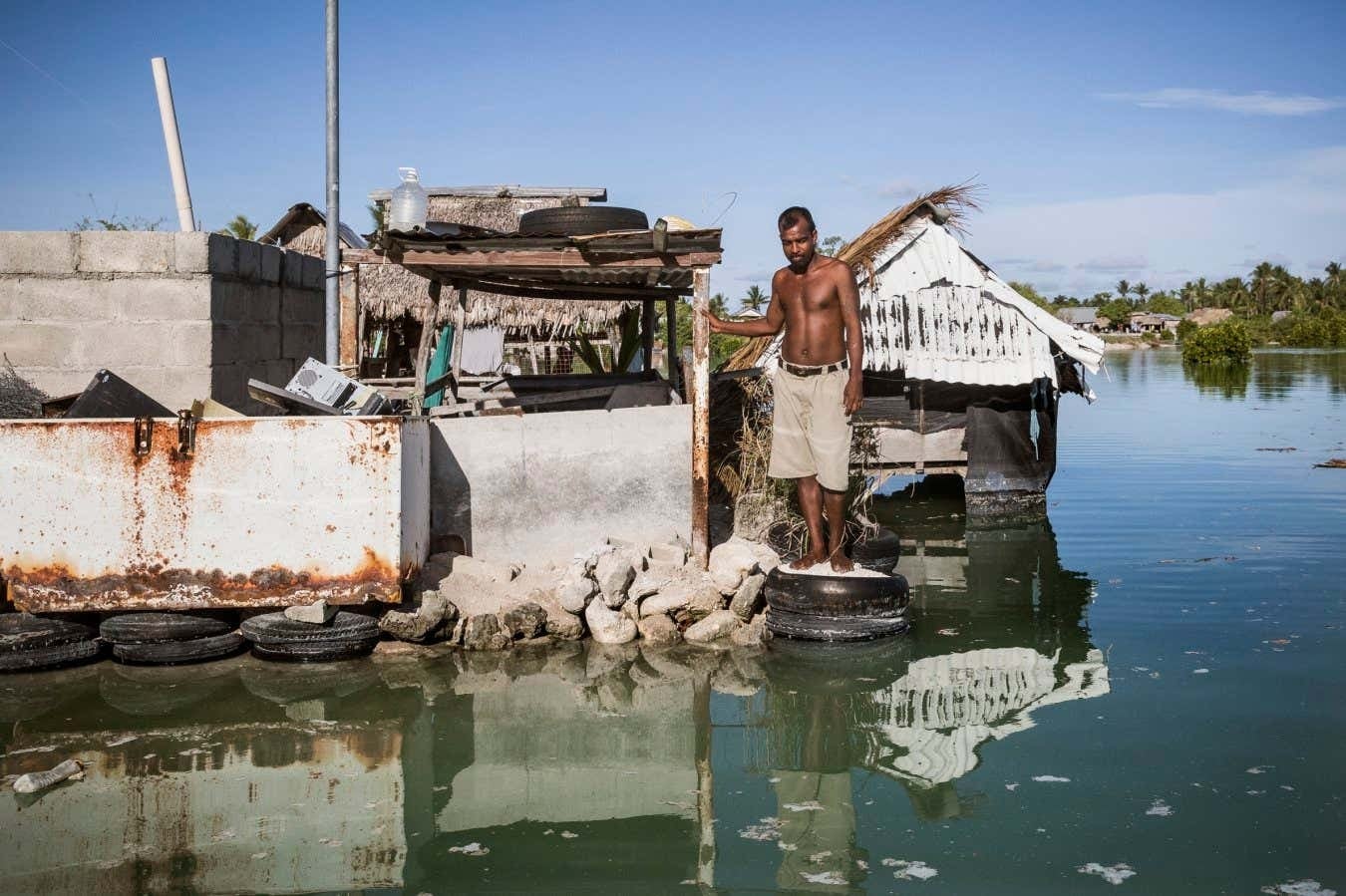
The rising tides are no longer a distant threat for communities across the Pacific Islands. On low-lying atolls like Sikaiana in the Solomon Islands, saltwater intrusion contaminates drinking water and farmland, while intensifying storms devastate livelihoods. The situation is dire: some projections suggest Tuvalu could be submerged entirely by the end of the century.
This isn’t just about future risks; it’s a present crisis forcing displacement, but also sparking innovative adaptation strategies. While many are leaving, others are pioneering solutions that combine traditional knowledge with modern science – restoring mangroves, altering farming techniques, and preparing for a dramatically changing world. The question remains whether these efforts will be enough to sustain island life.
The Escalating Climate Crisis
The urgency stems from a rapidly warming planet. Despite the Paris Agreement’s goal of limiting warming to 1.5°C, greenhouse gas emissions continue to rise, making that target increasingly unreachable. The consequences are already being felt worldwide, but Pacific Island nations – with average elevations just meters above sea level and 90% of populations living near the coast – are uniquely vulnerable. Sea levels in the region are rising at twice the global average, accelerating coastal erosion, saltwater intrusion, and extreme weather events.
The Human Cost of Climate Change
Beyond physical destruction, climate change is unraveling cultural foundations. Relocated communities in Kiribati and Tonga grieve the loss of ancestral lands, with some returning illegally to their submerged homes. Migration routes, like the Australian program for Tuvaluans, offer practical solutions but inflict deep trauma.
The crisis is also exacerbating existing vulnerabilities. Food insecurity is rising as warming oceans deplete fish stocks and saltwater ruins crops. Stronger cyclones repeatedly destroy infrastructure, forcing endless cycles of rebuilding. Mosquito-borne diseases are spreading as temperatures rise, and freshwater supplies are dwindling due to droughts.
Local Solutions, Global Lessons
Despite the challenges, Pacific Islanders are not passively waiting for disaster. Nature-based interventions, such as mangrove restoration, offer promising but imperfect solutions. Projects in Fiji have shown success in stabilizing coastlines and restoring ecosystems, though implementation requires expertise and sustained funding.
Innovative tools like the Kakau Dashboard in Palau help farmers adapt to erratic weather by providing crop-specific guidance based on local forecasts. Early warning systems for dengue fever outbreaks are also being developed to mitigate the spread of disease. These initiatives highlight the importance of hyper-local data collection and culturally sensitive approaches.
The Need for Urgent Action
The biggest obstacle remains financing. The Pacific region has received less than 0.22% of global climate funds, despite bearing disproportionate impacts. The International Court of Justice has recognized a legal duty for states to protect the climate and assist vulnerable nations, but commitments remain insufficient.
To preserve the habitability of these islands, the world must provide substantial, timely support. This includes increased funding for adaptation measures, technical assistance tailored to local contexts, and a commitment to drastically reduce global emissions. The fate of Pacific Island nations isn’t just a regional issue; it’s a test of humanity’s ability to address a shared crisis before it’s too late.