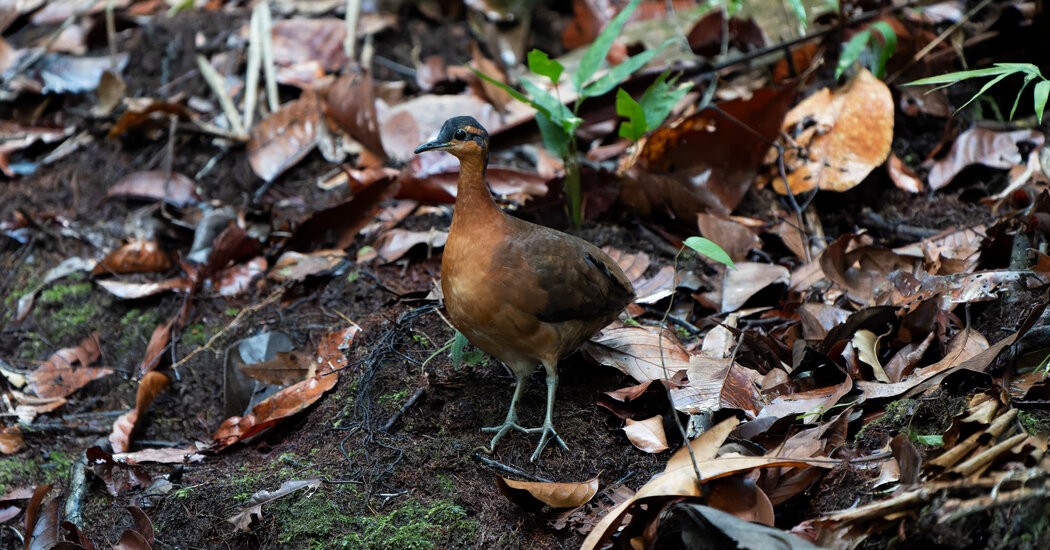
A newly discovered bird species in the remote Amazon rainforest, the slaty-masked tinamou, exhibits a striking lack of fear towards humans—a trait that researchers warn could lead to its rapid extinction, mirroring the fate of the infamous dodo. The comparison isn’t metaphorical; the tinamou’s behavior closely resembles historical accounts of the dodo’s naiveté, making it uniquely vulnerable.
The Dodo Parallel: Why Fearlessness Matters
The dodo, a flightless bird endemic to Mauritius, was driven to extinction in the 17th century shortly after Dutch settlers arrived. Its lack of fear meant it was easily hunted, and its inability to fly left it defenseless against introduced predators. The slaty-masked tinamou, similarly, displays no aversion to human presence. This isn’t just a behavioral quirk; it’s an ecological liability in a world where human encroachment is a primary driver of species loss.
A Bird Unlike Any Other
Discovered in the Serra do Divisor mountains of western Brazil, the tinamou stands out even among its relatives. While most tinamous are shy and camouflaged, this species boasts vivid cinnamon-rufous plumage with a distinctive dark stripe across its eyes. More importantly, the birds approach humans with alarming calmness, sometimes walking directly up to researchers. This behavior is so unusual that scientists spent three years just confirming the bird’s existence after first detecting its unique call in 2021.
The Haunting Song of a Threatened Species
The tinamou’s vocalizations are as unusual as its temperament. Unlike the simple whistles and trills of other tinamous, this species emits complex, ascending calls that distort a listener’s perception of distance. These haunting melodies further underscore the bird’s distinctiveness, but also highlight its isolation—and thus, its vulnerability.
The slaty-masked tinamou is not merely an oddity; it’s a species on the brink. Its lack of fear, combined with its limited range and the growing pressures of deforestation, makes it a living echo of the dodo’s tragic fate. Conservation efforts must now focus on protecting its habitat and mitigating human-wildlife conflict before this unique bird disappears forever.