



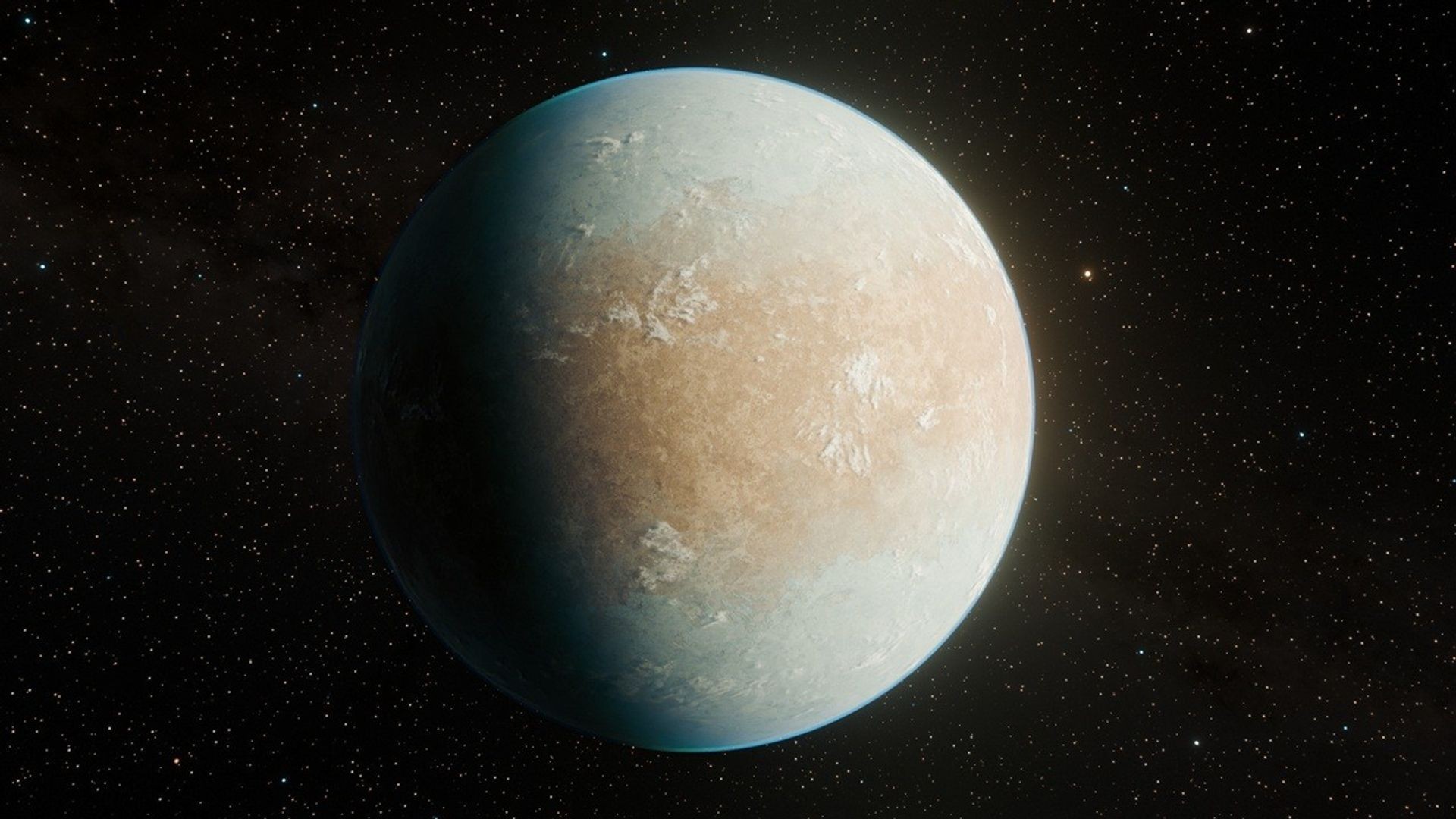
Astronomers have identified a potential rocky exoplanet, dubbed a ‘cold Earth,’ orbiting a star 146 light-years from our solar system. While its existence remains unconfirmed, the planet – designated HD 137010b – orbits within the outer limits of its star’s habitable zone, raising questions about its potential for liquid water and even life.
Discovery and Uncertainties
The candidate planet was found while reviewing archival data from NASA’s Kepler Space Telescope’s K2 mission. The discovery isn’t definitive yet; scientists have only detected one instance of the planet passing in front of its star (a “transit”), making confirmation difficult.
HD 137010b orbits a K-type dwarf star, smaller and cooler than our Sun, receiving only 29% of the solar energy Earth does. Estimates suggest a diameter only slightly larger than Earth’s, with an orbital period of roughly 355 days. However, these figures carry significant uncertainty: the true conditions on the planet’s surface remain unknown.
The Habitable Zone Question
Based on current data, the planet likely has a frozen surface unless it possesses a dense atmosphere. Without an atmosphere, surface temperatures would average –90°F (-68°C), comparable to Mars.
The crucial point is that its location at the edge of the habitable zone makes it a borderline case. Whether it’s truly habitable depends on atmospheric composition and potential internal heat sources. There’s a 40% chance it falls within the conservative habitable zone, where greenhouse effects and carbon dioxide levels play a key role. Conversely, there’s a 51% chance it resides in the wider, optimistic habitable zone – where geothermal activity could keep it warm. The remaining 50% chance is that it falls entirely outside of the habitable zone.
Future Observations
The brightness of HD 137010b’s host star offers a rare opportunity for detailed atmospheric analysis. Instruments like the James Webb Space Telescope could detect atmospheric molecules by analyzing light filtering through the planet’s atmosphere during transits.
However, because its orbital period is about 355 days, transits are infrequent, making precise timing crucial. Upcoming missions like NASA’s TESS, ESA’s CHEOPS, and especially ESA’s PLATO (launching in 2026) could provide the necessary observations.
The potential for HD 137010b to harbor a habitable environment hinges on its atmosphere. A substantial amount of carbon dioxide could trap enough heat to allow for liquid water on the surface.
This discovery highlights the ongoing search for potentially habitable worlds beyond our solar system, and the challenges of confirming their existence with limited observational data. While HD 137010b remains a “maybe” planet for now, it represents a valuable target for future exploration.