


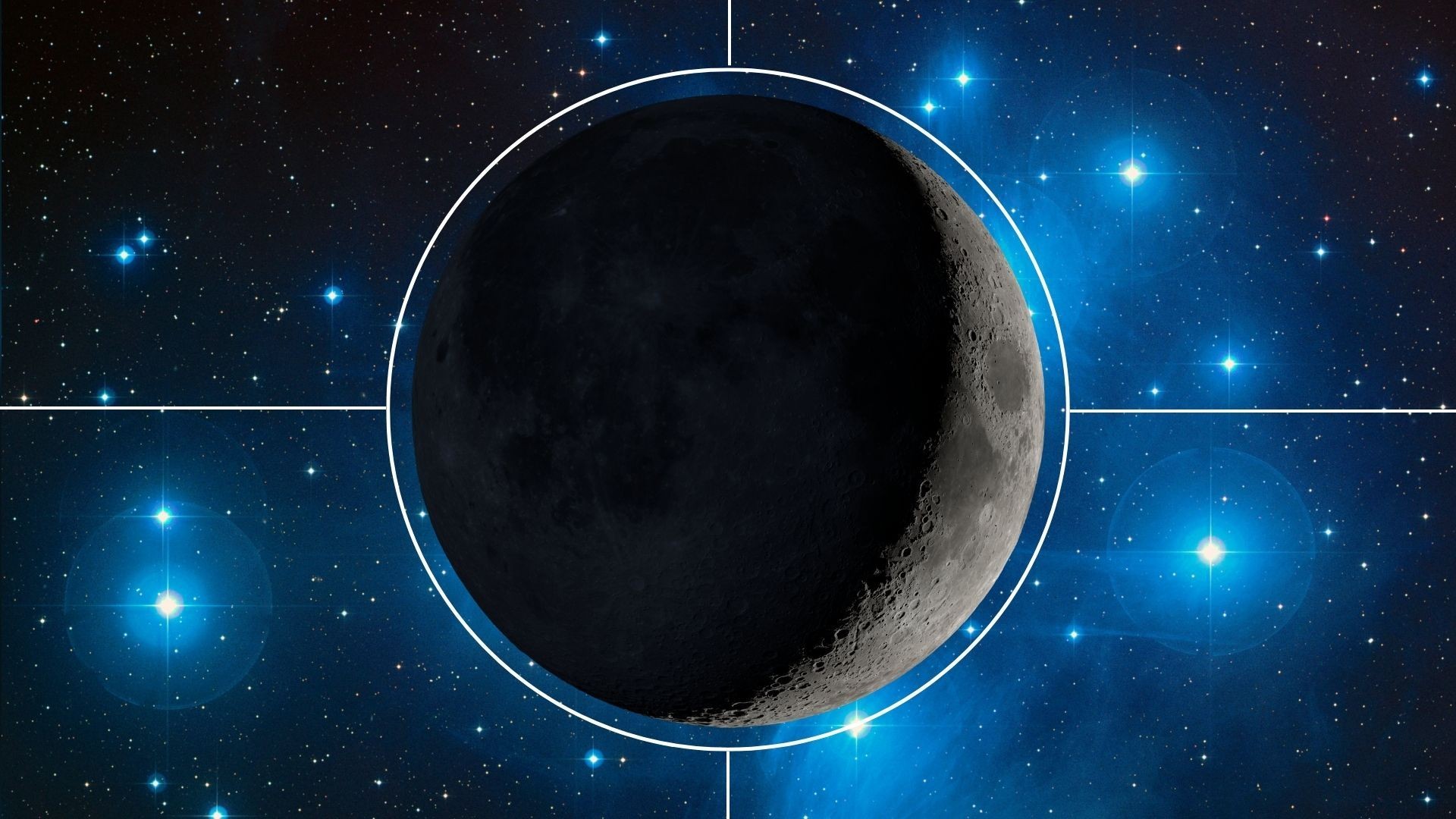
The waxing crescent moon will pass strikingly close to the Pleiades star cluster over the next two nights (March 22-23), creating a beautiful celestial display visible after sunset. This alignment isn’t just aesthetically pleasing; it connects modern stargazers to millennia of human observation.
What You’ll See
Look towards the western horizon shortly after dark. The moon, about 14% illuminated, will appear as a slender sickle just above the Pleiades – a cluster of stars also known as the “Seven Sisters.” The separation will be roughly the width of three fingers held at arm’s length.
Nearby, you’ll also find the reddish star Aldebaran and the V-shaped Hyades cluster in Taurus. Venus will be visible low on the horizon as a fleeting “evening star,” while Jupiter shines brightly overhead in Gemini.
Why This Matters
The Pleiades isn’t just a pretty sight. It’s one of the most recognizable star clusters in the sky, known to humanity for thousands of years. Evidence suggests it may even have been depicted on the Nebra Sky Disk, a 3,800-year-old bronze artifact representing the oldest known map of the stars.
The cluster was first studied with a telescope by Galileo Galilei, who discovered dozens more stars within it. Today, astronomers estimate the Pleiades may contain thousands of stars, many of which were previously undetected.
Viewing Tips
- Naked Eye: The Pleiades appears as a hazy patch of light.
- Binoculars: Reveal at least seven of the brightest stars, along with dozens of fainter ones.
- Telescopes: Even a modest telescope will provide a stunning view, far exceeding what Galileo could have imagined.
The moon will continue its journey across the sky, passing Jupiter in the coming week. This alignment is a reminder of our long history with the night sky and the ongoing discoveries that continue to unfold.
This celestial event provides a simple, striking connection to our ancestors, who looked to the same stars for guidance and wonder.