A new study suggests that microscopic life could survive ejection from one planet and travel through space to another, raising the possibility that Earth may have been seeded with life from Mars. While the theory of lithopanspermia – the spread of life via rocks ejected from a planet – has long been debated, research published this week in The Proceedings of the National Academy of Sciences NEXUS provides compelling evidence that microbes can withstand the extreme conditions of interplanetary travel.
The Experiment: Simulating Cosmic Impacts
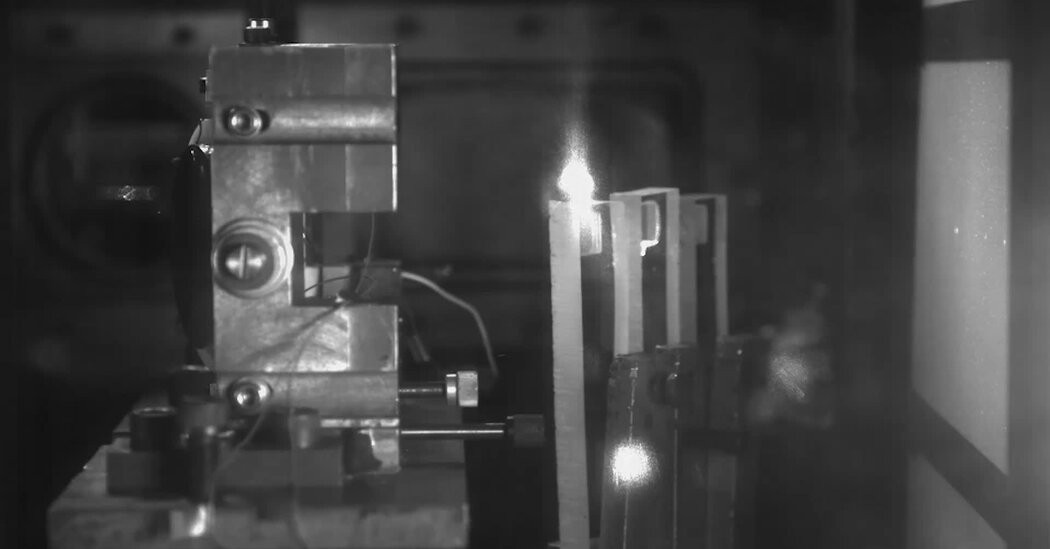
Researchers led by K.T. Ramesh at Johns Hopkins University subjected bacterial colonies to conditions mimicking an asteroid impact. This included the shockwaves, heat, and pressure equivalent to being blasted off a planet’s surface. The results showed that not only did the bacteria survive, but they remained viable, suggesting that they could potentially endure a journey through space.
This is significant because Martian meteorites have already been found on Earth, confirming that rocks can indeed travel between the planets. These meteorites were formed by asteroid strikes on Mars long ago, and some contain evidence of ancient water – a key ingredient for life.
Why This Matters: The Origins of Life
The study doesn’t prove that life originated on Mars, but it strengthens the hypothesis that life could spread between planets. One leading theory of how life first appeared on Earth involves microbes arriving on meteorites. This new research suggests that this is not just plausible, but potentially common.
“We continuously redefine the limits of life,” says Madhan Tirumalai, a microbiologist at the University of Houston who was not involved in the study. This work is another example of how resilient life can be.
Implications for Space Exploration
The findings also have implications for planetary protection. As humans explore other worlds, especially those with the potential for microbial life, it’s critical to avoid cross-contamination. This study reinforces the need for stringent sterilization protocols to prevent Earth-based microbes from hitching a ride to other planets, or vice versa.
While the idea of Martian ancestors remains speculative, the research clearly demonstrates that microbes can survive one of the most violent processes in the cosmos and leverage it for interstellar travel. This work pushes the boundaries of our understanding of life’s potential and its distribution throughout the universe.