

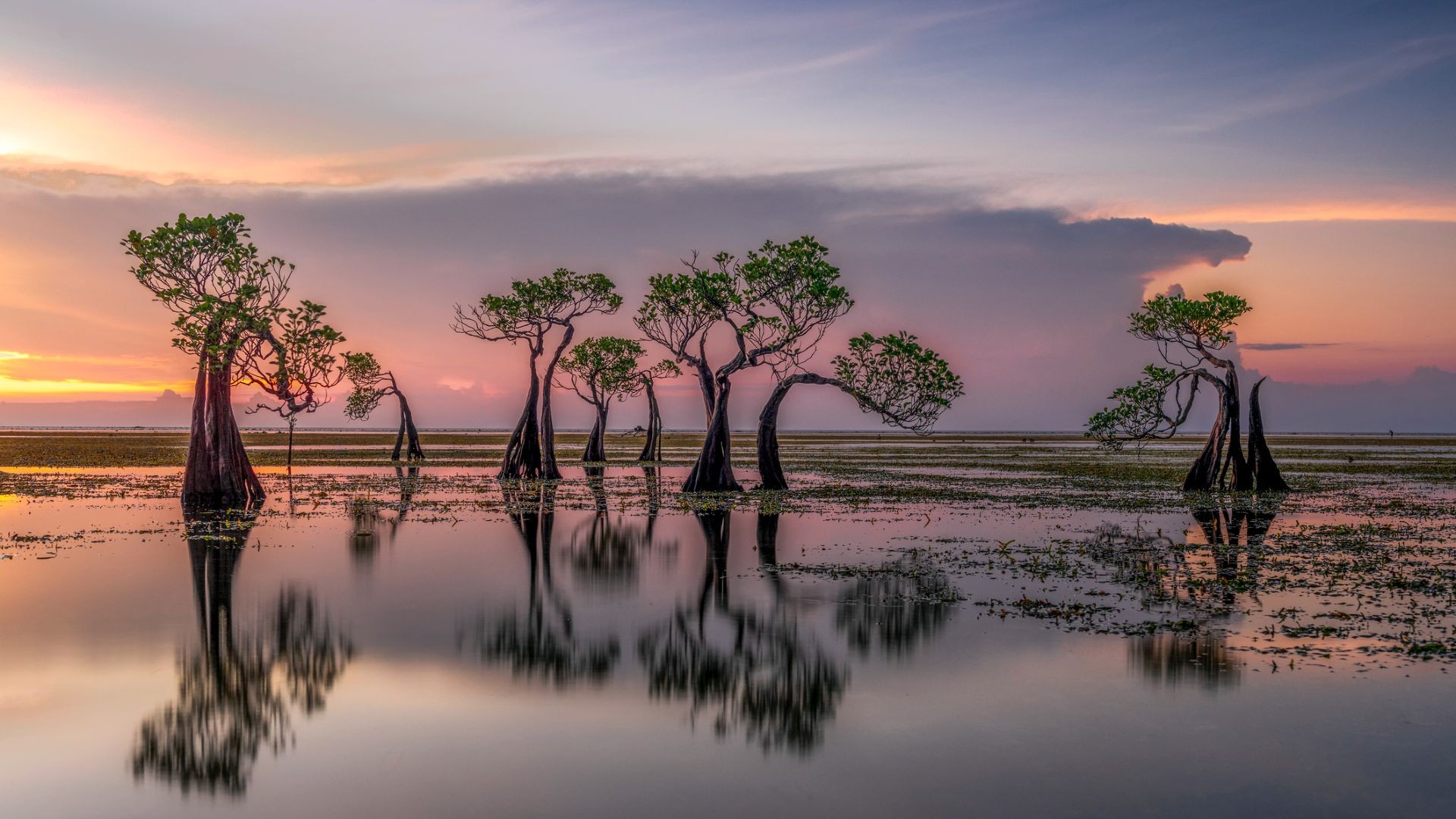

Kustgemeenschappen over de hele wereld worden geconfronteerd met escalerende schade door overstromingen en stormvloeden als gevolg van de klimaatverandering. Uit een nieuwe studie gepubliceerd in PNAS blijkt dat het herstel van mangrovebossen, vooral in combinatie met bestaande kustverdediging zoals dijken, miljarden schade zou kunnen voorkomen en jaarlijks honderdduizenden mensen zou kunnen beschermen. De analyse benadrukt de ondergewaardeerde economische en beschermende waarde van deze natuurlijke ecosystemen.
De toenemende dreiging van kustoverstromingen
Extreme weersomstandigheden zoals orkaan Ian in Florida (2022) demonstreren de vernietigende kracht van stormvloeden, die $110 miljard aan schade en 158 dodelijke slachtoffers veroorzaakten. Regio’s met gezonde mangrove-ecosystemen ondervonden echter 30% minder schade, waardoor naar schatting 13 miljard dollar werd bespaard. Dit illustreert het vermogen van mangroven om golfenergie te absorberen via hun dichte wortelstelsel, en fungeert als een natuurlijke buffer tegen extreem weer.
Economische voordelen: een rendement van $ 6 voor elke bestede dollar
Onderzoekers modelleerden het herstel van mangroves naast bestaande waterkeringen wereldwijd, waarbij ze ontdekten dat dergelijke systemen jaarlijks 800 miljoen dollar zouden kunnen besparen en tegelijkertijd 140.000 mensen tegen overstromingen zouden kunnen beschermen. In scenario’s met hoge emissies zou elke dollar die in mangrovedijksystemen wordt geïnvesteerd tegen 2100 zes dollar kunnen opleveren of besparen, tot een potentieel van $125 miljard. Zuidoost-Azië en West-Afrika zouden de grootste voordelen zien, waarbij Nigeria, India en Indonesië tot de grootste winnaars zouden behoren. In de VS zullen Florida en Louisiana aanzienlijk winnen.
Grijsgroene infrastructuur: natuur en techniek combineren
Deze studie valt binnen het opkomende veld van de ‘grijs-groene infrastructuur’, waarin natuurlijke oplossingen worden geïntegreerd met technische verdedigingsmechanismen. Andere voorbeelden zijn onder meer het combineren van bosbeheer met brandwerende constructie of het combineren van damonderhoud met stroomopwaarts herstel van stroomgebieden. Volgens Thomas Westhoff van Wetlands International is deze hybride aanpak bijzonder pragmatisch voor sterk verstedelijkte en verzakkende kustlijnen.
Uitdagingen voor herstel: waarom mangroveprojecten mislukken
Ondanks hun bewezen waarde loopt in 2050 meer dan de helft van de mangrove-ecosystemen op aarde gevaar als gevolg van landbouw, aquacultuur en ontwikkeling. Tot 80% van de herstelprojecten mislukt als gevolg van onjuiste uitvoering (beplanting in ongeschikte gebieden of gebruik van verkeerde soorten). Succesvol herstel vereist steun van de gemeenschap, maar ook economische prikkels die concurreren met winstgevender landgebruik.
“Mangroven moeten vanaf het begin concurreren met andere economische belangen”, zegt milieu-econoom Jonah Busch, en onderstreept de noodzaak om hun financiële voordelen aan te tonen om het behoud op de lange termijn te garanderen.
De bevindingen van het onderzoek versterken de urgentie van het beschermen en herstellen van mangroven als een kosteneffectieve strategie om de gevolgen van klimaatverandering te verzachten. Hoewel het geen universele oplossing is, biedt de integratie van deze natuurlijke verdedigingswerken met de bestaande infrastructuur een krachtige, op bewijs gebaseerde benadering van de veerkracht van kustgebieden.


