



Researchers have achieved a breakthrough in quantum physics by creating the most complex time crystal to date inside a quantum computer. This experiment doesn’t just push the boundaries of what’s possible with these exotic states of matter; it also highlights the growing potential of quantum computers as powerful tools for scientific discovery.
The Odd World of Time Crystals
Traditional crystals exhibit repeating patterns in space —think of the regular arrangement of atoms in a diamond. Time crystals, however, repeat patterns in time. Instead of sitting still, they cycle through configurations indefinitely, seemingly defying the usual rules of thermodynamics.
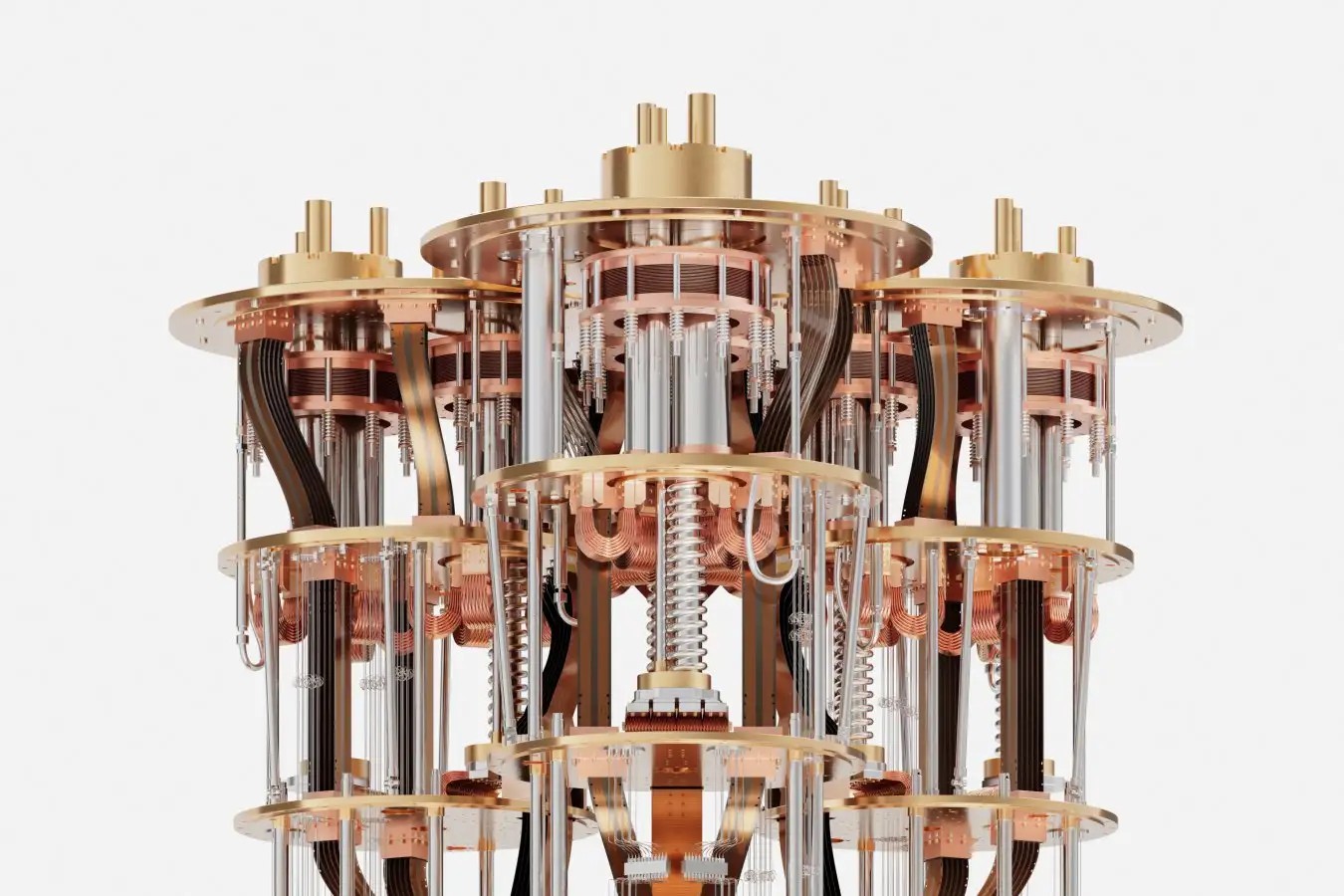
Initially, this perpetual motion appeared to violate physics, but over the last decade, scientists have successfully created time crystals in laboratories. The latest advance, led by Nicolás Lorente at the Donostia International Physics Center in Spain, utilizes an IBM superconducting quantum computer to construct a far more complex version than ever before.
From One Dimension to Honeycomb: A 2D Time Crystal
Previous studies mainly focused on one-dimensional time crystals, akin to a simple line of atoms. Lorente’s team took on the challenge of building a two-dimensional time crystal. They used 144 superconducting qubits, arranged in a honeycomb-like pattern, where each qubit acted as a particle with quantum spin. By precisely controlling the interactions between these qubits, they induced the time-crystal behavior.
The key was not only creating the time crystal but also programming the interactions to produce specific strengths and patterns. This level of control allowed them to map out the system’s “phase diagram”—essentially a comprehensive chart showing all possible states. Just as a phase diagram of water reveals whether it’s liquid, solid, or gas, this map details the quantum system’s behavior.
Why This Matters: Quantum Computers as Material Design Tools
Jamie Garcia at IBM, unaffiliated with the research, suggests this experiment could be the first step toward using quantum computers to design new materials. Understanding the full range of a quantum system’s properties—even the unusual ones like time crystals—could revolutionize materials science.
Currently, simulations of complex quantum models are too demanding for conventional computers, often requiring approximations. But even existing quantum computers aren’t perfect; they suffer from errors. This research required a hybrid approach: using conventional methods to estimate where the quantum computer’s results become unreliable, and then leveraging the quantum computer’s exact (though error-prone) calculations.
The Future of Quantum Simulations
Biao Huang at the University of Chinese Academy of Sciences notes that simulating two-dimensional systems is notoriously difficult numerically. This experiment, with over 100 qubits, provides a vital benchmark for future research. Moreover, it could bridge the gap between time crystals simulated on quantum computers and similar states found in quantum sensors.
This work represents exciting experimental progress for several areas of study into quantum matter. Specifically, it could help connect time crystals, which can be simulated on quantum computers, to similar states that can be created in some types of quantum sensors.
The combination of approximate classical methods and exact (but imperfect) quantum calculations will refine our understanding of complex quantum models, potentially unlocking new breakthroughs in material design and beyond.
This advance reinforces the idea that quantum computers aren’t just faster processors; they’re fundamentally different machines capable of tackling problems beyond the reach of classical computation.