


The successful return of the Artemis II crew marks a significant milestone in space exploration, but it also highlights a universal human challenge that transcends even the most advanced technology: the psychological strain of prolonged confinement with colleagues.
While the crew—Commander Reid Wiseman, mission specialists Christina Koch and Jeremy Hansen, and pilot Victor Glover—has conquered the technical rigors of space, their ten-day mission serves as a profound case study in interpersonal endurance.
The Pressure Cooker of Confinement
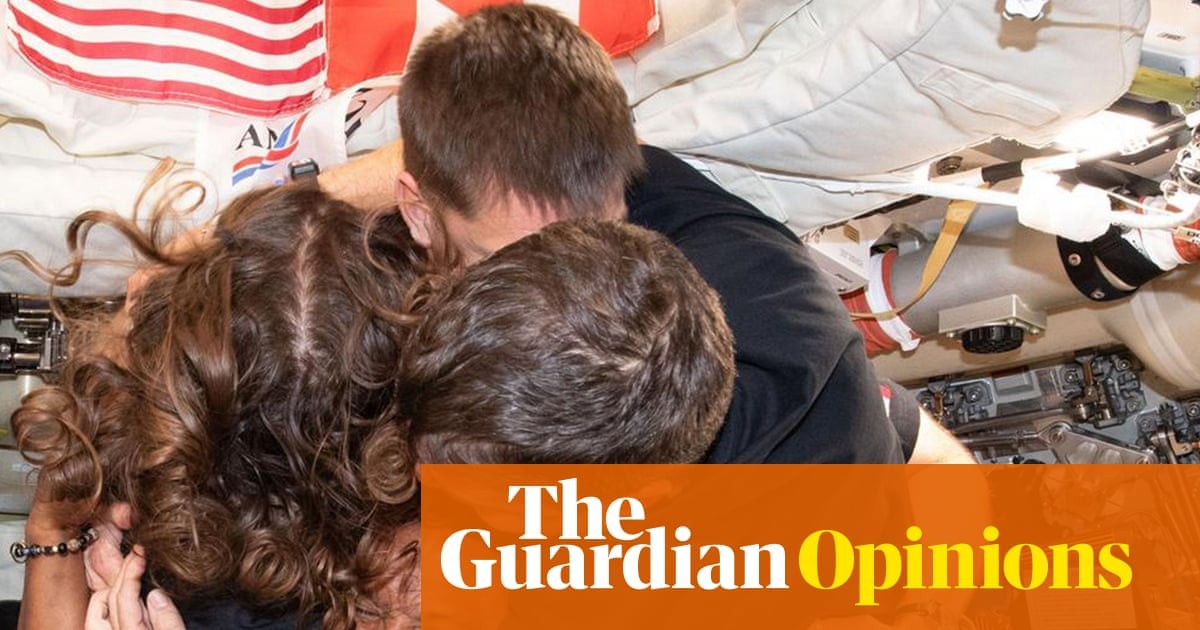
The crew spent 10 days inside a capsule described as being “not much bigger than a family tent.” In the vacuum of space, there is no “leaving the office” at the end of a shift. Unlike a traditional workplace, where employees can retreat to their private lives to decompress, the Artemis II crew lived, ate, and worked in a continuous, high-stakes environment.
This lack of physical and psychological distance creates a unique set of pressures:
– Zero Escape: There is no possibility of “going no contact” to resolve tensions.
– Micro-behaviors: In such tight quarters, minor habits—the way someone eats, speaks, or moves—can become significant sources of friction.
– Constant Proximity: The crew must maintain professional cohesion 24/7, regardless of personal temperament.
The “Office Effect”: Why Small Spaces Matter
The challenges faced by astronauts mirror the psychological dynamics found in even the most mundane office environments. When humans are forced into close proximity for extended periods, several predictable behavioral trends emerge:
- The Search for Control: In environments where individuals have little agency over their larger circumstances (such as a high-stakes space mission or a stagnant corporate job), they often fixate on trivial matters to assert dominance or personal boundaries.
- The Development of “Micro-Feuds”: Small, inconsequential disagreements—such as the temperature of a room or the position of a window—can escalate into long-running psychological battles.
- Behavioral Alteration: Prolonged confinement can reveal personality traits that individuals might otherwise suppress, leading to increased irritability or pettiness.
The Human Element in High-Stakes Environments
Whether it is a crew of elite astronauts orbiting the Earth or employees in a small, quiet office, the ability to manage interpersonal relationships is as critical as any technical skill. For the Artemis II mission, the success of the journey relied not just on the reliability of the spacecraft, but on the emotional intelligence and resilience of the crew members.
The mission proves that while we can engineer ways to survive the harshness of space, we are still subject to the timeless complexities of human social dynamics.
The true test of a mission isn’t just surviving the vacuum of space, but surviving the proximity of one’s peers.
Conclusion
The Artemis II mission highlights that technical excellence is only half the battle in exploration; the ability to maintain psychological harmony in confined spaces is what truly determines the success of human endeavors.