



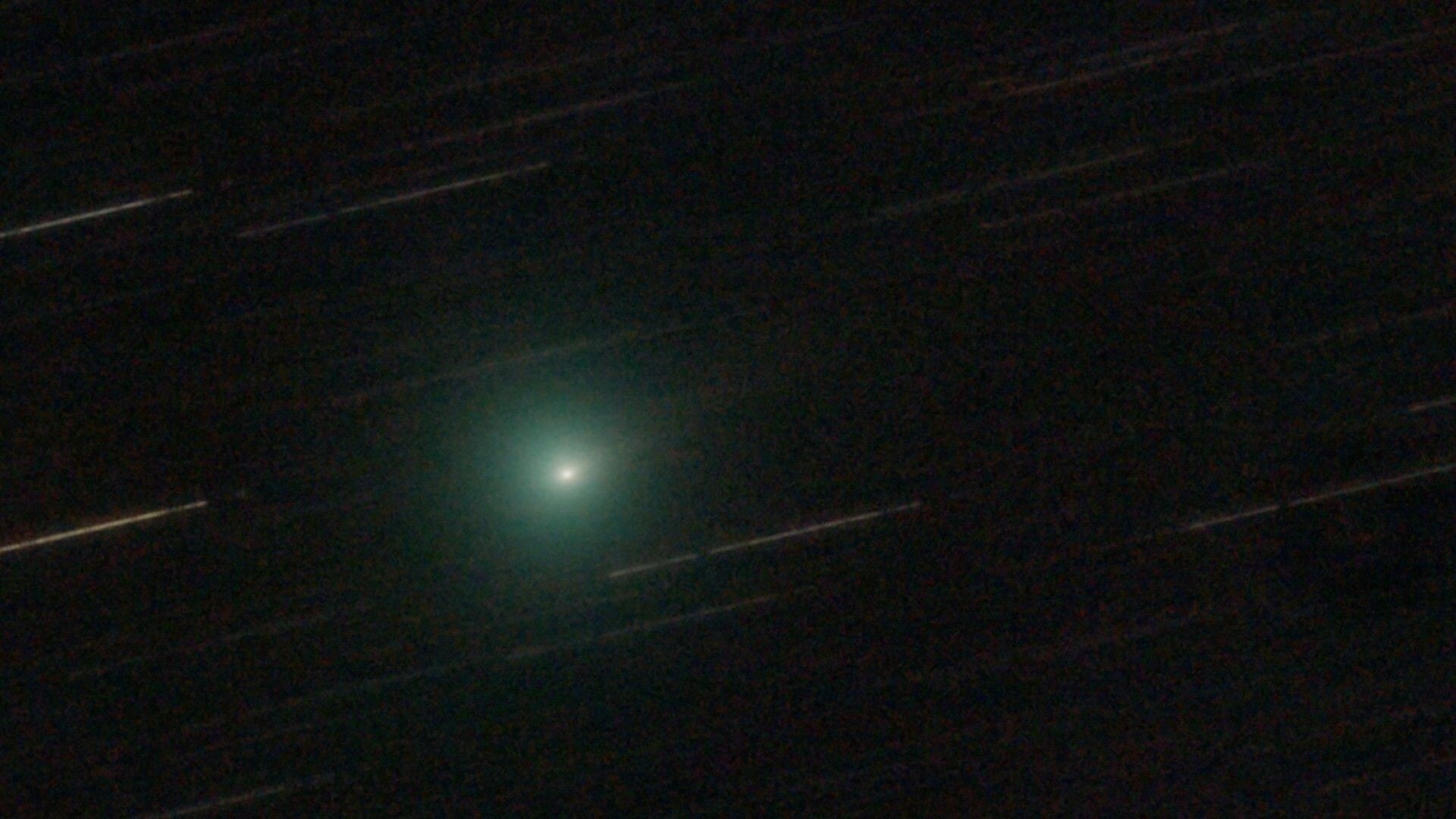
Comet 24P/Schaumasse will reach its closest point to the sun on January 8th, an event known as perihelion. While not visible to the naked eye, this icy visitor offers a chance for telescope users to observe a celestial phenomenon. This comet’s periodic orbit brings it near the sun roughly every eight years.
Discovery and Orbit
Discovered in December 1911 by astronomer Alexandre Schaumasse using a 400mm telescope in Nice, France, 24P/Schaumasse follows an orbit that extends beyond Jupiter’s path before swinging back toward the sun. This makes it a short-period comet, meaning its orbital cycle is relatively quick compared to others.
Why this matters: Comets like 24P/Schaumasse are remnants from the early solar system, providing clues about the conditions that existed when planets formed. Studying their composition helps scientists understand the building blocks of our celestial neighborhood.
Brightness and Visibility
Comets brighten as they approach the sun because solar heating vaporizes icy material, creating a glowing envelope of gas. This gas reflects sunlight, making the comet visible. However, 24P/Schaumasse won’t be easily seen.
The comet currently has a magnitude of +10.8, which is too dim for the naked eye (which can see up to around +6.5 magnitude). A telescope with at least a 6-inch aperture is needed to spot it as a faint patch of light, though the waning moon will make observation more challenging.
How to Find It
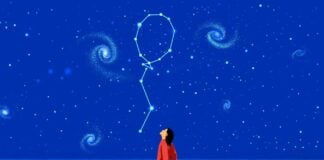
To locate the comet, look towards the constellation Virgo high in the southern sky before dawn. Find the star Vindemiatrix (magnitude +2.8) and search 5 degrees to its left. Using a stargazing app on your smartphone can simplify this process.
For those wanting to explore further: Modern telescopes can greatly improve viewing; many models are available for various needs and budgets.
Comet 24P/Schaumasse’s closest approach is a subtle but scientifically valuable event. Though not spectacular to the casual observer, it’s a reminder of the dynamic processes shaping our solar system.