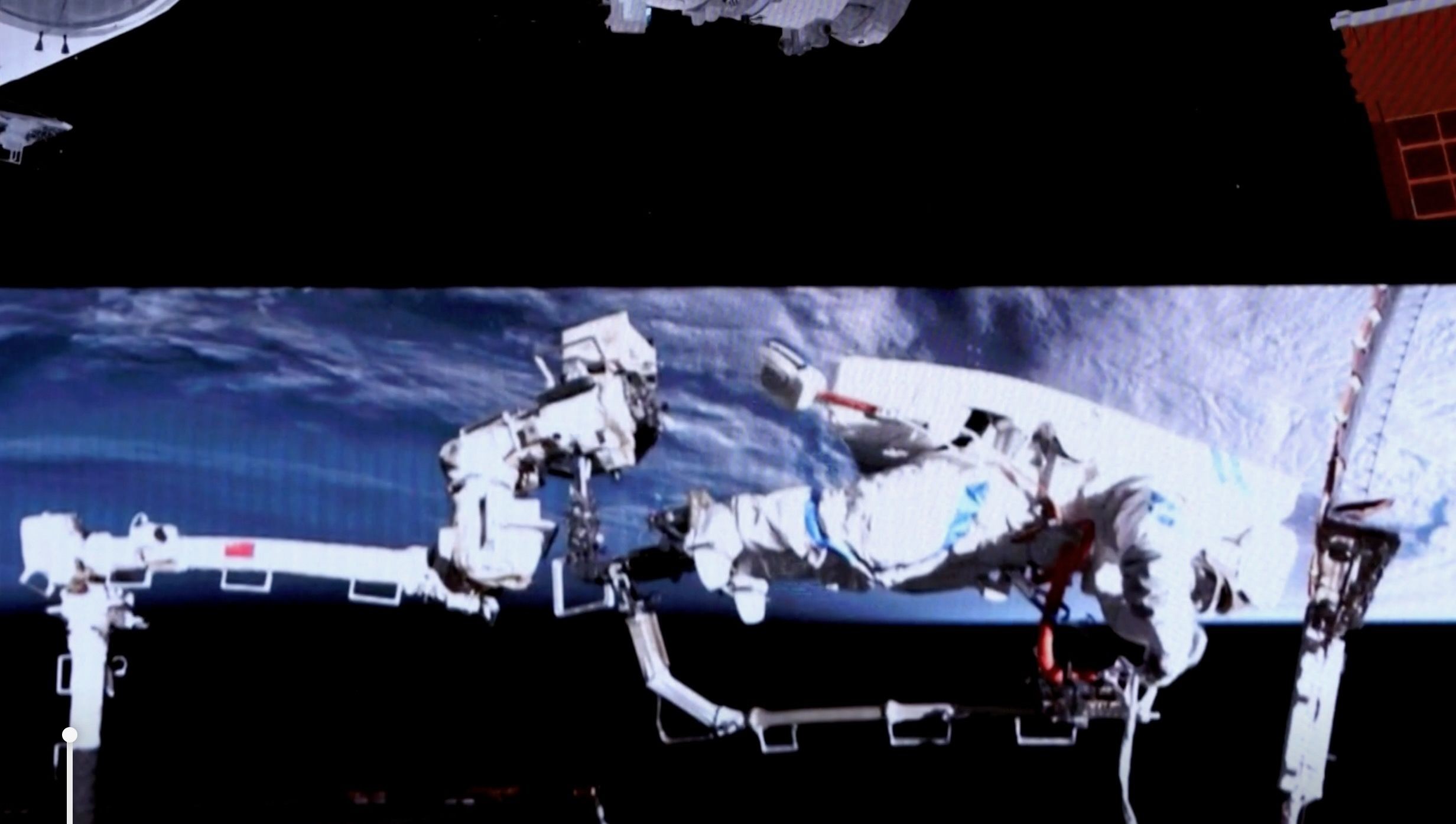
Китайський космонавт Чжан Лу дорівнював національному рекорду за кількістю виходів у відкритий космос, завершивши свою шосту позакорабельну діяльність (ВКД) за межами космічної станції “Тяньгун” у понеділок, 16 березня. Семигодинна операція, проведена спільно з колегою У Феєм, включала встановлення захисту від космічного сміття на зовнішній стороні станції. Ця місія підкреслює зростаючі можливості Китаю в галузі тривалих космічних операцій та його відданість підтримці постійної присутності людини на орбіті.
Деталі та цілі місії
Вихід у відкритий космос розпочався о 7:25 ранку за східним часом (11:25 GMT; 7:35 вечора за пекінським часом) та здійснювався за підтримки космонавта Чжан Хунчжана всередині станції, а також наземних команд та роботизованої руки станції. Астронавти використовували передові скафандри “Feitian” під час ВКД. Основним завданням було посилення захисту “Тяньгуна” від орбітального сміття, що все більш важливою проблемою для всіх космічних станцій. Це демонструє проактивний підхід до космічної безпеки, враховуючи зростаючу загрозу зіткнень з дрібними об’єктами, що не відстежуються.
Історичний контекст та значимість
Чжан Лу тепер ділить рекорд за кількістю виходів у відкритий космос серед китайських космонавтів із Чень Дуном, який має також шість виходів. Рекорд із загальної кількості виходів у відкритий космос належить російському космонавту Анатолію Соловйову (16) та американському астронавту Пеггі Вітсон (10).
Це досягнення — це питання особистих успіхів; воно відображає стрімкий розвиток Китаю в космічних технологіях та його зростаючу роль у міжнародній космічній діяльності.
Поточна місія “Шеньчжоу-21” слідує за попередньою ВКД у грудні, коли та ж команда інспектувала пошкодження космічного корабля “Шеньчжоу-20”, який довелося замінити через підозри на структурні проблеми, пов’язані з космічним сміттям. Екіпаж “Шеньчжоу-20” повернувся на Землю в капсулі “Шеньчжоу-21” як запобіжний засіб.
Майбутні плани для “Тяньгуна”
Китай має намір підтримувати постійну присутність людини на “Тяньгуні” щонайменше ще протягом десятиліття. Майбутні місії “Шеньчжоу-23” та “Шеньчжоу-24”, а також додаткові поставки вантажів “Тяньчжоу” забезпечать повну укомплектованість та працездатність станції. Космічний корабель “Шеньчжоу-22”, запущений наприкінці минулого року, служить резервним транспортним засобом для екіпажу “Шеньчжоу-21”, що ілюструє надмірність Китаю у відповідь на потенційні ризики.
Цей стійкий прогрес у пілотованих космічних польотах наголошує на довгострокових амбіціях Китаю в галузі орбітальних досліджень, розробки технологій та міжнародного співробітництва на низькій навколоземній орбіті.