



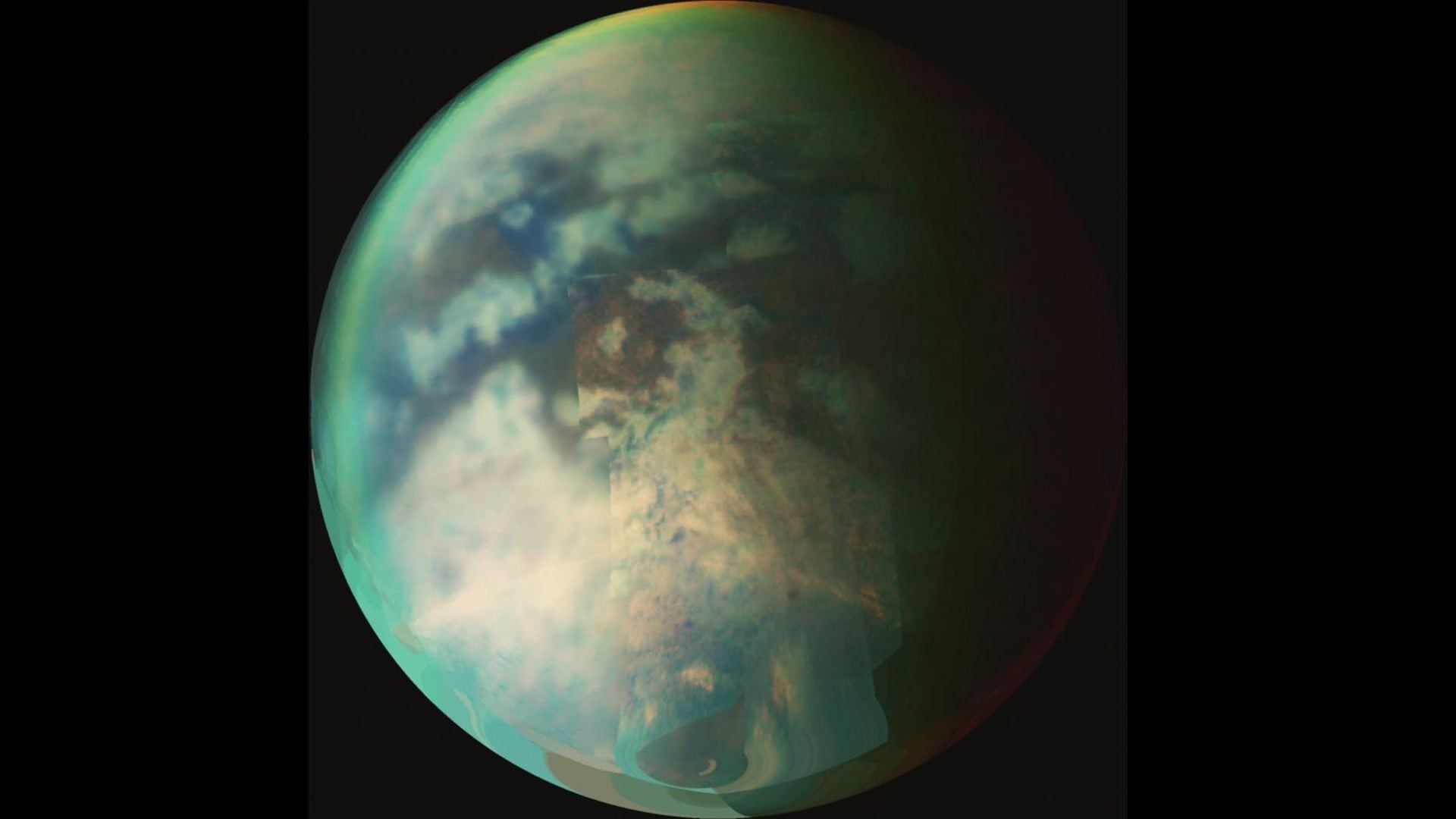
Saturn’s largest moon, Titan, may not harbor a vast underground ocean as previously suspected. New research suggests that instead of a global sea beneath its icy shell, Titan likely contains scattered pockets of liquid water within a slushy, high-pressure ice layer.
What We Thought We Knew
For years, scientists believed Titan’s subtle distortions under Saturn’s gravity indicated a substantial subsurface ocean. This idea stemmed from observations suggesting that the moon flexed in a way consistent with a large liquid reservoir. Titan is unique in our solar system: it’s larger than the planet Mercury and the only moon with a dense atmosphere and stable liquid on its surface – although that liquid is primarily methane and ethane, not water.
How New Data Changed the Picture
Planetary scientist Flavio Petricca and his team reanalyzed data from NASA’s Cassini mission using refined techniques for interpreting radio tracking signals. Their findings indicate Titan resists Saturn’s gravitational pull far more strongly than expected. This resistance suggests that Titan’s interior isn’t buoyed by a widespread ocean but is instead a dense layer of ice close to its melting point. This ice layer, under intense pressure, likely contains isolated pockets of liquid water.
The Role of Heat and Time
Titan may have once had a global ocean early in its history. Over time, that ocean likely froze due to insufficient heat from radioactive decay within its core. However, Petricca suggests the moon may now be entering a phase where internal heating is increasing again. The presence or absence of a full ocean does not necessarily dictate habitability, and it remains unclear if these isolated pockets of water improve or diminish Titan’s potential to support life.
What’s Next?
NASA’s Dragonfly mission, slated to arrive on Titan in the 2030s, will provide crucial data on the moon’s geology and subsurface structure. This mission could clarify whether Titan’s interior is shifting toward a more liquid state. The discovery raises questions about the prevalence of ocean worlds in our solar system; they may be less common than previously believed.
The new study suggests that subsurface oceans may not be as ubiquitous as scientists once thought, challenging assumptions about planetary habitability.