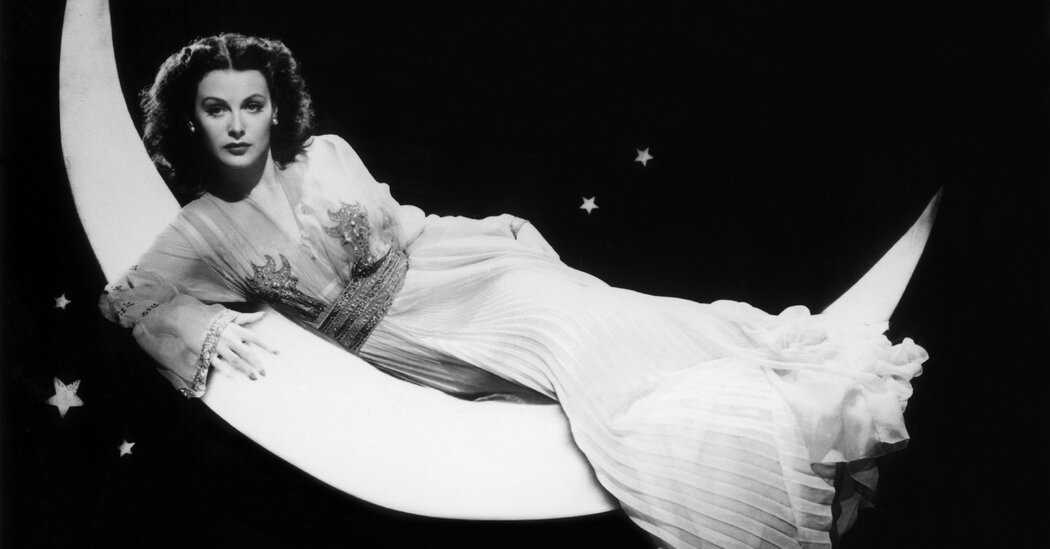
Hedy Lamarr, the Austrian-born actress who captivated audiences in Hollywood during the 1930s and 40s, died on January 19, 2000, at her home in Florida at the age of 86. While celebrated for her beauty and roles in films like “Ecstasy” and “Samson and Delilah,” Lamarr’s legacy extends far beyond the silver screen. She was also a brilliant, though often overlooked, inventor.
Early Life and Rise to Fame
Born Hedwig Eva Marie Kiesler in Vienna in 1914, Lamarr’s early life was marked by artistic ambition. She studied acting under Max Reinhardt, who immediately recognized her striking beauty, declaring her either “the most beautiful girl in the world” or “the most beautiful girl in Europe.” Her breakthrough role came in the controversial 1933 Czech film “Ecstasy,” which featured nude scenes that shocked and fascinated audiences. Despite being banned in many parts of the U.S. for years, the film propelled Lamarr into international stardom.
Hollywood Years and Underestimated Talent
Lamarr moved to Hollywood in 1937, where she became a sought-after actress known for her exotic and alluring roles. As film historian David Thomson noted, she often played “sultry women,” though she sometimes appeared “worried” in parts that demanded pure, unthinking seduction. Despite being typecast, Lamarr quietly pursued her passion for science and invention.
Secret Invention: Frequency-Hopping Spread Spectrum
During World War II, Lamarr, along with composer George Antheil, developed a “secret communication system” designed to prevent jamming of Allied torpedo guidance signals. The invention, known as frequency-hopping spread spectrum, allowed radio signals to switch between different frequencies rapidly, making them almost impossible for enemies to intercept. Lamarr and Antheil patented the technology in 1942, but the U.S. Navy dismissed it as impractical.
Post-War Recognition and Legacy
The frequency-hopping technology remained largely forgotten for decades until the 1990s, when it was rediscovered as a foundational element of modern wireless communication systems. Today, Lamarr’s invention is critical to technologies like Wi-Fi, Bluetooth, and GPS. In 1997, she and Antheil were finally recognized with an Electronic Frontier Foundation Pioneer Award.
Hedy Lamarr’s story underscores the tragic pattern of genius overlooked due to societal expectations and gender biases. She was a star who deserved recognition not just for her beauty, but for her intellect.
Lamarr’s story is a reminder that brilliance can emerge from unexpected places, and that history often fails to acknowledge the contributions of women in science and technology. Her dual legacy as a Hollywood icon and an unsung inventor ensures her place as a remarkable figure in the 20th century.