





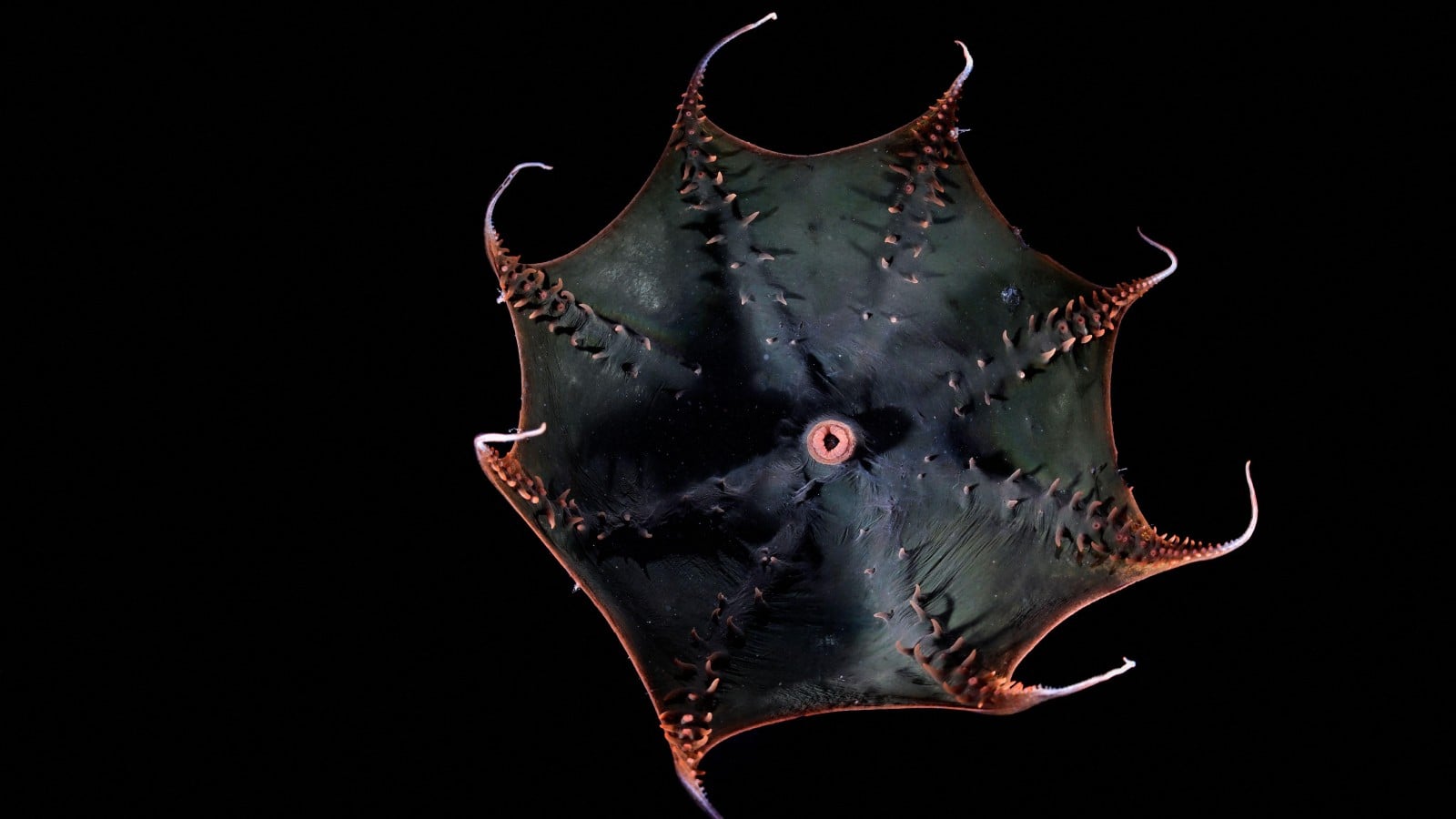
The vampire squid (Vampyroteuthis infernalis ), a deep-sea creature often called a “living fossil,” has had its genome fully sequenced for the first time, providing crucial insights into the evolution of squids and octopuses. For decades, scientists have sought to understand how these two distinct groups diverged from a common ancestor, and the vampire squid’s surprisingly well-preserved genetic structure offers a critical piece of that puzzle.
A Missing Link in Cephalopod Evolution
The vampire squid occupies a unique position on the evolutionary tree, belonging to the octopus order yet retaining strong genetic similarities to squids and cuttlefish. This discovery, published in iScience on November 27th, confirms that its chromosomes closely resemble those of its squid relatives, despite its classification as an octopod. This suggests that the genome of the common ancestor of modern squids and octopuses may have looked very similar to the vampire squid’s genome around 300 million years ago.
Genome Size and Stability
The study revealed that the vampire squid has an exceptionally large genome—approximately 11 billion base pairs, nearly four times the size of the human genome. However, unlike modern octopuses, which undergo frequent chromosomal reshuffling, the vampire squid’s genome has remained remarkably stable, maintaining its ancestral, squid-like arrangement. This preservation is significant because it provides a clearer picture of what cephalopod genomes looked like before the evolutionary divergence that led to today’s octopuses and squids.
Historical Misclassification and Rarity
The vampire squid’s classification has shifted over time. Initially mistaken for a cirrate octopus due to its webbed arms in 1903, it was later reclassified into its own order, Vampyromorphida, in the 1950s. This classification acknowledges its unique characteristics, neither fully squid nor octopus. The difficulty in studying these creatures is compounded by their deep-sea habitat, solitary nature, and poor survival in captivity. Scientists have long suspected that unlocking the vampire squid’s genome would resolve key questions about cephalopod evolution.
Implications for Cephalopod Research
The sequencing of the vampire squid genome is a major win for cephalopod researchers, who have struggled to study this elusive species. Bruce Robison, a senior scientist at the Monterey Bay Aquarium Research Institute (MBARI), notes that the findings “reinforce the notion…that vamps would be the key to the puzzle.” The genome’s stability and ancestral features make it a valuable resource for understanding how cephalopod genomes have evolved over millions of years.
The vampire squid’s genome provides a window into the past, revealing the genetic blueprint of an ancient cephalopod lineage that has remained largely unchanged for hundreds of millions of years. This discovery underscores the importance of studying rare and hard-to-reach species to unlock fundamental secrets of evolutionary history.