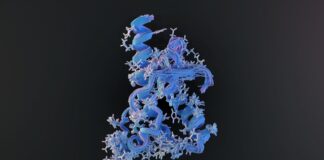
The fundamental question of what makes us aware – why there’s something it feels like to be human – remains one of science’s greatest mysteries. Award-winning journalist Michael Pollan explores this in his latest book, A World Appears, probing why consciousness has proven so resistant to explanation despite advances in neuroscience and artificial intelligence.
The Hard Problem of Consciousness
Pollan’s work isn’t just a philosophical exercise; it tackles the “hard problem” of consciousness head-on. This refers to the difficulty of explaining how physical processes in the brain give rise to subjective experience. We understand that brain activity correlates with thoughts and feelings, but not why that activity is accompanied by awareness.
AI and the Limits of Simulation
Can AI shed light on human consciousness? Pollan suggests that while AI can simulate intelligence, it doesn’t necessarily replicate the underlying experience. AI lacks the evolutionary history, biological embodiment, and complex feedback loops that shape human awareness. Machines can process information at speeds beyond human capability, but this doesn’t mean they feel anything.
Defending the Mind in a Digital Age
The book also addresses a growing concern: the potential for technology to erode our capacity for deep thought and introspection. Pollan argues that in an increasingly saturated digital environment, it’s vital to actively defend our minds. This means cultivating practices that foster awareness, such as mindfulness, critical thinking, and engagement with the natural world.
The core insight is that consciousness isn’t just about what the brain does, but also about how it does it – and why. This distinction is crucial as we navigate a world where artificial intelligence blurs the lines between simulation and genuine experience.
In conclusion, A World Appears isn’t just a book about consciousness; it’s a call to protect the very thing that makes us human in an age of accelerating technological change. The challenge is not just to understand consciousness, but to preserve it.