


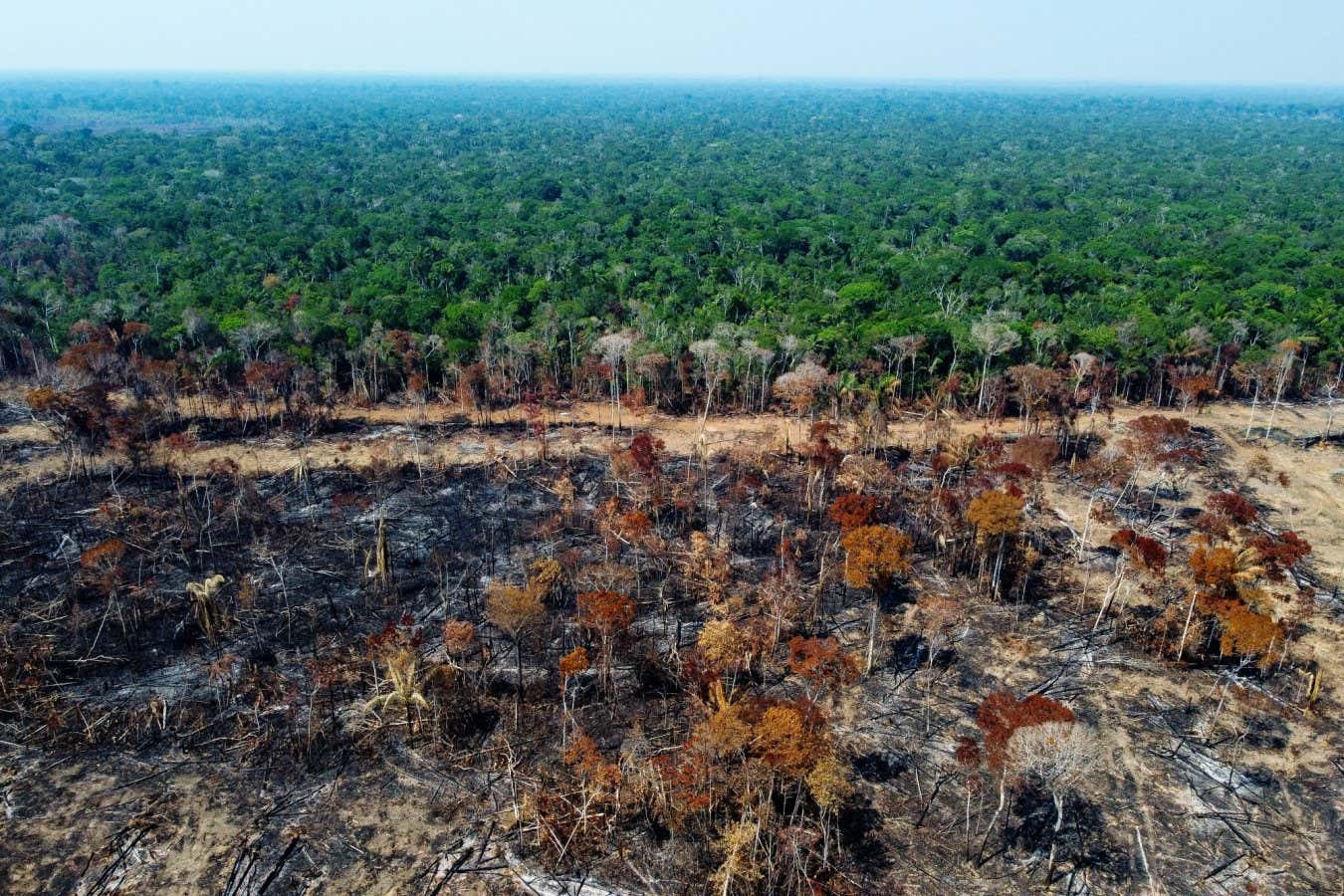
The Amazon rainforest is losing its ability to generate rainfall, a critical function that keeps the ecosystem alive and supports regional agriculture. New research confirms that widespread deforestation—primarily for cattle ranching—is dramatically reducing precipitation across the entire southern Amazon basin, not just in immediate proximity to cleared areas. This decline in rainfall is occurring faster than previously understood, bringing the rainforest closer to an irreversible tipping point where it could transform into a savannah.
Rainfall Decline Linked Directly to Tree Loss
Satellite data and ground measurements reveal an 8–11% drop in rainfall over the southern Amazon between 1980 and 2019, coinciding with a 16% reduction in tree cover. Unlike earlier studies, this research demonstrates the impact extends over vast distances—over 3,000 kilometers—meaning deforestation doesn’t just harm local areas, but actively undermines rainfall patterns that benefit even distant farms and ranches.
The mechanism is simple: trees recycle moisture through evaporation and transpiration, creating what scientists call “flying rivers” that transport water across the rainforest. When forests are cleared, this cycle breaks down. More water runs off into rivers instead of re-entering the atmosphere, starving these atmospheric rivers and reducing rainfall.
“Some people in agribusiness might see a bit of forest as wasted land [they] could go clear,” says Dominick Spracklen of the University of Leeds. “That bit of forest is working really hard to maintain regional rainfall that our bit of agriculture is benefitting from.”
Deforestation’s Role Outpaces Climate Change
While global warming is undoubtedly contributing to Amazonian drought, deforestation accounts for 52–75% of the observed rainfall decline. This means that human activity, specifically large-scale land clearing for agriculture, is the dominant driver of the drying trend. Furthermore, current climate models underestimate the true impact of deforestation by up to 50%, suggesting the tipping point may be closer than previously estimated.
The atmosphere over deforested regions becomes smoother, allowing moisture to escape the basin instead of circulating. This reduces storm formation and further diminishes rainfall.
The Imminent Threat of Amazon Dieback
Scientists are concerned that combined with increasing temperatures, deforestation could push the Amazon past a critical threshold. One study estimates a 37% chance of some level of Amazon dieback by 2100 if global warming reaches 1.5°C. While total savannah conversion isn’t inevitable, even partial dieback would result in a degraded forest with reduced biodiversity and carbon storage capacity.
The Amazon is more sensitive to deforestation than previously believed, meaning the tipping point could arrive sooner than predicted. This underscores the urgent need to halt forest clearing to preserve one of the world’s most critical ecosystems.