






Astronomers are refining their methods for detecting extraterrestrial intelligence by precisely measuring how interstellar space distorts radio signals. New research from the SETI Institute reveals that even the slightest variations in signal timing – on the scale of billionths of a second – caused by gas between stars, can significantly affect the accuracy of cosmic measurements. This is crucial not only for astrophysics but also for distinguishing genuine alien signals from human-made noise.
The “Twinkle” of Interstellar Space
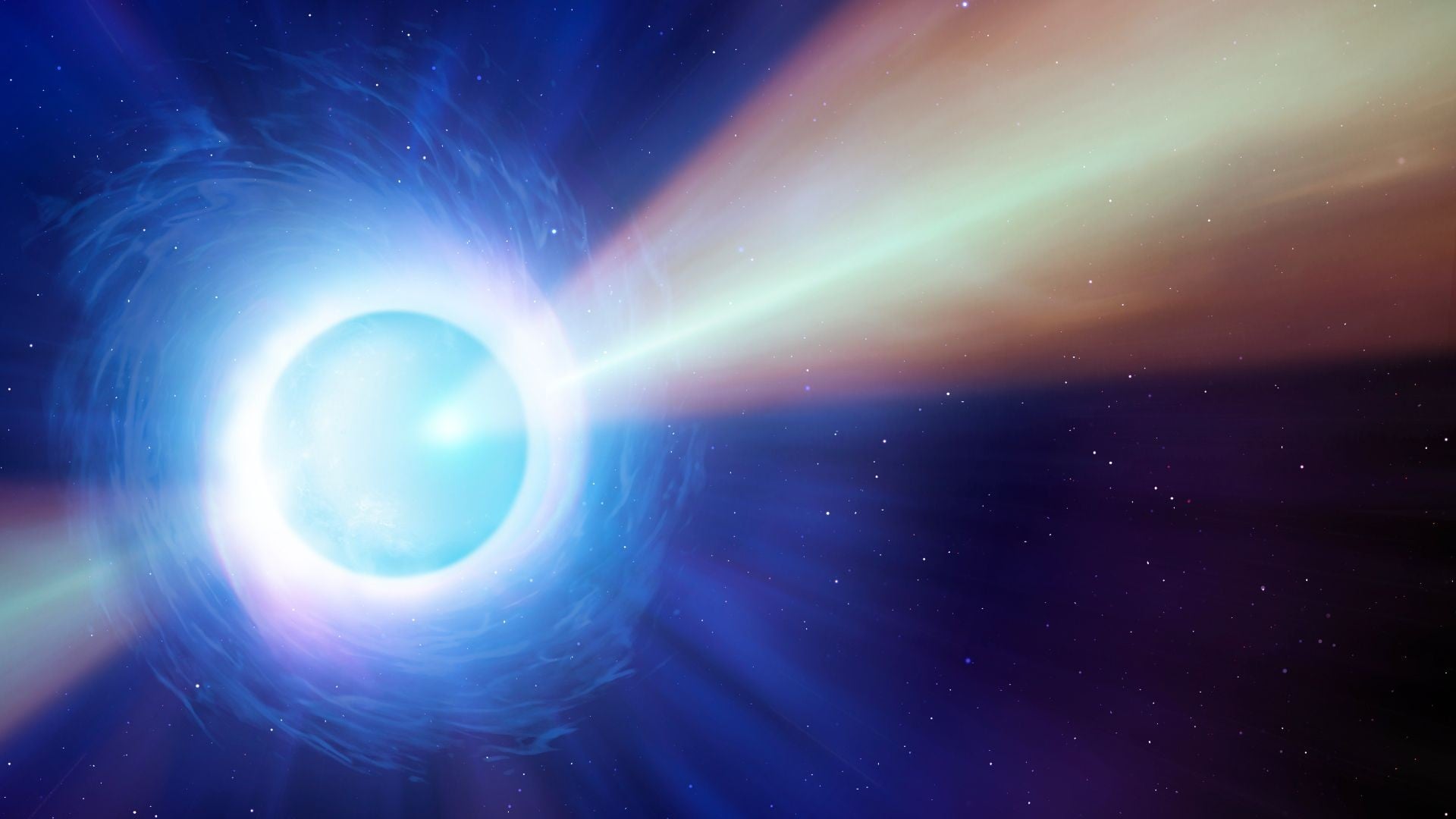
The study, led by Grayce Brown, focused on the pulsar PSR J0332+5434, a rapidly spinning neutron star over 3,000 light-years away. By tracking changes in the pulsar’s radio signals over ten months using the Allen Telescope Array in California, the team observed a phenomenon known as scintillation.
Scintillation is the radio equivalent of how stars appear to twinkle due to Earth’s atmosphere. In space, radio waves from pulsars pass through clouds of charged gas (free electrons), which bend and scatter the signal, causing slight delays in arrival time. As Earth, the pulsar, and the gas move relative to one another, these distortions evolve, altering signal timing by as little as tens of nanoseconds.
Why This Matters: Gravitational Waves and SETI
These seemingly insignificant delays have major implications for two key areas of research:
- Gravitational Wave Detection : Pulsar timing arrays search for low-frequency gravitational waves by looking for correlated deviations in pulse arrival times. If interstellar gas distortions aren’t accounted for, they can obscure or even mimic the faint signals researchers seek.
- The Search for Extraterrestrial Intelligence (SETI) : Distinguishing between genuine cosmic signals and terrestrial interference is a major challenge. Scintillation patterns can help identify signals originating beyond our Solar System.
“If we don’t see that scintillation,” Brown explained, “then the signal is probably just interference from Earth.”
Refining the Cosmic Clock
The team’s near-daily observations (almost 400 in total) allowed them to map the subtle changes in scintillation patterns over hundreds of days. While no repeating patterns were found, the researchers suggest longer-term monitoring could further refine predictions and improve corrections for interstellar distortion.
The broader effort included monitoring roughly 20 pulsars over a year, building upon a pilot phase from late 2022. This ongoing work is vital for enhancing the precision of cosmic measurements and increasing the chances of detecting both faint gravitational waves and potential signals from other intelligent civilizations.
Ultimately, understanding how interstellar space alters radio signals is not just an exercise in astrophysics; it’s about sharpening our cosmic clocks to hear the faintest whispers from the universe.