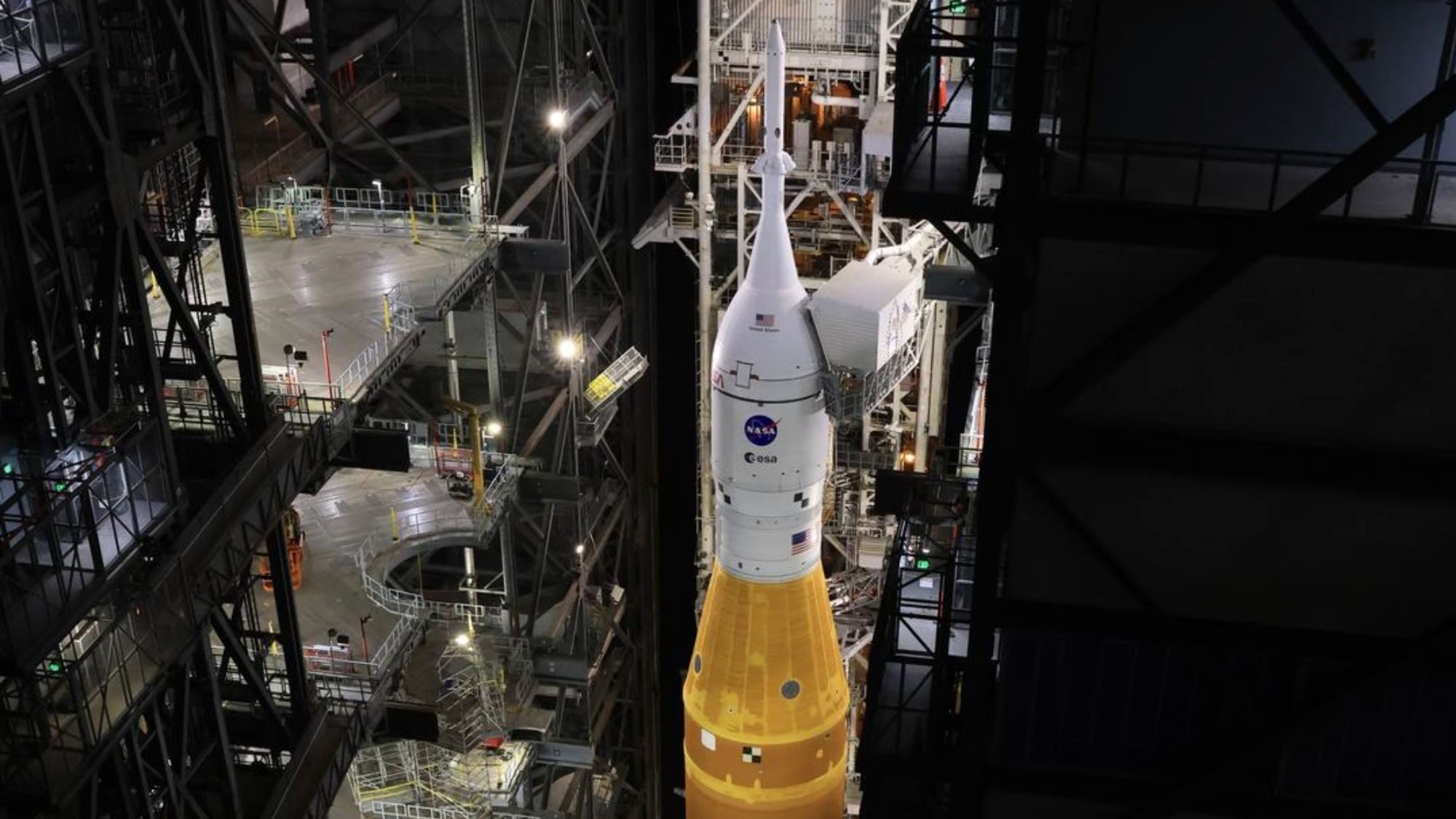
La NASA ha autorizado el lanzamiento de su misión Artemis 2, fijando el 1 de abril como la fecha de despegue más temprana posible. Después de completar las reparaciones y pruebas rigurosas del cohete Space Launch System (SLS), los funcionarios de la agencia confirmaron hoy que el vehículo está listo para regresar a la plataforma de lanzamiento el 19 de marzo. Esto marca un paso fundamental hacia el regreso de los astronautas a las proximidades de la Luna por primera vez en más de 50 años.
Reparaciones y preparación
El cohete SLS se sometió recientemente a mantenimiento dentro del edificio de ensamblaje de vehículos del Centro Espacial Kennedy en Florida. Un problema de flujo de helio en el escenario superior, descubierto después de un segundo ensayo general húmedo, provocó la reversión para su reparación. El problema, originado en un sello de desconexión rápida, ahora se ha solucionado con una solución de diseño que se ha probado e implementado con éxito. La NASA ha determinado que una tercera prueba de abastecimiento de combustible es innecesaria antes del lanzamiento.
Detalles de la misión y tripulación
Artemis 2 transportará a cuatro astronautas (Reid Wiseman, Victor Glover, Christina Koch y Jeremy Hansen) en una misión de diez días diseñada para volar una trayectoria en forma de ocho alrededor de la Luna y regresar a la Tierra. Este es el primer vuelo de prueba con tripulación de la nave espacial Orion, esencial para verificar su soporte vital y sus capacidades en el espacio profundo antes de que la NASA intente un aterrizaje lunar.
Cambiando los planes de aterrizaje lunar
Si bien Artemis 2 permanece sin cambios, el programa Artemis más amplio de la NASA ha sido reestructurado. Se ha revisado el plan original de Artemis 3 (2028) para llevar astronautas a la Luna. En cambio, Artemis 3 ahora se centrará en maniobras de encuentro y acoplamiento entre Orion y los módulos de aterrizaje lunares comerciales desarrollados por SpaceX (Starship) o Blue Origin (Blue Moon). La NASA tiene la intención de priorizar el módulo de aterrizaje que esté listo primero, y el primer aterrizaje lunar ahora está programado para Artemis 4 o 5.
Por qué esto es importante
El programa Artemis representa un cambio importante en la exploración espacial, yendo más allá de misiones aisladas hacia una presencia lunar sostenida. Este programa no se trata sólo de regresar a la Luna sino de construir la infraestructura y la experiencia para misiones tripuladas a Marte en la década de 2040. La reestructuración actual refleja los desafíos de coordinar proyectos complejos de múltiples agencias y la necesidad de adaptabilidad frente a retrasos técnicos.
El compromiso de la NASA con la seguridad sigue siendo primordial, y los funcionarios enfatizan la mitigación exhaustiva de riesgos durante la revisión de la preparación del vuelo. Si se pierde la ventana de lanzamiento del 1 de abril, existen oportunidades de respaldo entre el 2 y el 6 de abril, con una ventana adicional que se abre desde finales de abril hasta mayo.
En última instancia, Artemis 2 es un paso crucial hacia el establecimiento de una presencia humana a largo plazo en el espacio, y la capacidad de la NASA para ejecutar esta misión de manera eficiente determinará la trayectoria futura de la exploración lunar y marciana.