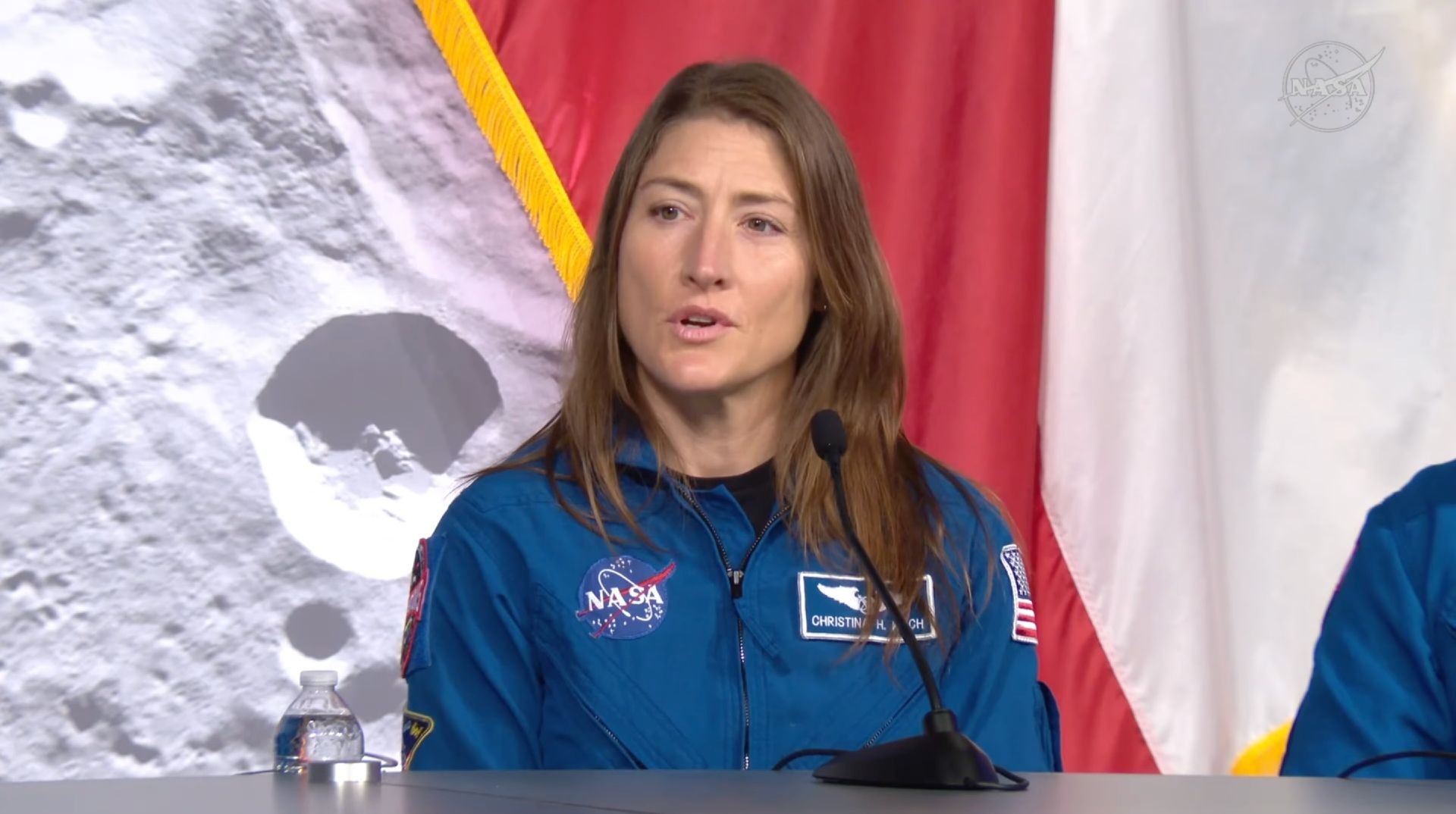
NASA astronaut Christina Koch is poised to become the first woman to venture beyond low Earth orbit (LEO), joining the Artemis 2 crew for a historic round-the-moon mission scheduled for no earlier than April 1. Koch’s upcoming flight isn’t just a personal milestone; it represents a pivotal moment in space exploration, signaling a return to deep-space human missions and laying the groundwork for sustained lunar presence.
A Crew of Firsts
Koch will be joined by three other astronauts making their own marks on history: NASA commander Reid Wiseman, NASA pilot Victor Glover (the first Black person to leave LEO), and Canadian Space Agency mission specialist Jeremy Hansen (the first non-American to leave LEO). The diversity of the crew underscores a deliberate shift in NASA’s approach to space travel, one that values inclusivity and international collaboration.
The Artemis 2 Mission Profile
The Artemis 2 mission is a 10-day flight designed to test the Orion spacecraft in a real-world deep-space environment. The crew will perform a trans-lunar injection maneuver, slingshotting around the moon before returning to Earth. This mission is critical preparation for Artemis 4, slated for 2028, which aims to land astronauts on the lunar surface for the first time in over 50 years.
Koch’s Perspective: Teamwork Beyond the Capsule
In a recent interview, Koch emphasized the importance of the broader team behind the mission. “It feels like an incredible privilege and responsibility,” she stated, but her focus extended beyond the four astronauts. She highlighted the dedication and collaborative spirit of the flight control, launch control, and engineering teams.
“We stand on their shoulders. We wouldn’t be here if it weren’t for our wider teams.”
Koch stressed that the success of Artemis 2 isn’t about individual achievements but the collective effort of decades of planning, problem-solving, and the deliberate cultivation of a diverse astronaut corps. This approach, she argues, is what will propel future missions forward.
The Bigger Picture
The Artemis program signifies a renewed commitment to lunar exploration, driven by both scientific curiosity and geopolitical ambition. This mission is not just about returning to the moon; it’s about establishing a sustainable presence that could serve as a stepping stone for future missions to Mars and beyond. The Artemis 2 flight is a crucial step in that direction, proving that human space travel can be both ambitious and inclusive.
Artemis 2 represents a landmark moment in human spaceflight, demonstrating the power of international collaboration and the relentless pursuit of scientific discovery. This mission will not only pave the way for a return to the moon but also inspire a new generation of explorers to push the boundaries of what’s possible.