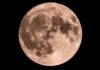



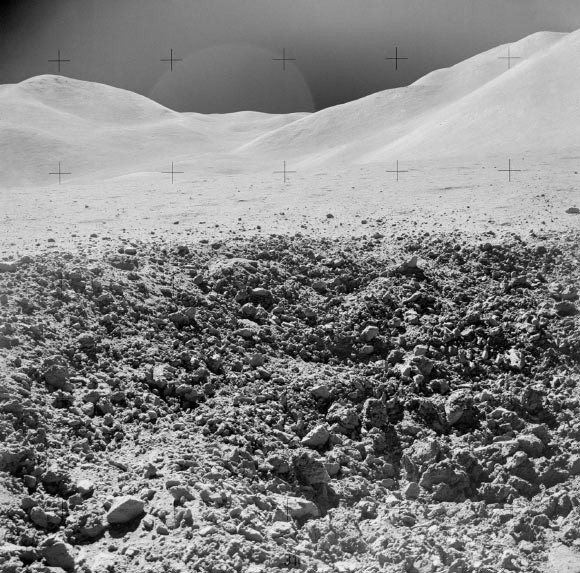
Recent analysis of lunar regolith—the dusty layer covering the Moon’s surface—challenges the widely held belief that meteorites were the primary source of Earth’s water. Planetary scientists now suggest that meteorite impacts over the past 4 billion years delivered only a small fraction of the water found in Earth’s oceans, forcing a reassessment of this long-standing hypothesis.
The Long-Held Meteorite Theory
For years, the theory that meteorites delivered significant amounts of water to early Earth has been a dominant explanation. As the Solar System formed, frequent impacts brought volatile compounds, including water, from asteroids and comets. This idea neatly accounted for the abundance of water on our planet, which is otherwise difficult to explain given the high temperatures of the early Earth.
A New Method for Studying Lunar Regolith
Researchers led by Dr. Tony Gargano at NASA’s Johnson Space Center utilized a novel approach: analyzing the ratios of oxygen isotopes in lunar regolith. Unlike traditional methods that rely on metal-loving elements (which can become distorted by repeated impacts), oxygen isotopes provide a clearer, more pristine fingerprint of the original meteoroid composition. Oxygen is the dominant element in rocks and remains largely unaffected by impacts.
Key Findings
The study revealed that roughly 1% of the lunar regolith’s mass originated from carbon-rich meteorites that partially vaporized upon impact. Scaling these findings to Earth, accounting for its higher impact rate, suggests meteorites contributed only a small percentage to the planet’s total water supply.
“The lunar regolith is one of the rare places we can still interpret a time-integrated record of what was hitting Earth’s neighborhood for billions of years,” Dr. Gargano explained. The oxygen-isotope fingerprint allows scientists to isolate the impactor signal even in material that has been extensively melted and reworked.
Implications for Water Sources
The findings don’t entirely dismiss the role of meteorites in delivering water to Earth; they simply suggest that other sources must have been more significant. This shifts focus towards potential internal sources of water, such as volcanic outgassing, or alternative delivery mechanisms.
For the Moon, the meteorite contribution is still meaningful, especially considering its limited water reserves concentrated in permanently shadowed polar regions. These icy deposits present both scientific opportunities and potential resources for future lunar exploration, like the Artemis III mission.
The Value of Lunar Samples
The analysis relies on samples collected during the Apollo missions over 50 years ago, but the value of this material continues to grow. As Dr. Gargano notes, “The Moon gives us ground truth: real, physical material we can measure in the lab and use to anchor what we infer from orbital data and telescopes.” The next generation of lunar exploration, through the Artemis program, promises even more discoveries, building on the foundation laid by Apollo.
This research underscores the importance of physical samples in planetary science. While remote sensing and modeling are valuable, direct analysis of materials like lunar regolith provides crucial validation and insight. The Moon remains a critical archive of our Solar System’s history.
In conclusion, while meteorites did contribute some water to Earth, this study suggests they were not the dominant source. The findings highlight the need for continued research into alternative water delivery mechanisms and the value of physical lunar samples for unraveling the mysteries of our Solar System’s past.