





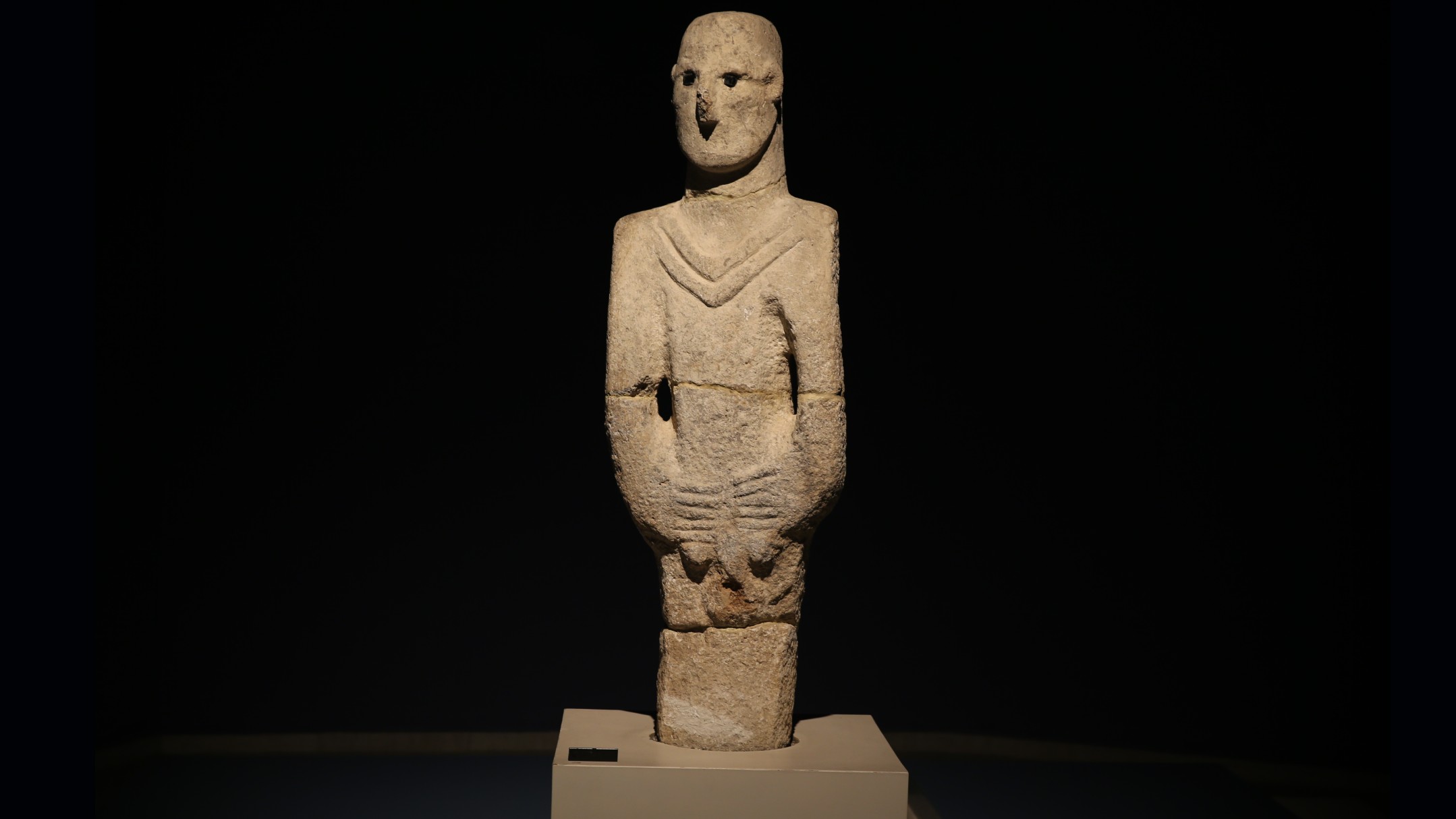
Найстаріша з відомих статуй людини в натуральну величину, що отримала назву «Людина з Урфи», пропонує рідкісний погляд на символічний світ людей неоліту на території сучасної південної Туреччини. датується приблизно 8600 роком до нашої ери і є вражаючим образом: оголеного чоловіка, що тримається за ерегований пеніс.
Виявлення та фізичний опис
«Людину з Урфи» було випадково виявлено в районі Баликлигель. Риси статуї разючі: глибокі очниці, заповнені обсидіаном, зламаний ніс і, що примітно, відсутність рота. V-подібне маркування на шиї передбачає наявність намиста, але в іншому фігура повністю оголена. Його руки, складені перед ним, явно демонструють його геніталії, а замість ніг скульптура має U-подібну основу, ймовірно, призначену для вбудовування в стіну або нішу.
Контекст: Єні-Махалле і життя в епоху неоліту
Археологічні дані пов’язують «Людину з Урфи» з прилеглим неолітичним поселенням Єні-Махалле. Розкопки тут виявили круглі будинки з терацевими підлогами, а також крем’яні знаряддя, наконечники стріл та обсидіанові пластівці. Радіовуглецеве датування підтверджує вік цього місця, що дозволяє віднести його до ранніх етапів осілого життя людини. Це важливо, тому що демонструє, що навіть на цій ранній стадії цивілізації люди створювали монументальне мистецтво із явним символізмом.
Зв’язок з Гебеклі-Тепе та іншими місцями
“Людина з Урфи” – це не поодинокий випадок. Район навколо Шанлиурфи багатий на подібні знахідки. Приблизно за 16 кілометрів звідси знаходиться Гебеклі-Тепе, відомий своїми стародавніми храмами та Т-подібними стовпами, який також дав ритуальну статую людини у 2025 році. Статуї чоловіків, які тримаються за свої пеніси, також були виявлені в Карахані-Тепі та Сайбурчі, датовані 11 000-річним віком. Ці відкриття вказують на ширшу культурну практику зображення чоловіків із явними сексуальними особливостями.
Сенс зображення: культ предків та потойбічне життя?
Найцікавіше питання полягає в тому, чому були створені ці статуї. Археолог Алістер Кумбс припускає, що відсутність рота у «Людини з Урфи» є навмисним, що символічно представляє мертвих. Це передбачає, що статуя може зображати важливого предка або фігуру, яка виступає посередником між світом живих і надприродним царством. Відсутній рот може представляти мовчання, необхідну умову для того, хто перейшов в інший світ.
«Відсутність рота є частиною стилістичного дизайну, що символічно натякає на присутність мертвих». – Алістер Кумбс
Явне зображення пеніса у поєднанні з відсутністю ніг та рота вказує на навмисну спробу створити потужну, нелюдську фігуру, можливо, божество, дух предків чи ритуалістичну виставу життя та смерті.
** «Людина з Урфи» і пов’язані з ним відкриття показують, що стародавні громади в південній Туреччині розробили складні символічні системи, засновані на плодючості, культі предків і потойбіччя.** Неспокійний, але разючий образ статуї кидає виклик нашим уявленням про раннє 500 років тому люди боролися з фундаментальними питаннями життя, смерті та надприродного.