Long before pixels took over the screen, mechanical beasts ruled the box office. You still feel it when the water breaks in Jaws. You still feel it when E.T. reaches for the moon. These weren’t just props. They were engineering marvels.
So, what is an animatronic device?
It’s a mechanized puppet. One that moves. It might be preprogrammed to follow a strict loop. It might be controlled by a human hand via remote controls. Some only wiggle their ears. Others breathe, blink, and chew.
“Animatronics often seem as real to us as their flesh-and-blood counterparts.”
That’s the point. Precision. Ingenuity. Dedication. That’s what makes the fake look real.
These devices range from simple limited movements to incredibly versatile performers. The best ones disappear. You stop seeing the wires. You stop seeing the gears. You just see the monster. Or the alien. Or the dinosaur.
The history is deep. The craft is exact. And the results? Unforgettable.
Next time you watch a blockbuster, look closer. Is it CGI? Or is it an animatronic? The line is getting blurrier by the year. But the roots? They’re mechanical. Heavy. Real.
What’s the most convincing animatronic creature you’ve ever seen?
Think about it. Then keep watching. The next one might just blink at you.
The Mechanics Behind Jurassic Park III’s Spinosaurus Animatronic
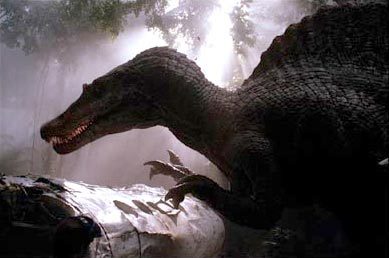
The Spinosaurus didn’t just appear on screen. It was built. Stan Winston Studio (SWS) engineered the animatronic for Jurassic Park III, working hand-in-hand with Universal Studios and the film’s production team to nail the design. The result wasn’t CGI. It was a massive, mechanical beast.
Creating something this size requires more than just metal and rubber. It involves a complex system of hydraulics, pneumatics, and precise control mechanisms. The goal was movement that felt organic, not robotic. When the creature lunged, it needed weight. When it turned its head, it needed resistance. SWS achieved this through careful engineering.
John Rosengrant, Stiles White, and the rest of the team at Stan Winston Studio managed the build. Brett Levisohn at Universal Studios provided critical support. Their collaboration ensured the animatronic could perform reliably on set, day after day. The footage you see is largely practical effects. Real physics. Real scale.
Look for the Spinosaurus in Jurassic Park III, released by Universal. It’s a testament to what practical effects can still achieve. Digital tools have advanced, sure. But there’s a tangible presence to a physical model. It interacts with the environment in ways code often struggles to replicate. The water reacts differently. The lighting hits a real surface. That distinction matters.
The process behind these machines remains largely undocumented in popular media. Yet, it’s the backbone of the franchise’s early visual success. Understanding how these animatronics were controlled gives you a new appreciation for the film’s tension. The danger feels immediate because the threat is there. In the room. Breathing. Moving.

How Jurassic Park III Pushed CGI Further
The “Jurassic Park” franchise has always been obsessed with making its dinosaurs feel terrifyingly real. It’s a high-wire act. You are asking audiences to believe in animals that vanished sixty-five million years ago. When the first film dropped in 1993, it changed the game. Stan Winston’s animatronics gave the T-Rex a weight and presence that early computer graphics couldn’t quite match. It felt wet. It felt heavy. It felt alive.
Then came “The Lost World: Jurassic Park.” Spielberg and the crew tightened the screws. The raptors moved with more fluidity. The CGI integrated better with the live-action footage. But “Jurassic Park III” didn’t just follow the formula. It raised the stakes.
The third installment focused on smaller, faster threats. The Spinosaurus. The Compsognathus swarm. These weren’t just background props. They were active predators. The digital models had to handle complex interactions. Swarms of tiny dinosaurs require a different kind of processing power than a single massive beast. The team at Industrial Light & Magic pushed the boundaries again. They wanted the creatures to inhabit the world, not just appear in it.
“The realism isn’t just about texture. It’s about weight.”
This evolution matters. We aren’t just watching movies. We are watching a technological race. Each entry had to outdo the last. The 1993 original set the standard. “The Lost World” refined it. “Jurassic Park III” expanded the scope. The machines kept improving. The dinosaurs kept getting more convincing.
It’s not just about spectacle. It’s about suspension of disbelief. When you see those creatures move, you forget they are pixels. You forget they are plastic. For a moment, they are real.
And that is the trick. The better the illusion, the scarier the movie. Universal Studios knows this. They keep pushing the tech forward. Because if the dinosaurs look fake, the fear fades. If they look real, you’re hooked.
So, which one had the best effects? The purists might argue for the practical effects of the first film. The tech nerds might point to the seamless integration of the second. But “Jurassic Park III” proved that digital creatures could hold their own against the best practical work ever made. The bar was raised. Again.
The question now is where do we go from here? The technology keeps advancing. The expectations keep rising. The next dinosaur movie will have to be even more convincing. Even more real.
We’ll see.
The Jurassic Park franchise shifted gears significantly in the third installment. While the original T. rex remains an icon, the spotlight moved. The new star is the Spinosaurus, a creature so massive it eclipses even the King of the Dinosaurs. Most of the animatronics for Jurassic Park III were fresh builds. The Velociraptors, for instance, were redesigned to align with modern paleontological findings rather than their film counterparts. But the T. rex? It got a refresh too, just not enough to steal the show.
The Heaviest Animal in the Room
The Spinosaurus isn’t just a prop. It is the largest animatronic creature Stan Winston Studio (SWS) has ever constructed. It dwarfs the T. rex from the original 1993 film. To put that scale into perspective, look at the sheer weight and length involved.
- Length: 43.5 feet (13.3 meters). That is nearly the length of a city bus.
- Weight: 24,000 pounds (10,886 kg or 12 tons).
- Power: Pure hydraulics. Every movement, including the blink of an eye, is driven by fluid pressure.
Why hydraulics? Because this beast operates above and below water. Electric servos don’t survive that kind of immersion. The result is a creature with 42 hydraulic cylinders and roughly 2,200 feet (671 meters) of hydraulic hose snaking through its frame.
Built for the Deep
The engineering behind this monster is brutalist in the best way. The Spinosaurus doesn’t crawl around on legs. It moves on a track system consisting of two 12-inch (30.48 cm) steel I-beams stretching 140 feet (43 meters). Every pivot point uses roller-bearing construction to handle the load. The large steel components? Cut using waterjets for precision that saws couldn’t achieve.
It is completely remote-controlled. The crew doesn’t need to climb inside. They push buttons, and the beast responds. This setup allows for the creature to dive, splash, and thrash in the water tanks at Universal Studios without risking the integrity of internal electronics.
“The Spinosaurus is based on a real dinosaur that paleontologists have recently discovered.”
The Burden of Accuracy
This reliance on real science creates a unique challenge for the design team. Having a real-world blueprint is a double-edged sword. On one hand, you have a solid foundation. You know the bone structure. You know the proportions. On the other hand, you are bound by specific criteria. You can’t just make it “look cool.” It has to match the fossil record.
This accuracy requirement tightens the screw on the builders. They must replicate the skeletal structure exactly while adding the skin, muscle, and hydraulic machinery that makes it move. If the paleontologists say the vertebrae are shaped this way, the animatronic skeleton must mirror that shape. There is no wiggle room for artistic license when the source material is extinct but documented.
The Process Behind the Beast
How do you go from a fossil sketch
Let’s get one thing straight immediately. The Spinosaurus. It holds the title for largest known meat-eating dinosaur. Not close. Not a runner-up. The absolute biggest.
But how do you take a prehistoric apex predator and turn it into a moving, breathing piece of practical effects magic? It isn’t just magic. It’s engineering. Brutal, deadline-driven engineering.
The Timeline That Defies Logic
Building an animatronic of this scale usually involves a ritualistic sequence. You start with sketches. Then you build a maquette—a small-scale model. Then a full-size sculpture. From that, you carve a mold. Cast the body. Install the guts—the hydraulics, the servos, the wires. Assemble. Test. Fix. Repeat.
A complex figure like this? It could take two years. Maybe more.
Deadlines don’t care about your perfectionism. Budgets definitely don’t.
Enter Jurassic Park III.
John Rosengrant ran the show. As the SWS (Stan Winston Studio) effects supervisor, he had roughly 75 designers, engineers, and artists at his disposal. About thirty of them focused solely on the Spinosaurus. Two years? Impossible. They did it in less than twelve months.
That’s not just fast. That’s aggressive.
Sketching the Beast
Where does it start? Paper. Obviously.
Before any hydraulics were wired or any molds were carved, an artist had to put the dinosaur on paper. This wasn’t guesswork. SWS worked directly with Jack Horner. Horner isn’t just a name on a poster. He’s a paleontologist. A real one. An expert.
Horner and the JP3 crew sat down with the artists. They looked at the preliminary sketches. They argued. They suggested changes. They tore things apart and put them back together until the anatomy felt right.
The goal wasn’t just to make it look cool. It was to make it look real.
For the Spinosaurus, the process from initial scribble to final, approved design took about three weeks. Three weeks to define the largest meat-eater ever to walk the earth.
Now that the design is locked, the physical work begins.
The story of the Spinosaurus doesn’t live in the final CGI render or the movie screen. It starts on paper. Stan Winston Studio relies on these initial sketches as the bedrock of the entire project. If the drawings are wrong, the rest of the pipeline collapses. The accuracy of the art dictates the accuracy of the creature.
Once the artists lock in a design, the work moves from two dimensions to three. The team builds a maquette. This is a miniature scale model, sculpted out of clay. For the Spinosaurus, the very first version was crafted at a one-sixteenth scale.
Why start so small? To test the anatomy before committing to full-size construction. The maquette acts as a reality check. It reveals proportions that look fine on paper but fail in three-dimensional space. If the sculptor finds issues, they don’t just patch it up. They go back. The clay is reworked. The paper design is updated. Then, they build the maquette again.
The paper sketches are vital. Everything else relies on the accuracy of these designs.
This loop continues until the clay model matches the artistic intent. Only then does the process move forward.
Scaling Up the Beast
The jump from a one-fifth-scale maquette to a full-size Spinosaurus might sound like a simple multiplication problem. It isn’t. That small model, measuring roughly 8 feet long, was already massive by hobbyist standards. It gave the team at Stan Winston Studio the breathing room to carve in the grit and texture that makes skin look like skin. But the real magic—the transition from clay to steel—happened after the maquette left the studio.
In the original Jurassic Park, building these life-sized monsters was a manual grind. Sculptors hammered metal by hand. It worked. It also took forever. By the time Jurassic Park III rolled around, technology had started to catch up with ambition. The goal wasn’t to replace the artist’s eye, but to speed up the heavy lifting.
From Clay to Code
The maquette didn’t just get measured; it got interrogated. It was hauled over to Cyber F/X for a process that feels more like science fiction than manufacturing. This is where computer-aided manufacturing (CAM) steps in to save the day.
The tool of choice? A 3-D digitizer. Don’t picture a flatbed scanner sitting on your desk. This is industrial-grade hardware. For the Spinosaurus, they used laser scanning.
Here is how the physics plays out. The laser head doesn’t just shine light; it fires over 15,000 beams per second. Those beams bounce off the clay surface of the maquette. High-resolution cameras positioned on either side catch the reflected light. They aren’t taking a photo of the whole beast at once. They are capturing a single cross-section slice at a time.
A custom computer system collects these thousands of slices and stitches them together.
The result is a seamless, perfect digital twin of the maquette. No human error. No missed dents. Just pure, mathematical accuracy.
Why go through all this trouble when you could just scale up the image? Because a digital file is just data. You need that data to drive the machines that will carve the actual foam, mold the silicone, and weld the steel skeleton. The laser scanner bridges the gap between the organic chaos of hand-sculpted clay and the rigid precision of industrial robotics.
The Spinosaurus wasn’t just big. It was complicated. A long neck. A massive sail. Jaws that could snap shut with the force of a hydraulic press. You can’t just stretch a small model and hope it looks right. You need the exact contours. The exact depth. The 3-D digitizer captured every ridge, every scale, and every shadow.
Once that data was locked in, the old-school sculptors could relax. The machines took over.
From Digital Blueprint to Polyurethane Block
The transition from a digital wireframe to physical mass wasn’t magic. It was engineering.
Cyber F/X took the computer model and fed it into a milling machine. The result? A life-size Spinosaurus carved out of polyurethane foam. Not just any foam. This was rigid stuff. Dense enough to hold its shape under the stress of high-speed cutting, yet light enough to be manageable once assembled.
The secret sauce was a proprietary technique called CNC-Sculpting®. Developed in-house by the visual effects team, it solved a massive logistical problem: how do you carve a 40-foot dinosaur in one go? You don’t. You break it down.
The computer model was sliced into manageable chunks. Each piece’s data was sent individually to the sculpting machine. There, tiny spinning blades whittled away at solid blocks of foam. Section by section. Layer by layer. The machine did the heavy lifting, removing excess material with robotic precision.
Then came the assembly.
The Stan Winston Studio team took these carved sections and fitted them together. Like a giant 3-D jigsaw puzzle. The fit had to be tight. Gaps meant imperfections. Once locked in, they had a basic shell. A skeleton of foam. Rough. Unfinished. But alive.
Hand-Scalping the Foam
The machine provided the shape. Humans provided the soul.
This is where the real work began. The foam sculpture was just a blank canvas. A gray, featureless husk. It lacked scale. It lacked skin. It lacked the Spinosaurus swagger.
A team of sculptors at Stan Winston Studio stepped in. They didn’t use computers. They used chisels. Knives. Sandpaper. Hours of hand-carving.
Details were added manually. Textures were rubbed in. Scales were pressed into the foam. Every wrinkle, every ridge, every subtle contour of muscle was defined by human hands. This step was critical. Machines cut geometry. Artists added biology. Without this layer, the model would look like a toy. With it, it looked like it had just walked out of the Cretaceous period.
The Mold-Making Process
Once the sculpture was approved, the next phase started. Molding.
You can’t cast a dinosaur directly from the sculpture. You need a negative. A mold.
The team created a series of molds from the full-sized model. The material? Epoxy. Not plaster. Not silicone. Epoxy.
Why epoxy? Durability. Bonding strength.
The molds had to survive multiple casts. They had to hold up under the weight of resin or fiberglass. They had to release cleanly without damaging the delicate surface details painstakingly carved into the foam. Epoxy provided that rigid, strong bond. It captured every microscopic texture from the sculptors’ tools.
Once cured, the mold set. The sculpture could be removed. Ready for casting.
The Anatomy of a Fake Skin
Once the mechanical guts are sorted, the real magic begins in the mold. You don’t just slap skin on a robot. The frame gets test-fitted inside the negative space first. Only then do you cast the foam rubber.
There’s a specific trick here called the foam-running core. It sounds technical, but it’s basically a spacer. You line the mold with precise layers of clay to dictate exactly how thick the skin needs to be. Once that clay structure is solid, you fiberglass over it. Then you scrape the clay out. What’s left? A hollow shell.
Bolt that shell into the mold.
Now you have a negative space between the detailed mold face and the core. Fill that gap with foam rubber, and you get skin. Why go through all this trouble? Two reasons. First, it looks natural. Second, it controls the weight. A uniform slab of rubber feels like a slab of rubber. This method gives it depth. It gives it life.
Making the Monster
This is where the work drags on. Building the animatronic components takes the longest part of the process. Most creatures at Stan Winston Studio (SWS) need parts you can’t buy.
Try finding a replacement left forearm for a Spinosaurus at Home Depot. You can’t. You won’t.
So SWS builds almost everything from scratch. They aren’t entirely alone in the wild, though. They repurpose common devices when possible. A generic servo here, a modified hinge there. They take available items and twist them to fit uncommon needs.
If you want to learn animatronics, this is the lesson. Stop looking for specialized kits. Start looking at what’s on the shelf and ask how it can be broken.
The Mechanical Backbone
The work at Stan Winston Studio doesn’t happen in a vacuum. It splits into four distinct buckets, all developing at the same time. One of those buckets is purely mechanical. Here, engineers are building the skeleton and muscles of the creature. This ranges from basic gears to complex hydraulic systems.
Take the Spinosaurus. It’s a beast of hydraulic power. Nearly every mechanical system inside that model runs on fluid pressure. It’s not just about moving parts; it’s about making them move with weight. With real weight.
The Nervous System
Then there’s the electronics group. They build the brain. These engineers typically start from zero. They design custom circuit boards because off-the-shelf solutions just don’t cut it for a dinosaur the size of a bus.
They are essentially building the world’s most sophisticated remote-controlled toy. But “toy” feels too small a word. The movement of the Spinosaurus is controlled by specialized telemetry devices. These systems allow operators to manipulate almost every motion in real time.
The Spinosaurus moves because engineers built giant remote-controlled toys from scratch.
We’ll get into the specific telemetry gear next. But for now, understand this: without those custom boards, the hydraulics are just static metal. The electronics give it life.
The Skeleton and Skin of a Giant
Before you can worry about how a dinosaur looks, you have to worry about how it stands up. All hydraulic systems are installed and checked. First.
The structural integrity of the Spinosaurus isn’t just aesthetic. It’s engineering. Electronic and mechanical components need something solid to attach to. They need a frame to control. And that frame needs to keep the skin from collapsing. Stan Winston Studio didn’t use wood or simple steel beams. They built a complex plastic and steel armature. But they wanted realism. So, they mimicked the beast’s own anatomy.
The frame resembles the actual skeleton of the Spinosaurus. It looks like bone. It moves like bone. This isn’t just for show. It’s natural design.
The primary material? Graphite.
That’s right. Not steel. Not aluminum. Graphite. A synthetic composite. It is incredibly strong. It is also remarkably light. Heavy metal would have dragged the animatronic down. It would have stressed the hydraulics. Graphite holds the weight of the machine without adding unnecessary mass. Most creatures SWS built used similar skeletal structures. But for the Spinosaurus, the graphite frame was the backbone of the entire operation.
Then comes the surface. The “skin.”
You wouldn’t wrap a giant robot in plastic. You’d want something that moves. Something that yields. The solution was foam rubber.
Foam rubber is light. It is spongy. It is made by mixing air into liquid latex rubber. Then, you cure it. Harden it. There are stronger options out there. Silicone. Urethane. These materials last longer. They are tougher. But they are a nightmare to work with. They require precise temperatures. Specific mixing ratios. Time.
Foam rubber is forgiving. It is easier to mold. The liquid solution is poured into each custom mold. It sits. It cures. As it hardens, the foam rubber integrates with the frame at specific points. Embedded. Locked in.
But foam can tear. It can rip under the stress of a snapping head or a flapping jaw. So, they reinforced it. A piece of fabric, cut to exact size, is embedded in the wet foam after the pour. It acts as a mesh. A skeleton for the skin itself. Once cured, each piece is pulled from the mold. Ready to be stitched together.
The Integration Phase
Now you have a skeleton. You have skin. You have hydraulics. You have electronics.
It’s time to put it all together.
The process is methodical. You don’t just bolt things on and hope for the best. The frame is assembled first. Then, the mechanical systems are slotted into place. Every piston. Every cable. Every servo.
As each component is added, it is checked. Not once. Repeatedly. Does it move properly? Does it hit anything it shouldn’t? Is there interference? The margin for error is zero. If the jaw hits the chest plate when it opens, the whole thing jams. If the tail servo fights the hip actuator, the motion is wrong.
Most of the electronic components are then connected to the mechanical systems they control. The brain meets the muscle. The wires find their homes.
The controls were tested before this final assembly. You don’t wait until the skin is on to
The Illusion of Flesh and Bone
Getting the hide right isn’t just about slapping rubber over a steel cage. At the Stan Winston Studio, the process for the Spinosaurus was anything but simple. The skeleton acts as the anchor. Some skin segments, already reinforced with embedded structural pieces, are locked in as the armature goes together. But the rest? That comes later. Only after every motor, wire, and servo is buried deep inside the chest does the crew start sewing the exterior back on.
It is exhausting work.
Every single panel is fitted, checked, and double-checked. The goal is to avoid the disasters that kill realism: unwanted folds, buckling skin, or material stretched until it looks like cheap plastic wrap. If a seam catches or a section rides too tight, the entire assembly has to be rethought. Adaptation happens on the fly. You have to know where the skin should hang loose and where it needs to pull taut against the frame. That distinction is everything.
The secret weapon for making the thing feel alive? Bungee cords.
“During movement, these bungee cords simulate tendons under the skin, bunching and stretching.”
SWS didn’t just rely on the rigid frame. They tied elastic lines between the internal structure and specific zones of the dermis. When the dinosaur moves, those cords snap and recoil. They mimic the way biological tendons bunch and stretch beneath the surface. The result is a subtle, secondary motion. A ripple. A breath. Without that internal tension, the Spinosaurus would just be a static suit. With it, it feels heavy. Real. Dangerous.
Painting the Skin Without Using Paint
Before the synthetic skin goes on the frame, it needs color. But Stan Winston Studio doesn’t reach for a brush and traditional paint. The team uses a specially formulated mixture that behaves more like rubber cement. They tint this slurry to hit the exact shade required for the character.
Why skip the paint? Rosengrant explains the logic. Traditional paint cracks. It doesn’t stretch. The rubber-like mixture bonds tighter to the foam rubber substrate. As the animatronic moves, the skin moves with it. No fissures. No peeling. Just a flexible second skin that holds up under mechanical stress.
Once the figure is dressed, the real work begins. Testing. Troubleshooting. Fixing whatever breaks under pressure.
Making it Move
Who controls these heavy, complex machines? Puppeteers. It’s a literal description. An animatronic is just a sophisticated puppet after all. But don’t mistake this for simple lever-pulling.
These puppeteers are actors. They study the figure. They spend hours learning its range of motion. Rosengrant calls this process “finding the performance.” It’s not about moving the arm up and down. It’s about making the arm want to move.
The puppeteer determines which subtle shifts in the mechanism read as anger. Which twitch signals surprise. Which posture screams hunger. The script provides the emotion. The puppeteer provides the life. They translate text into mechanics.
It’s a dance between engineer and actor. One builds the body. The other gives it a soul.
Does it ever feel like you’re controlling a person? Maybe. Or maybe you’re just really good at moving rubber.
Forget what you know about standard movie monsters. The Spinosaurus isn’t just a big lizard prop. It is a living, breathing mechanical nightmare controlled by eight separate people. And they are all working in perfect, terrifying unison.
At the center of this chaos is Rosengrant. He’s the coordinator. His job isn’t just to pull strings; it’s to ensure that every twitch, sway, and roar happens at the exact right millisecond. If one puppeteer is even a fraction of a second off, the illusion breaks. And with a creature this massive, you can’t afford to break the illusion.
The Human Interface of a Digital Monster
You might think controlling a dinosaur involves sitting in front of a computer screen. Not here. The telemetry devices are tactile. Some look like video-game joysticks. Others are bizarre contraptions that defy explanation.
Take the arm controller. It’s not a remote. It’s a suit. The puppeteer straps a device directly onto his own arms. He moves his limbs. The device translates his physical motion into digital signals. Those signals hit the circuit board. The Spinosaurus’s arms mimic him. Instantly. Real-time. It’s not animation. It’s performance.
This hands-on approach is why the Spinosaurus animatronic control system is so unique. It’s not automated. It’s human. And humans are unpredictable. Which is why precision matters more than power.
Eight Roles, One Monster
Each of the eight puppeteers has a specific domain. No one controls everything. That would be a recipe for disaster. Here is who does what:
- Head and Body Coordinator handles the basic posture. Swiveling the head. Opening the jaws. Making the neck sway. It’s the foundation of the presence.
- Tongue Specialist manages the slide levers. The tongue doesn’t just sit there. It moves up. Down. In. Out. It adds saliva. It adds life.
- Eyes get their own joystick. Blinking. Moving. The ridge above the eye shifts too. It’s the first thing the audience notices. If the eyes are dead, the monster is dead.
- Front Arms have full range of motion. Hands open. Hands close. They grab. They claw.
- Cart Operator moves the entire creature back and forth on its track. It’s the only thing that changes position in the arena.
- Breathing Potentiometer operator inflates a bladder inside the chest cavity. The Spinosaurus breathes. You can see it. You can hear it.
- Tail Master controls the tail. Full range of motion. This is where the danger lies.
- Body Raise Slider lifts the entire beast up and down. It changes the scale. It changes the threat level.
Rosengrant watches all of them. He sees the data. He sees the motion. He makes sure they are in concert. Because if they aren’t, you don’t have a dinosaur. You have a pile of expensive scrap metal.
The Danger of Unchecked Power
Rosengrant calls the Spinosaurus a “hot rod.” That’s an understatement. Everything on this machine has more power than necessary. The hydraulics? They use larger cylinders than standard animatronics. They pump out approximately 1,000 horsepower.
One thousand horsepower in a creature that weighs 12 tons.
What happens when that much power goes wrong? It tears things apart. Literally. The tail alone generates 2 Gs of force at the tip when whipped from side to side. Two times the force of Earth’s gravity. Imagine standing next to that. Imagine being hit by 2 Gs.
It’s not just about moving. It’s about force. And force is dangerous.
Keeping the Beast on a Leash
Because the Spinosaurus runs on radio-frequency (RF) devices, the environment has to be controlled. Strictly.
If you walk up to the animatronic with a cell phone on, you’re asking for trouble. RF signals from other devices can interfere with the control signals. And when you’re dealing with a
How the Jurassic Park III Spinosaurus Was Built
The sheer physical presence of the Jurassic Park III Spinosaurus gave the cast a very real reason to panic. On set, the animatronic wasn’t just sitting there. It was bolted to a platform that rolled on tracks, moving like a train. Behind the beast, an 18-foot hydraulic cylinder pushed it forward with terrifying speed. Changing locations? That required a crane to lift the entire machine.
Water was everywhere in the film. Mist. Rain. Lakes. The creature had to survive it all. Stan Winston Studio sealed every joint and wire. The result was a waterproof monitor that could be fully submerged and still run.
When you watch the movies now, the blend of practical and digital effects is hard to break. Most viewers can’t tell the difference on screen. But Stan Winston himself offered a simple rule for spotting a CGI dinosaur. If you see the whole creature, legs and all, moving across the frame, it’s digital. In most other shots, especially close-ups, you’re looking at the animatronic.
Most of these heavy-duty puppets don’t even have legs. The ones that do usually can’t move freely.
“If you can see the entire creature… moving across the screen, then it is digital.” — Stan Winston
This limitation wasn’t a flaw. It was a feature. It forced the camera to stay close. It kept the focus on the texture of the skin, the movement of the jaw. The lack of legs kept the creature grounded. Literally.
The hydraulic push gave it weight. The waterproofing gave it presence. You can feel it in the shot. You can’t fake that kind of physics with code. Not easily. Not then.
The line between digital and physical blur in Jurassic Park III. On screen, Industrial Light & Magic’s digital Spinosaurus is nearly indistinguishable from its practical counterpart. But seeing the animatronic version in person changes everything. It’s not just a prop. It’s a marvel of engineering.
I stood next to the figure. I touched the scales. The craftsmanship is intricate. These masters of animatronics shape reality with terrifying precision. The result? A dinosaur that feels alive, not constructed.
The technology behind these creatures extends beyond simple mechanics. It involves hydraulics, gears, and remote control systems working in concert. You can trace the lineage of this work through various studios and technical breakdowns.
If you want to dig deeper into how these illusions are built, there are plenty of paths to follow. You can look into how blue screen effects work or explore the inner workings of Industrial Light & Magic. Centropolis Entertainment also has a significant footprint in this history.
The physics involved are just as fascinating as the art. Hydraulics provide the muscle. Gears translate motion. Radio-controlled toys offer the precision. Even the materials matter—iron and steel form the skeleton, while bearings allow for fluid movement. Waterjets cut the components with surgical accuracy.
For those interested in the broader landscape of special effects, Stan Winston Studio remains a landmark reference. Their work defined an era. Cyber F/X also contributed to the industry’s evolution.
The connection to Jurassic Park III is direct. The film serves as a case study for this blend of analog and digital art.
You can even try building your own mechanics. Guides exist for constructing animatronic skeletons. There are tutorials for building android heads. It’s a hobby that bridges engineering and creativity.
The Matrix also utilizes similar principles, albeit differently. The “frozen” effect in that film relies on time manipulation rather than physical puppets. But the intent is the same: to make the impossible look tangible.
This isn’t just about movies. It’s about how we perceive reality. When the gears turn and the hydraulics hiss, we forget it’s fake. That’s the power of the craft.