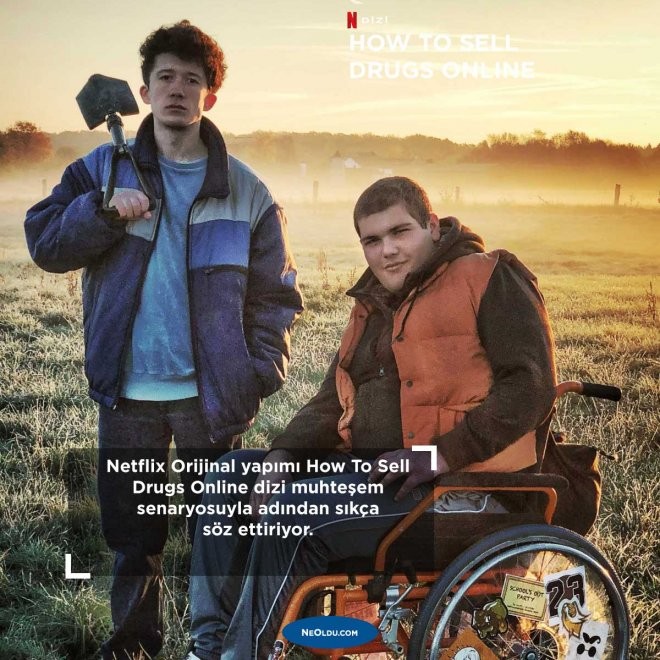
Netflix’s How to Sell Drugs Online (Fast) may be in German, but it’s far from boring. It’s colorful, fast-paced and really fun to watch. We’ve gone through reviews and facts to give you a clear idea of what this series has to offer. This is not just a fictional drama. Based on a true story. This changes everything.
Premise: E-commerce before it was cool.
Most crime dramas rely on guns, violence or complex geopolitical intrigue. this? keyboard.
Maximilian “Max” Mundt is a nerdy high school student who gets lost in the darknet economy. He doesn’t want to be a drug lord. He just wants to be a successful entrepreneur. This series captures that angle. This shows that someone can easily profit from a niche market if the barrier to entry is low.
“This is a journey into the dark world of the internet and an example of successful entrepreneurship.”
This is the main attraction. It’s like a cross between Breaking Bad and The Social Network, except the latter is set in suburban Germany and the coding wasn’t as messy.
Why is it effective?
The script is solid. By focusing on the logical absurdity of it all, it avoids the trap of glorifying crime. Max is not a cold-blooded killer. He’s a man trying to balance his thriving black market empire with his grades. Thrill comes from near misses, not body counts.
The audience appeals to the irony. A teenager’s attempt to ask a girl out consequencesed in pounds of ecstasy going online. The show relies on this contrast. This is very interesting. I am very nervous. That’s true.
What you need to know about actors
In the middle is Moritz Zimmermann who plays Maximilian “Max” Mundt. he runs the show. His performance combines awkward charm and cold calculation. You would support him even if you knew he was doing something illegal.
Next, Lisa Novak plays Lena Klenke. She is Max’s friend and later becomes his unwilling partner in crime. His character forms the basis of the story. Without her, Max is just a guy in a basement. With her, it’s a partnership. A messy and complex criminal organization.
The chemistry between the two sets the emotional core in motion. It’s not just a about the drugs. It’s a matter of trust. And betrayal. And how money changes everything.
Viewers’ comments
Online reviews emphasized the pace of the show. It moves very fast. Some episodes feel like a roller coaster ride. Others let you breathe. But it rarely stagnates.
Critics noted that while the premise was unique, the execution sometimes relied on familiar tropes. However, the German setting adds a layer of cultural atmosphere that makes it feel fresh. The humor is dry. The drama is sharp.
Is it perfect? No, but it’s impressive. In a streaming landscape full of similar stories, it’s important to stand out. This works.
Where to look
This is a Netflix original. So you already know where to find it. But the question is, will you binge it in one sitting.
The last episode remained unresolved. Not neatly packaged. There is no clear morality. It’s just…a consequences. that feels honest.
Real life
Moritz and Lenny’s digital business
The story centers on a high-stakes plan born out of desperation and digital savvy. Only 17 years old, Moritz is the ringleader of the operation, but he did not act alone. His closest friend Lenny is in a wheelchair, but this hasn’t dampened his goals or his access to the digital world.
Together they navigate the underground economy of the Internet. This is not charity work. it’s a calculated attempt to get rich. Their networks become tools that turn online connections into currency. The dynamic between these two is sharp. Moritz provides the vision. Lenny provides the execution, proving that mobility isn’t a prerequisite for influence.
The collaboration focuses on the broader theme of the series, how young people use technology to circumvent traditional barriers. For them, screens are more than just windows. This is a ladder. And they climb fast.
It’s not a question of whether they succeed. It’s what the cost will be. The show doesn’t shy away from the moral gray areas of quick money. Every trade has weight. Every connection has a price.
Moritz and Lenny play a dangerous game. One wrong move and everything they’ve built could be destroyed. But in their world, standing still is more dangerous.
“The internet doesn’t care about your body. It only cares about your effort.”
This angle adds depth to the character study. It’s not just about young people. It’s about the agency. When the world tries to trap you, rewrite the rules. The show uses stories to explore themes of resilience and reinvention.
Lenny’s presence challenges stereotypes. He is not a burden. he is an accomplice. His wheelchair is a detail, not a definition. Moritz understood this. He values Lenny’s mind more than physical strength.
Their plans are complicated. It contains many layers of deception and trust. The show portrays this in subtle nuances. This is no simple heist. This is a social experiment. A test of loyalty.
Viewers are drawn by their ingenuity. How can two children outsmart a system built for adults? The answer lies in their adaptability. they learn faster. They risk more. They understand the digital landscape in a way that older generations miss.
as their operation grows, so do the tensions. The stakes rise. The authorities close in, Moritz and Lenny remained focused. They have a goal. A target. A future they were willing to bet on.
This side plot enriches the main storyline. It provides a contrast to the struggles of the other characters. While others fight for survival, Moritz and Lenny fight for wealth. Both are valid. Both are compelling.
The show uses their arcs to comment on economic disparity. It’s not fair. It’s not equitable. But it’s true. They respond with action.
Their friendship is an anchor. Without it, the scheme falls apart. Trust is their most valuable asset. they test it. They break it. They rebuild it.
Ultimately, their story is one of ambition. Pure and unadulterated. It’s about wanting more than what you’re given. It’s about taking what you want.
The Internet is their playground. Their battlefield. their home. they already have it
Catalyst of Chaos
Moritz’s journey into the dark web began with a very human and messy breakup. It wasn’t some grand conspiracy or a sudden desire to win that pushed him over the edge. It’s Lisa.
His American girlfriend returns from across the ocean, but she comes back changed. The drug culture he encountered in America fundamentally changed his worldview. She’s exploring new experiences. She’s evolving. And the result? She’s no longer interested in Moritz.
She’s outgrown him.
This is a classic breakup scenario, twisted into something far more volatile. When Lisa opens her heart, Moritz closes his heart. His pride was hurt, his pride is bruised, and his heart was broken. Instead of dealing with this rejection with therapy and time, she reached out for help. He’s looking for a way to prove his worth or just hurt her and show her how little he cares about the rules she’s starting to question.
The irony is palpable. Lisa wants freedom through exploration. Moritz can’t stand being left out and decides to sell his soul for clicks and become a slave to the algorithm.
Moritz and Lenny started out as just two kids wasting their youth on a website. No big deal. Just digital noise. But a darker, more painful thought arose in Moritz Zimmermann’s mind.
He doesn’t just want to surf the internet. He wanted to control the flow.
Everything changes when you change your perspective. Overnight they stopped being amateurs. They begin to climb the ladder of the drug trade.
Zimmerman Pivot
This change is not gradual. It happened suddenly. Moritz noticed the gap. He filled it. Suddenly the internet wasn’t just a place to hang out. It’s a delivery engine.
Lenny is obsessed with technology. Moritz elaborated on this view. Together, they created a network that moved goods faster than traditional street vendors.
The problem isn’t how they do it. That’s why they weren’t caught earlier. The answer lies in anonymity. speed. And the courage to treat criminal logistics like a startup company.
It is due to very human, very petty motives. Moritz didn’t want Dan to win. In particular, he does not want Dan to have Lisa.
Moritz’s criminal career was not motivated by an overwhelming desire for wealth or power. This is jealousy. Pure and simple. He notices that Lisa is seduced by Dan’s charm. Dan is popular as a seller of ecstasy. Instead of accepting defeat, Moritz decided to play the long game. He started an online drug empire not because he loved crime, but because he wanted to outshine his rival who had stolen the object of his desire. It’s a silly premise, but it grounds the characters in something we can relate to. There is a desperate need to prove that you are better than the guy who got your ex.
This added motivation makes How To Sell Drugs Online more than just a teen comedy. It’s one of the most watched youth series on Netflix, and for good reason. The cast are young and energetic, but they always find themselves in ridiculous situations. The chemistry works because Moritz stakes feel personal, even though it was legally disastrous.
This show balances high-stakes emotional backstories with genuine thrills. Some of the action scenes are surprisingly weight. The pace never drags. You’re watching this because you want to know if Moritz can continue running his digital empire while avoiding the police, cybercriminals and his own mother. It’s immersive. It’s fun. Definitely worth a weekend.
The gray area of street dealing on the screen
There’s no denying the visual shorthand used in crime dramas. The camera lingers on the hand-off, cash exchanges in small bags and stylish cars parked in a dark corner. This creates an image that is more of an advertisement than a warning. We present you a selection of its charm. The stakes feel manageable, or at least exciting rather than devastating.
But look closely at the mechanism.
The Internet and modern technology are not just imaginary props. These are tools that operate in the real world in a completely different legal framework. The digital fluidity that enhances these on-screen events can also be used to generate legitimate income. electronic commerce. digital marketing. remote freelance. These are not illegal acts. These are the ways people today can truly build wealth without stepping into the shadows.
The difference is important. Watching a show where the bad guys win might make you want to make a quick buck. But what skills do you need? These are transferable. Build your network online. Understand algorithms. Manage your digital assets. None of this has to be illegal.
“The tools are the same. The intention makes all the difference.”
It’s easy to confuse opportunity with temptation. One person builds a career. the other connects to the cell. Technology does not make decisions. It only strengthens what you put into it.
Consider the logistics of moving products in a kit and the logistics of moving data in a business plan. One leaves fingerprints. Another leaves a paper trail of invoices and receipts that really builds credit. Which path is more stable? Which one helps you sleep at night?
The line between inspiration and imitation is thin. But there is always an exit ramp. You don’t have to follow a script written by a screenwriter to get instant thrills. You can also write your own.
If you’re looking for a blueprint for the modern hustle, check out the digital footprint left by How to Sell Medicines Online (Dark Web). The show is more than just a dramatization of the rise of a teenage boy. This reflects the incredibly efficient operation of early e-commerce. In fact, we can learn from Max’s chaotic rise and turn the lessons into a case study of agility and market disruption.
The show quickly rose to the top of binge-worthy television, capturing viewers who wanted more than the usual crime drama genre. The pace is relentless, the stakes are personal, and the tech-savvy story feels surprisingly close to our current reality. It’s not just about selling drugs. It’s about understanding supply chains, brand loyalty and customer retention in the most unregulated market imaginable.
Critics and audiences alike have rated this intensity with a solid 7.9 IMDb rating, suggesting it has grown beyond its original release. It’s a tight, high-octane series that doesn’t fall short and leaves you wanting more after every episode. If you haven’t added it to your watchlist yet, you’re missing out on one of the most exciting examinations in modern entrepreneurship disguised as a thriller.
This series is a stark reminder that in the digital age, the barriers to global business are lower than ever before, and so are the consequences.
It’s not a question of whether you should watch it or not. What matters is whether you can handle the anxiety of watching someone take advantage of a loopholes you didn’t know existed. The final episodes offers no clear resolution, just the cold reality of a system that consumes its creators. The season ends with admiration for the hustle and worrying about the costs.
Why this fast-paced drug dealer drama succeeds
It’s easy to dismiss another teen crime series as light entertainment, but “How to Sell Drugs Online (Fast)” manages to avoid that trap. The consensus of the viewers is clear. This is a wildly watchable show that demands your full attention because it never lets up. As one viewer said, this show is fast. Not only in terms of plot, but also in terms of pace. Every minute of the six half-hour episodes moves at breakneck speed. Some people find it tiring, but most people find it addictive. This is the definition of a “snackable” series. It’s short enough to finish in a day, but dense enough to keep you hooked.
The premise is deceptively simple. Maximilian Mundt plays Moritz Zimmermann, a high school student who has to win back his ex-girlfriend. His solution? He decided to sell illegal drugs online. This plot point is actually inspired by a real-life legal cases, grounding the fictional mayhem in a recognizable reality. Although the technical aspects of darknet market operations are covered superficially, the show does not pretend to be a documentary. It’s a comedy-drama with enough thriller elements to keep it interesting.
Beyond the Teenager Label
There is widespread prejudice against programs for young actors. Many adults ignore it because they think it lacks depth or complexity. This series breaks that conventional wisdom. One 30-year-old viewer noted that despite the younger cast, the show resonated on a more mature level. It’s not all about drugs and romance. It’s about the uncomfortable transition to adulthood.
The show does not shy away from the consequences of Moritz’s actions. It conveys a message about the impermanence of human relationships and the need to step out of your comfort zone. In the teen drama, these themes are treated with a surprising nuance. The inclusion of fake documentaries, interview footage and meta-commentary serves a purpose. It separates the audience from the characters enough that they can criticize their choices, but still become emotionally invested in the outcome. This stylistic choice effectively dismantles the “just a teen show” label.
The Cultural Texture
One unexpected element that caught the audience’s attention was the soundtrack. The songs of Turkish-German artists add a unique cultural layer to Berlin. This is not just background noise. It reflects the diverse identity of the characters and their environment. This detail adds texture to the world-building, making the environments feel alive and real rather than mundane.
For those wondering if Season 2 is worth the wait, the answer is yes. As the story progresses, the stakes rise and the characters face more complex moral dilemmas. Continuing the fast pace of Season 1, the suspense never ends.
The Cast and Their Roles
To understand why this show works, you have to look at the ensemble. Maximiliam Mundt plays Moritz Zimmermann is the anchor. He’s not your typical hero. He is flawed, desperate, and increasingly reckless. His performance carries the weight of the entire story, maintaining a balance between comedy and genuine pathos. The supporting roles are mostly young actors who bring energy and authenticity to their characters. They avoid caricature and play their characters honestly, which makes absurd situations feel grounded.
The chemistry between the characters drives the emotional core of the series. Friendships are tested. Trust has been broken and rebuilt. This dynamic demonstrates a realism that belies high-concept premise. The show works because it respects the emotions of the characters, even when they commit crimes. that’s great
Lena Klenke as Lisa Novak
Lena Klenke brings down-to-earth energy to How to Sell Drugs Online (Fast) as Lisa Novak. If you’re looking for the full cast or wondering who’s playing the female lead alongside Maximiliam Mundt’s Moritz, you need to know Klenke is the name
Lisa is more than just a side character. She is Moritz’s friend and confidant, but often caught in the crossfire of his digital empire. Moritz uses brains to hack into systems and sell drugs. Lisa, on the other hand, represents the real consequences of his actions. She is skeptical. She is wary. She sees the danger before money.
Kroenke’s performance balances loyalty and self-preservation. You can feel the tension in every scene. She knows Moritz was a genius, but he also knew that genius doesn’t pay for emotional damage. Her story explores the cost of friendship when one person is playing God in the bedroom.
Their relationship changes from a casual teenage friendship to something deeper. Moritz’s desire for control conflicts with Lisa’s desire for honesty. It is this friction that drives much of the second half of the series.
Why did Lisa stay? This is a question the show asks repeatedly. Is it love? fear? Or is it just the slowness of growing together? Kroenke handles ambiguity well. She doesn’t fully trust Moritz, but she can’t let him go either.
This complexity makes How to Sell Drugs Online (Fast) more than just a Teen Crime Drama. This is an exploration of codependency wrapped in a techno-thriller. Lisa Novak, played by Lena Klenke, is the anchor that prevents the story from descending into pure fantasy.
The chemistry between Mundt and Kroenke feels real. Not polished. Not scripted-perfect. Just real. It is this realism that keeps viewers interested, even when plot twists become ridiculous.
Lisa’s journey is not about becoming a criminal mastermind. It is about surviving one.
Lena Klenke’s breakthrough role in Victoria
Released in 2015, Victoria not only brought new faces to the silver screen but also gave the audience a new perspective. Lena Klenke was announced as the featured talent. Both audiences and critics took notice. She plays Lisa, a supporting but important character in the story. Her performance is in stark contrast to the film’s tense, real-time story.
Critics noted her ability to convey depth in a single shot. One-shot technique requires precision. Klenke delivered. She wasn’t just present; she was integral He is an integral part of the film’s emotional landscape. This role proves that she could handle complex material and hold her ground against seasoned Actors.
Her acting as Lisa became a benchmark in her early career. It wasn’t a the main character, it was memorable character. The success of this film helped elevate her profile. Now, when people look for up-and-coming German actors with talent for stage and screen, Klenke’s name comes up. This is a solid foundation based on demanding performance.